Philippines welcomes international visitors after two years of closures

1 / 2
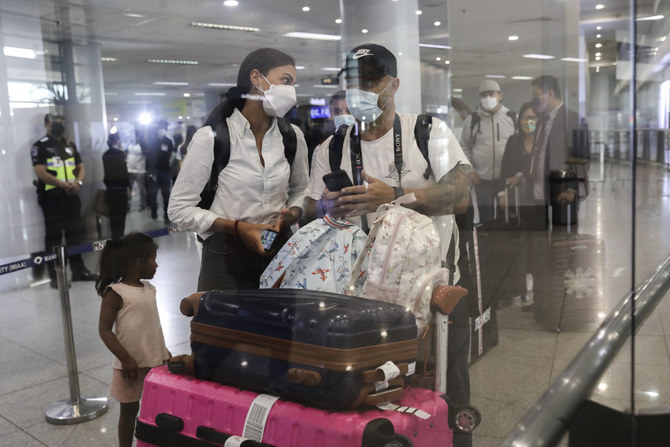
Foreign passengers queue as they arrive at Manila's international airport in the Philippines on Feb. 10, 2022. (AP Photo/Basilio Sepe)
2 / 2
Foreign passengers queue as they arrive at Manila's international airport in the Philippines on Feb. 10, 2022. (AP Photo/Basilio Sepe)
Short Url
Updated 10 February 2022
Follow

Philippines welcomes international visitors after two years of closures

  • Before the pandemic, tourism contributed nearly 13 percent of the country’s GDP
  • Number foreign arrivals expected to be about 12,000 a day in the coming months

MANILA: The Philippines reopened to fully vaccinated, COVID-negative foreign tourists on Thursday, after nearly two years of pandemic border closures.

Home to white sand beaches, famous diving spots, lively entertainment, cultural heritage and wildlife, the Philippines is dependent on tourism. When COVID-19 hit in 2020, most of the country’s tourism destinations were forced to shut.

But two years into the pandemic, the Southeast Asian nation has been largely successful in containing the local spread of the virus with lockdowns and vaccinations. It had planned to reopen in December, but the decision was postponed as the authorities decided to wait and see how the situation developed worldwide after the emergence of the omicron variant.

“We are happy, all stakeholders, that we are opening today,” Tourism Secretary Bernadette Romula-Puyat told reporters.

FASTFACTS

  • Before the pandemic, tourism contributed nearly 13 percent of the country’s GDP.
  • Number foreign arrivals expected to be about 12,000 a day in the coming months.

“We hope that this continues so that we get more jobs for our countrymen,” she said, adding that 1.1 million tourism workers in the country had lost their jobs during the pandemic and the reopening will have a huge impact on the country’s economic recovery.

Before the pandemic, in 2019, tourism contributed nearly 13 percent of the country’s gross domestic product, generating 2.51 trillion pesos ($50 billion), according to Philippine Statistics Authority data. In 2020, revenues from tourism plummeted to 973 billion pesos, with foreign arrivals slumping 82 percent.

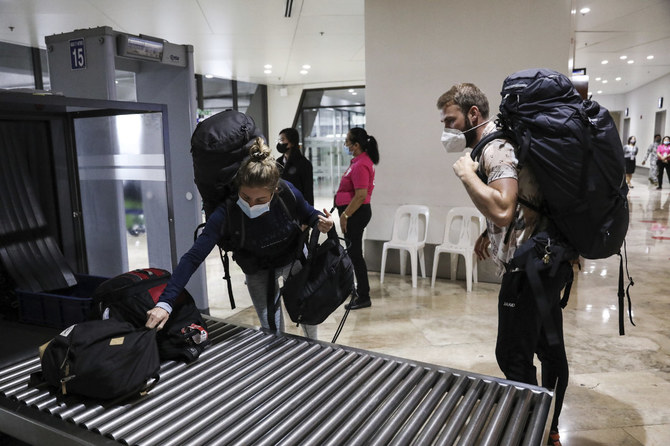
The first flight with foreign tourists to reach Manila International Airport on Thursday arrived from Vancouver, Canada. Other flights came from the US, Singapore, Thailand, Indonesia, Malaysia, Bahrain and China.

A third of the nearly 11,500 passengers scheduled to arrive in the Philippines that day were foreigners, while the majority were returning Filipinos, according to Bureau of Immigration estimates.

It said it expects the number of foreign arrivals to be about 12,000 a day in the coming months.

Immigration Commissioner Jaime Morente said in a statement: “We see this as the start of the recovery of the tourism industry which we hope will renew its vigor as in the previous years.”

Visitors arriving in the Philippines must present proof of being fully vaccinated against COVID-19, a negative result of a PCR test taken within 48 hours before departure, and travel insurance for COVID-19 treatment costs, with a minimum coverage of $35,000 for the duration of their stay in the Philippines.


Burkina jihadist attacks on army leave at least 10 dead

Updated 55 min 19 sec ago
Follow

Burkina jihadist attacks on army leave at least 10 dead

ABIDJAN, Ivory Coast: Suspected Islamist militants attacked an army unit in northern Burkina Faso Sunday, the latest in a series of alleged jihadist attacks that have killed at least 10 people in four days, security sources told AFP.
The west African country, ruled by a military junta since a 2022 coup, has been plagued with violence from militants allied to Al-Qaeda or the Daesh group for more than a decade.
Social media has been awash with speculation that the spate of attacks may have killed dozens of soldiers, but AFP has been unable to independently verify those claims.
The junta, which seized power on the promise to crack down on the violence, has ceased to communicate on jihadist attacks.
On Sunday, militants carried out a major attack on a military detachment in the northern town of Nare, two security sources told AFP.
The previous day, the Burkinabe army’s unit in the northern city of Titao was “targeted by a group of several hundred terrorists,” one of the sources said.
While the source did not give a death toll for either attack, they said part of the military base in Titao had been destroyed.
The interior minister of Ghana, which borders Burkina Faso to the south, said the government had “received disturbing information from Burkina Faso of a truck carrying tomato traders from Ghana which was caught in a terrorist attack in Titao.”

Jihadist ‘coordination’
According to the same security source, another army base in Tandjari, in the east of the country, was also attacked Saturday, and several officers killed.
“This series of attacks is not a coincidence,” the source said. “There seems to be coordination among the jihadists.”
A separate security source told AFP that a “terrorist group attacked the (military) detachment in Bilanga,” in the east of the country, on Thursday.
“Much of the detachment was ransacked,” the source said, giving a toll of “about 10 deaths” among the soldiers and civilian volunteers fighting alongside the army.
A local source confirmed the attack, adding there was damage in the town of Bilanga, and that the assailants had stayed at the scene until the following day.
Despite the junta’s vow to restore security, Burkina Faso remains caught in a spiral of violence.
According to conflict monitor ACLED, the unrest has killed tens of thousands of civilians and soldiers since 2015 — and more than half of those deaths have come in the past three years.