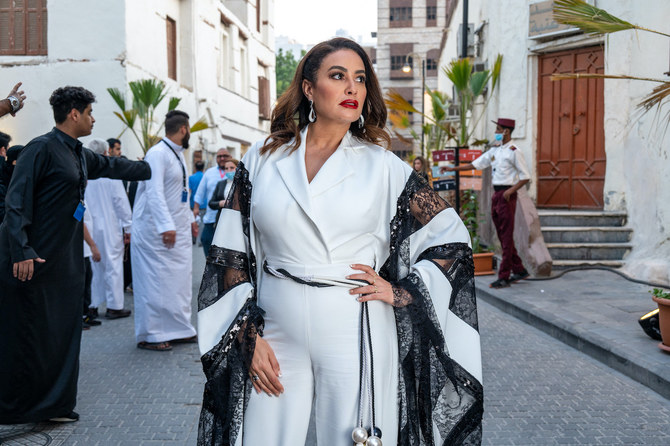

DUBAI: Say the name “Ola” to nearly anyone across the Arabic-speaking world, and they’ll know exactly who you mean. Ola is the Arab world’s very own Rachel from Friends, a character that captured the spirit of a generation with both humor and heart, and turned Tunisian actress Hend Sabri — the woman who brought her to life on the Egyptian TV phenomenon “Ayza Agawez” — into a cultural institution.
Now, 12 years since that series debuted, Ola is back on the small screen. “Finding Ola,” the latest Netflix original Arabic series, dropped on February 3 and immediately rocketed to the top of the streamer’s charts across the Middle East — this time not only starring Sabri, but shepherded by her, marking the star’s first major work as a producer and her first step into becoming an even more influential cultural voice across the Arab world.
“Ola, for me, is the most emblematic character that I have portrayed on screen. It’s the favorite of my audience. It’s the favorite of Arab families all over. When I was approached by Netflix to do something closer to a dramedy, I instantly thought of Ola,” Sabri tells Arab News.
“For me, she is a bridge between me and the audience. And it’s a very wide audience, because she’s so loved by all generations. Families in the Middle East don’t usually sit and watch the same show, but with Ola, something was different. Everybody in the family watched ‘Ayza Agawez,’” she continues.
In “Ayza Agawez” (which translates to ‘I Want To Marry’ in English), Ola was a 30-year-old woman who desperately wanted to find a partner. It was a laugh-out-loud comedy of errors that was emotionally honest and relatable for young women across the region, capturing the pulse of society in a way few series are able to. Bringing her back to the screen has given Sabri the opportunity to capture a different spirit, telling the story of a woman at a later stage in her life who is done trying to find a husband and is trying to find herself.
“I think Ola is a great tool to speak to people, to express my views on society, to tackle taboos, but in a subtle and loving way. I thought it would be nice to express what changed in those 12 years in the Arab world socially through Ola,” says Sabri. “She’s a great symbol of modern young Middle Eastern women.”
Sabri boldly chose to reimagine the tone of “Ayza Agawez,” crafting a series built for a 42-year-old woman — something that would be both cinematic and novelesque, a six-episode prestige series that honored the importance of the character, and how far she had come. In “Finding Ola,” she would be different, a woman who is dealing with a failed marriage and handling adult issues with grace, showing that getting to the altar doesn’t always guarantee a happy ending.
“She’s now in her early 40s, and it’s not the same world. We didn’t want her to be the old Ola because nobody stays the same. This isn’t a season two; it’s really something new. It’s another story with other characters and friendships, other views on life. People change, and maybe sometimes they don’t accept change from others because they think they shouldn’t change. Sometimes when people love you, they don’t want you to change, but people do change and if people change then everything else changes as well,” says Sabri.
Being the key creative voice for the show behind the scenes was a huge challenge for Sabri, who admits she had trouble at times adjusting to being the boss rather than ‘just’ an important collaborator, and the myriad ways in which that divided her focus.
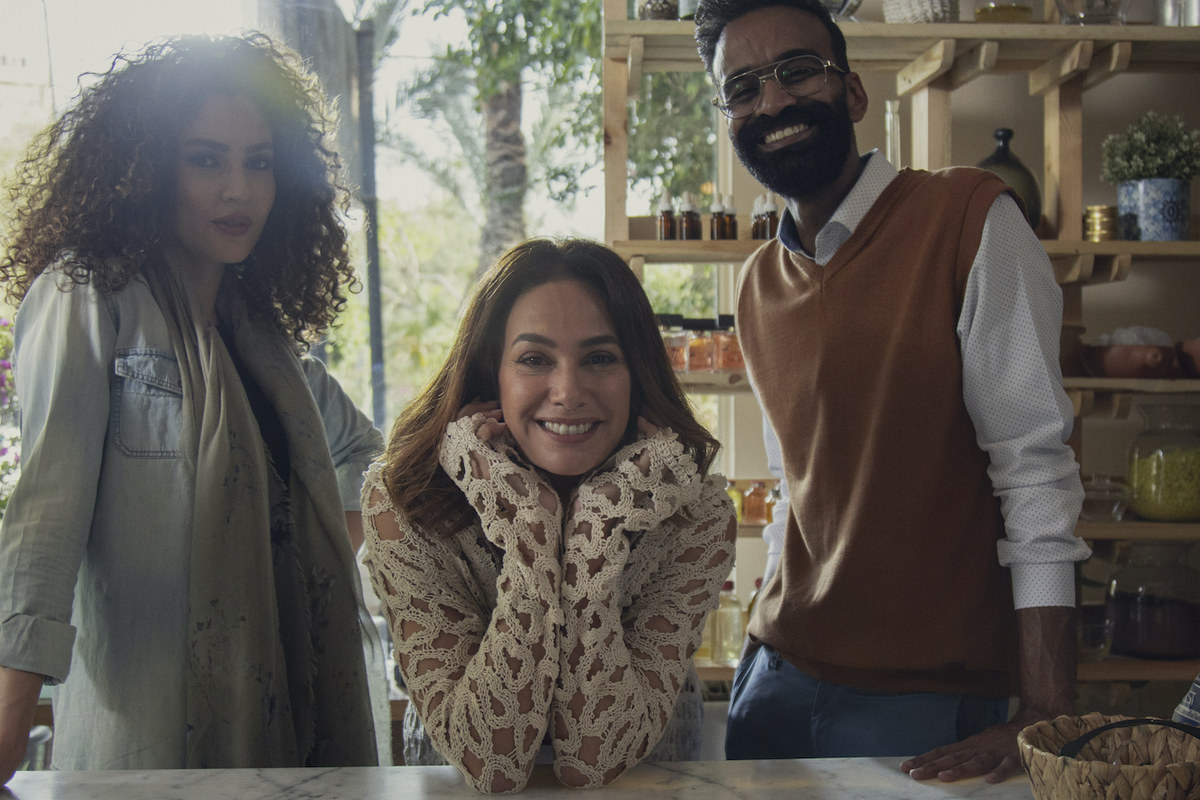
“Finding Ola” is the latest Netflix original Arabic series. (Supplied)
“As an actress, I lost all my friends because I was always on edge, and I could not really play into them. I could not be in the moment like they were. I missed being only an actress,” says Sabry.
Sabri, humble to a fault, is underselling the mastery she displayed behind the camera, according to the series’ director Hady El-Bagoury.
“For me, it was clearly her personality that made this work,” he says. “A great producer has to have a certain personality. You need to be able to talk to everybody, to have more than one room in your mind, you can’t be one-track minded. Hend is into details, and the great producers focus on details. I was very impressed by her way of thinking, and how seamlessly she switched from her producer mind to her actress mind in front of the camera.”
Once she adjusted, Sabri allows that the challenge of her ambitious plan manifested into the most fulfilling work of her career.
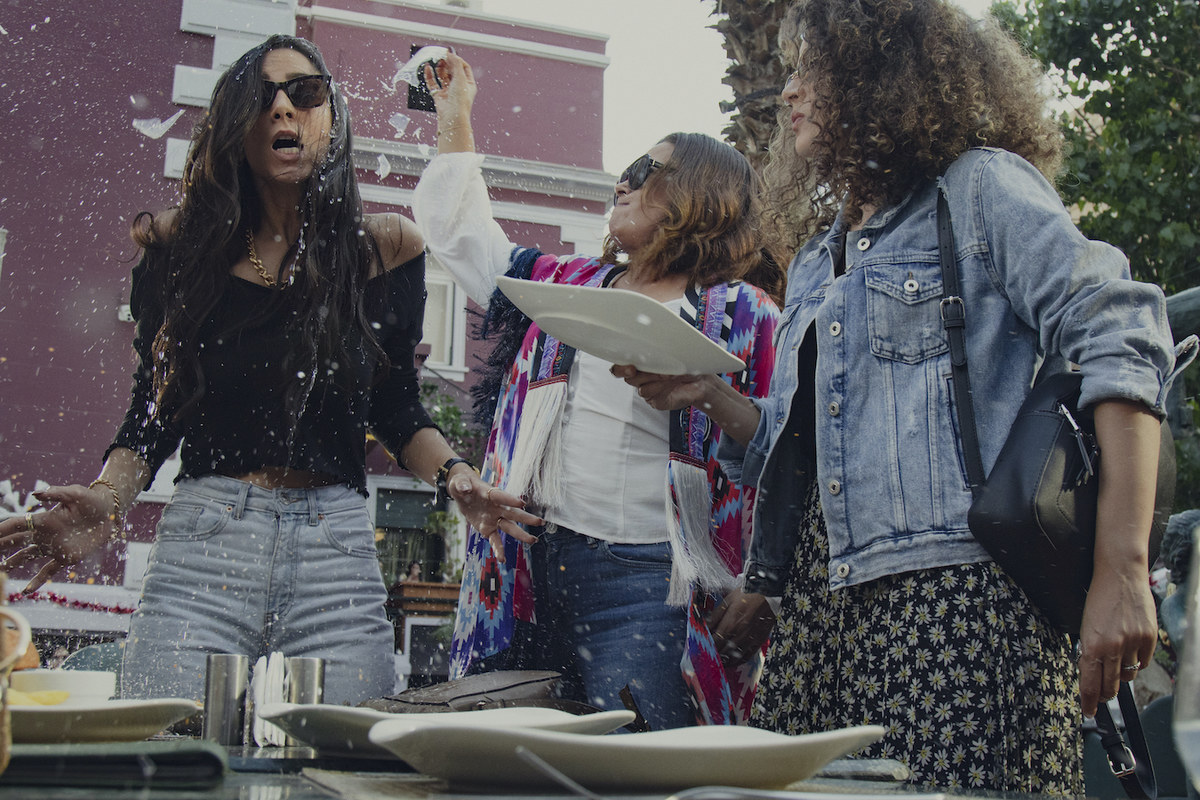
“Finding Ola,” the latest Netflix original Arabic series, dropped on February 3. (Supplied)
“I was excited by the end of the project. In the beginning, it was really stressful, but it was super-empowering, not only for me, but for every actress and every woman in this industry. I think it emboldened all the girls working with us to be able to see the power women had on this set. We were represented like never before,” says Sabri.
“This is the kind of respect that that we’re trying to get. We’re trying to change something in the industry. It’s not easy, but I learned a lot — even if I lost some friends. I’m grateful for what we accomplished, and where we’re heading,” she continues.
While Sabri remains one of the most sought-after actors in the Arab world, if El-Bagoury gets his way, Sabri will be a producer for years to come, as she has so much to add to the cultural scene in Egypt and beyond.
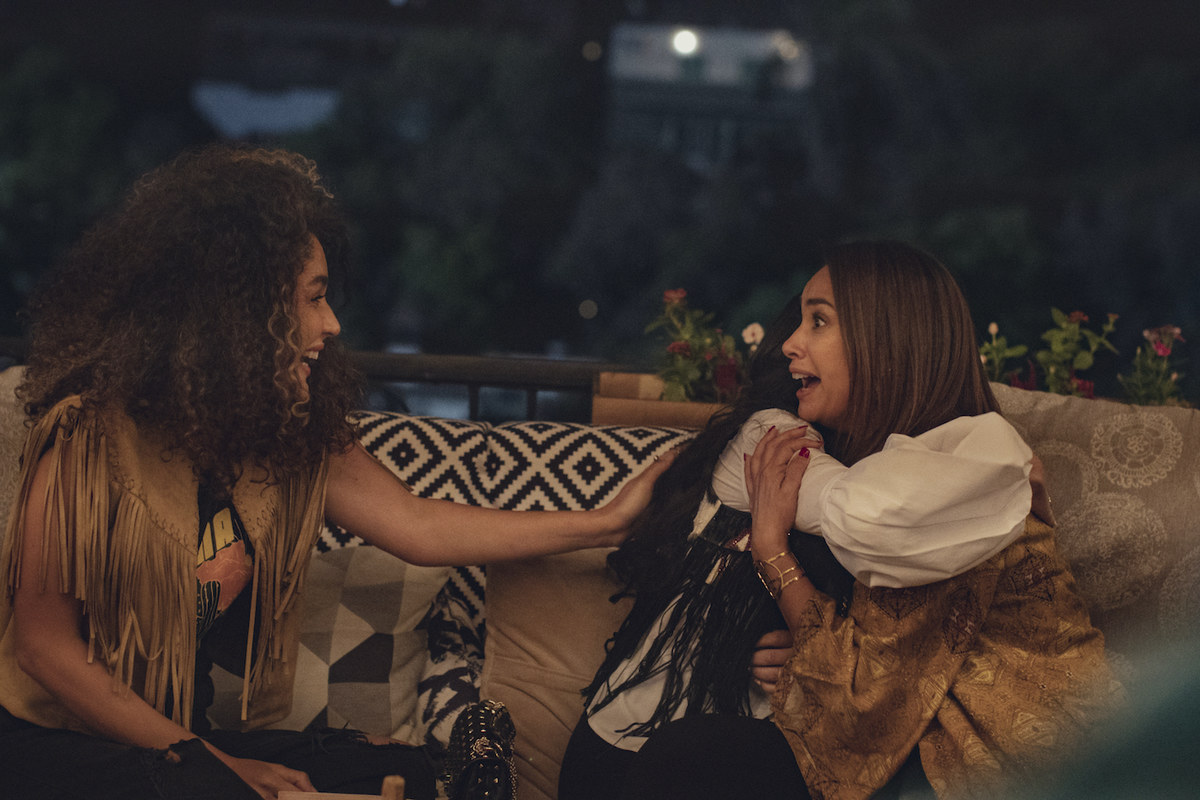
Being the key creative voice for the show behind the scenes was a huge challenge for Sabri. (Supplied)
“I told her many times that I would love to continue working with her as a producer, even if she’s not an actress. She has this very structured mind, and her opinions are very good — especially in terms of directing and script. She could do anything. She has all the elements that a great producer needs, even if it kills your social life,” El-Bagoury says.
Sabri seems to have found a home at Netflix, a partnership that will likely lead to future shows that Sabri will produce, even though it may be too soon to promise a second season of “Finding Ola.”
“We’ll see. Let’s see how season one goes. We’re really stressed. Anxious, proud, happy, yes — but stressed,” says Sabri.
Since the show rocketed to the top spot on Netflix in nearly every Middle Eastern country since its debut, Sabri has taken a moment to reflect on where this journey has brought her — a journey not too dissimilar to that of Ola herself — and how close it has brought her to those that she worked with to bring it to the world.
“Everybody that worked on this project worked with a bit of their heart and we’re very happy to be here. You can feel there is love for this project. We hope that people will like it as much as we do. I just want people to identify with her as much as they did 10 years ago, in the region and across the globe,” says Sabri.