



Dana Awartani

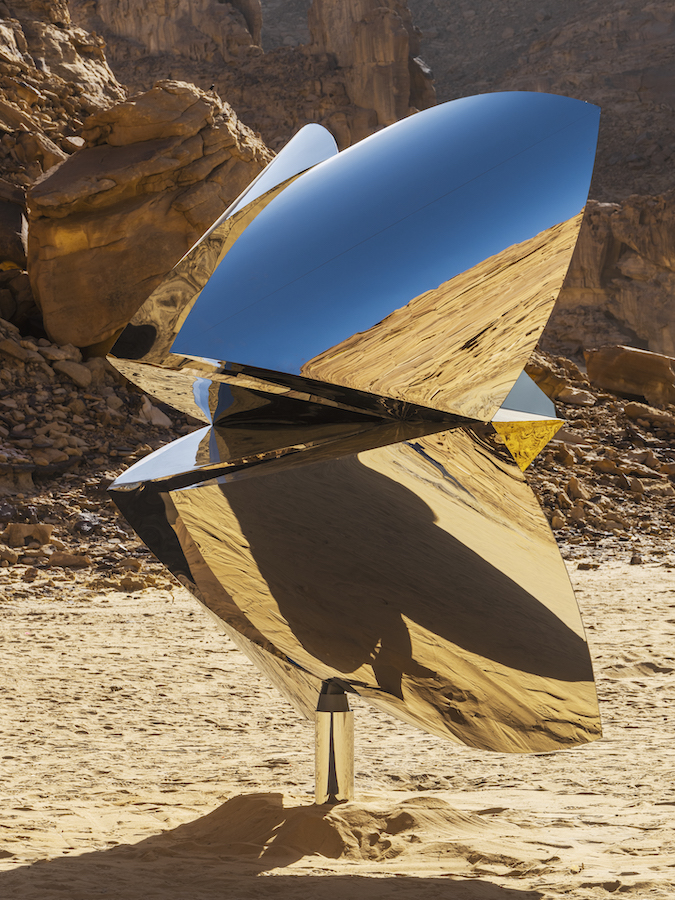
For the second edition of the contemporary art biennale set in the stunning landscape of AlUla, the organizers — Desert X and the Royal Commission for AlUla — invited 15 artists from around the world to explore the theme of mirages and oases via site-specific installations. They responded, the organizers say, with works that “address dreams, camouflage, fiction, (dis)appearance, extraction, illusion and myth, while also examining the dichotomy between the natural and man-made worlds. Jeddah-based Saudi multidisciplinary artist Dana Awartani contributes this concave geometric sculpture that is inspired by the traditional architecture of the area, referencing ancient Nabatean tombs and “mimicking the shapes of surrounding mountains, gorges, caverns and rock formations.”
Shadia Alem
The Paris-based Saudi artist Shadia Alem — the sister of author Raja Alem — says that she carries her hometown of Makkah with her “like a cosmopolitan cube reflecting it on the world and reflecting the world.” Her deep connection with her homeland is displayed in the gleaming metallic sculptural installation she has contributed to Desert X AlULa, which, the exhibition brochure explains, references “the Arabian desert’s literature, mathematics and mythology.” The sculpture is one of several in the exhibition which uses a reflective surface to display the unique beauty of AlUla. Alem’s piece is also influence by origami and classical geometry.
Sultan bin Fahad
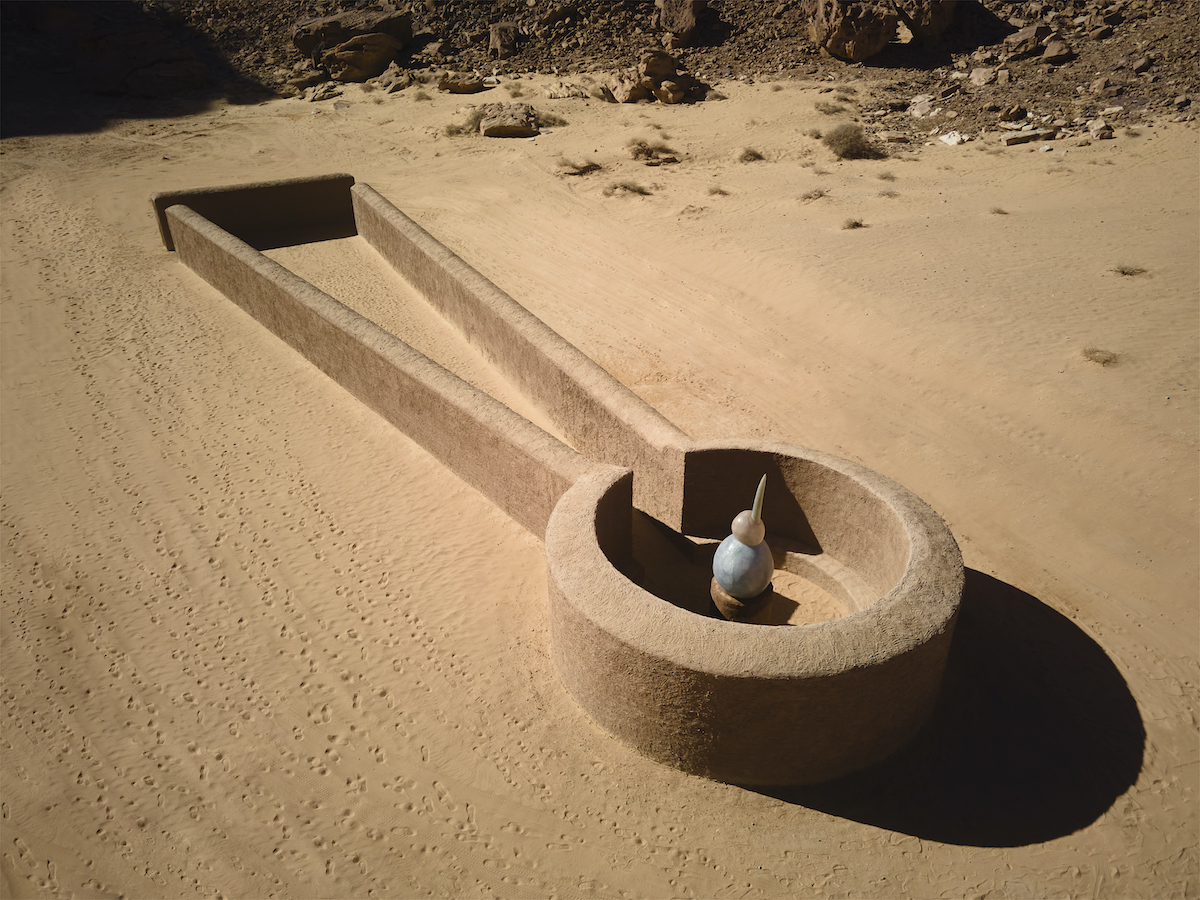
The central theme of Saudi artist Sultan bin Fahad’s art — which incorporates painting, sculpture and installations — is “spirituality and the material culture of Makkah in his native Saudi Arabia,” according to the exhibition brochure. “In his work, he reinterprets histories, stories and narratives with the use of material culture,” it continues. The mud structure in the shape of a desert kite that the artist created for Desert X AlUla is no exception. The mirrors on the outside give the impression of a mirage, while inside is an “urn-like sculpture embossed with four protective symbols traditionally used in Nabatean tombs.”
Zeinab Al-Hashemi
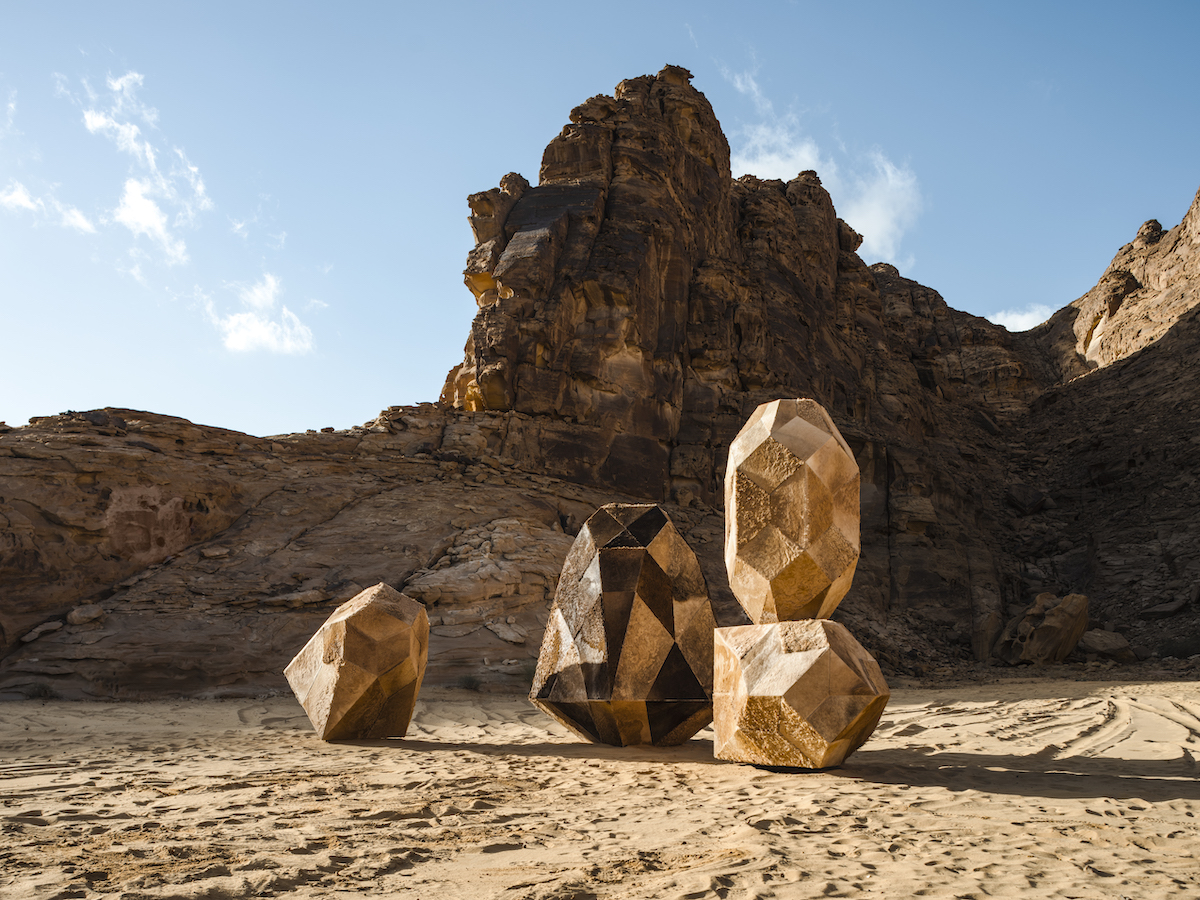
The Dubai-based Emirati artist Zeinab Al-Hashemi often works on large-scale, site-specific installations. “She is fascinated with capturing the transformation of her nation, examining both the contrast of and interdependence between the abstract, geometric shapes of urbanism and the organic forms associated with her country’s natural landscape,” her exhibition biography says. All of which makes her the perfect contributor to Desert X AlUla. For this year’s exhibition, Al-Hashemi created this interactive sculpture, which uses discarded camel skins over an abstract geometric base and is reminiscent of the surrounding rock formations on the site. “Like a camouflage, these camel-hide sculptures merge into the mountains,” the brochure states.
Abdullah Al-Othman
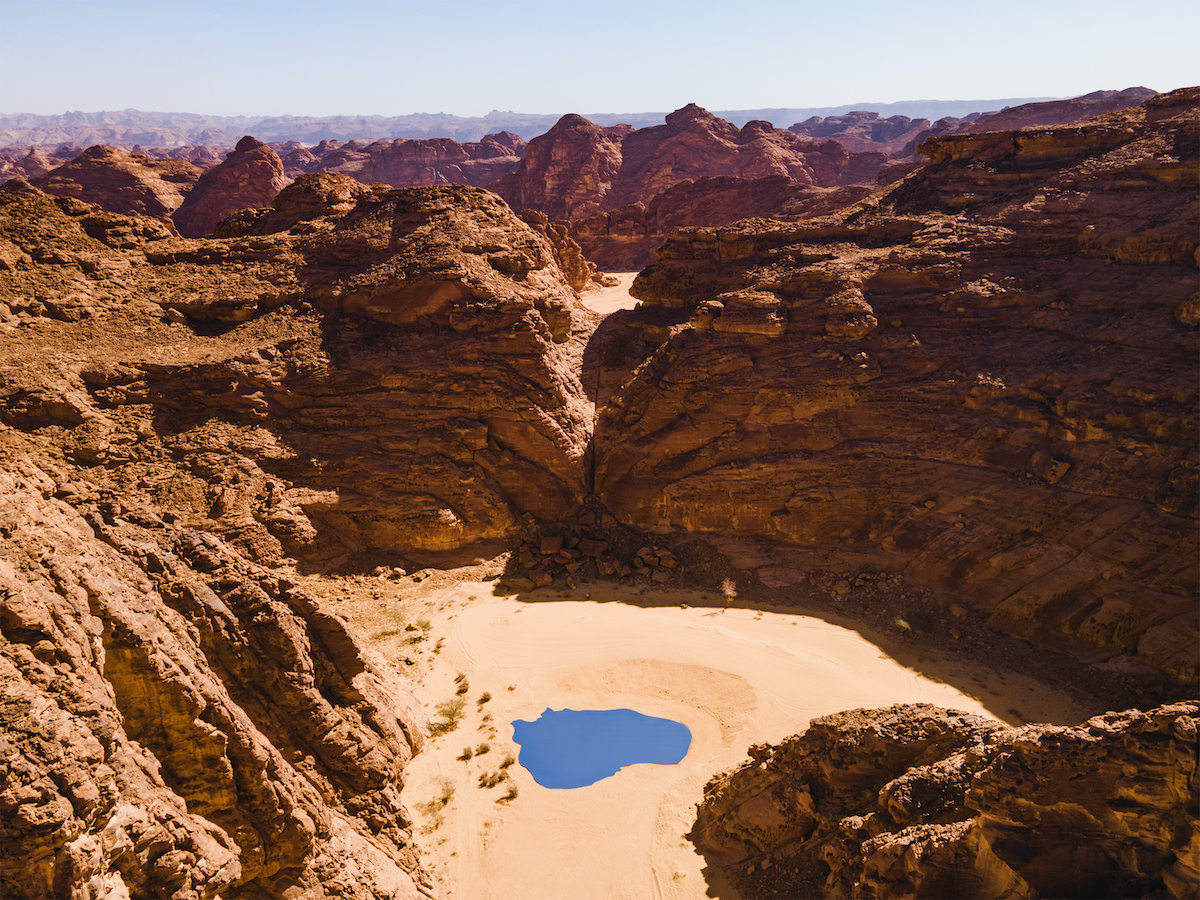
In this stainless-steel sculpture, Riyadh-born artist and poet Abdullah Al-Othman “references theories of light refraction dating back to the early days of desert civilization and culture.” The plinths of Al-Othman’s piece “interact with the light and create a radiant space that seeks to manifest the experience of (seeing a) mirage for the first time,” according to the exhibition brochure. The sculpture is typical of Al-Othman’s conceptual work, which — apart from poetry and sculpture — also includes street art and interventions, and video.
Shaikha Al-Mazrou
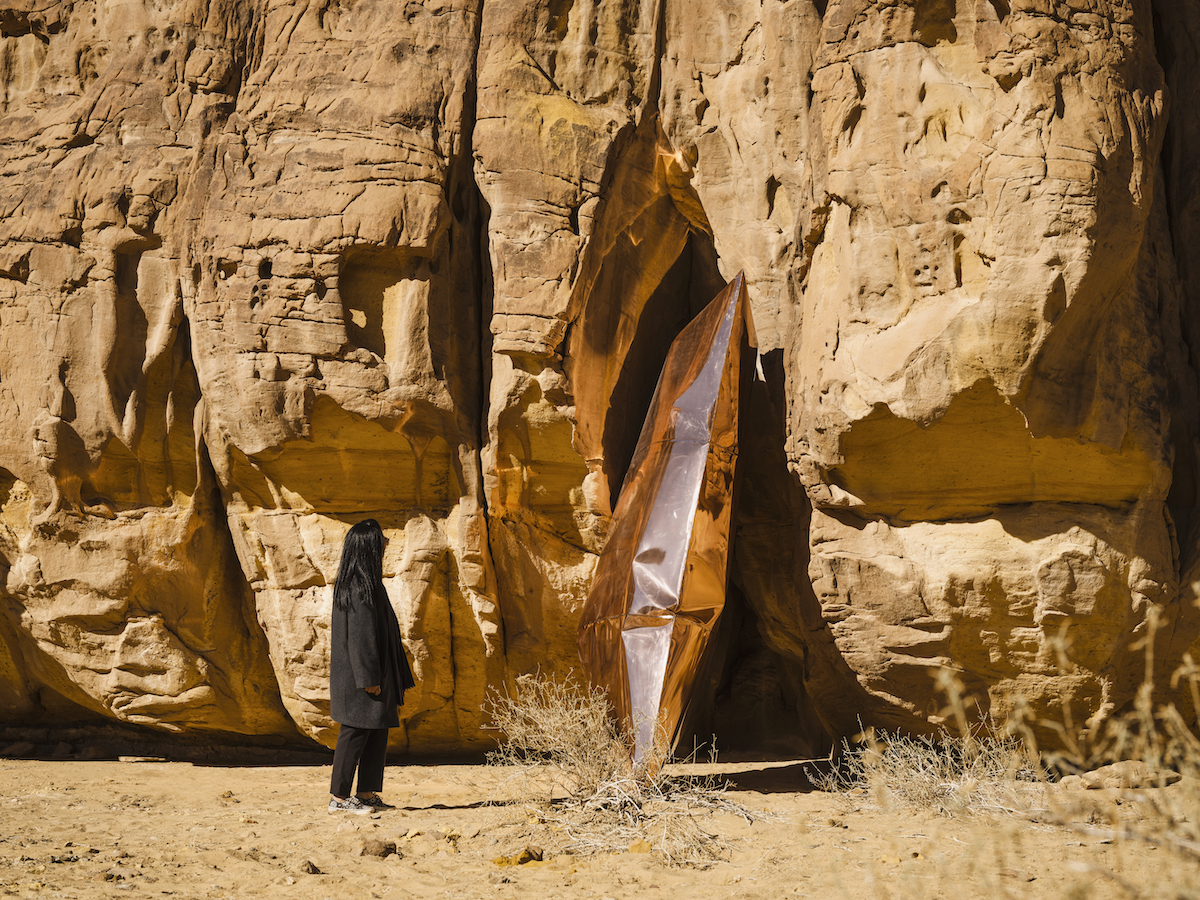
The Emirati artist Shaikha Al-Mazrou’s contribution to Desert X AlUla is this installation of steel structures that are “wedged in the voids of rocks, tensely balanced in the landscape, occupying the liminal state between stasis and movement, creating a silent-yet-imposing composition suspended in inertia.”
Khalil Rabah

The Palestinian artist Khalil Rabah is a major figure in his country’s art scene. His installation for the biennale references the olive tree orchards of his homeland, which have become a symbol of resistance, as well as of occupation. Much of Rabah’s work — like many of his Palestinian contemporaries — deals with displacement and identity. The work “creates a mirage of an orchard of olive trees, which stand here in the desert as living things displaced from their indigenous land and longing to be repatriated,” the exhibition brochure states, adding that the piece is “an exploration of territory, survival and citizenship.”
Ayman Zedani
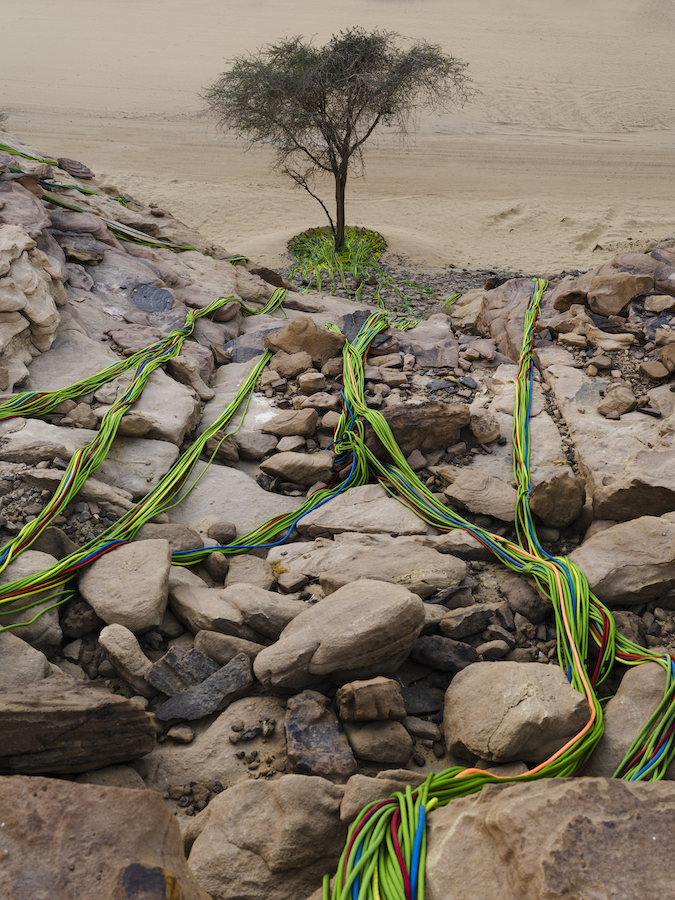
Much of Saudi artist Ayman Zedani’s work focuses on the impact of mankind on the natural environment and “attempts to renegotiate the relationship between human and non-human, animal and plant, organic and inorganic.” His conceptual soundscape installation for Desert X AlUla uses audio projection of “music, voices and footsteps, creating a cacophony of sounds that add to the chimes of nature.”


