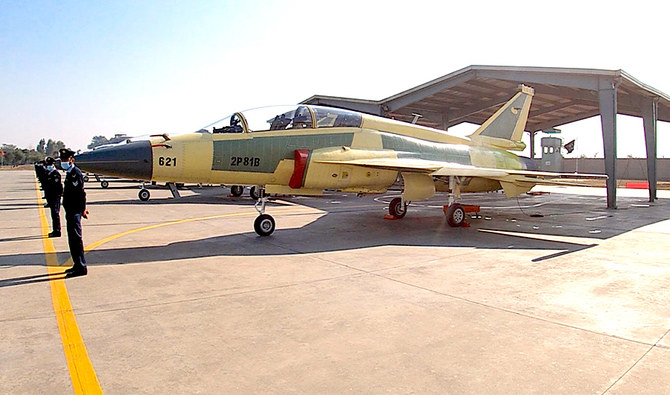
ISLAMABAD: The Pakistan Air Force (PAF) is all set to induct a first batch of next generation JF-17 Thunder block III fighter jets built jointly with China to upgrade its fleet by the end of next month, a PAF spokesperson has said.
JF-17 Thunder, an advanced, light-weight, all weather, multi-role fighter aircraft with air-to-air and air-to-surface combat capabilities, was developed as a joint venture between the Pakistan Aeronautical Complex (PAC) and the Chengdu Aircraft Industry Corporation (CAC) in China. The aircraft will replace Pakistan’s current aging fleet.
The first JF-17 prototype aircraft (called FC-1) was rolled out in May 2003. Basic flight testing was completed in 2007, which marked the arrival of the JF-17 Thunder aircraft in Pakistan, formally presented to the nation as a Pakistan Day gift on 23 March 2007. PAC has delivered nearly 120 JF-17 Block I and II fighter jets to PAF since 2009.
“JF-17 Thunder block III is the latest aircraft of this series and all taxi tests and flight tests have been completed,” a PAF spokesperson told Arab News on Tuesday. “It’s first batch will become part of the PAF fleet by the end of March,” he added, saying there would be a proper induction ceremony on the occasion.
The rollout ceremony of block III was held in December last year, the spokesperson said. The new JF-17 jets will also fly-past at the Pakistan day military parade on March 23, he added.
The Pakistan Day parade is held on March 23 every year to commemorate the Lahore Resolution, which was adopted on the same day in 1940 and laid the foundation for a Muslim-majority state in South Asia.
Last year, Pakistani Interior Minister Sheikh Rashid Ahmed said the Pakistan Day parade in 2022 would include a fly-past of Chinese multirole J-10C fighter jets, saying the planes had been acquired in response to arch-rival India’s purchase of French-made Rafale combat jets, which employ dual-capable systems that can be modified as nuclear weapon delivery platforms.
In 2016, India signed a deal to buy 36 Rafale fighter jets from France for around $8.7 billion, the country’s first major acquisition of combat planes in two decades and a boost for Prime Minister Narendra Modi’s plan to rebuild an aging fleet. India has so far received 26 of the 36 planes.
“It has the world’s most advanced Airborne Electronically Scanned Array (AESA) radar and the PL-15 missile, which has the highest and the longest range,” the PAF spokesperson said about the new JF-17 Thunder planes. “That is a very big edge, that our home grown fighter has the latest missile and radar technology.”
Improvements incorporated in the Thunder with respect to the previous Block II include an AESA NRIET KLJ-7A radar of Chinese origin and a wide-angle holographic HUD, derived from the one used by the J-20 stealth fighter. The jets also have a refurbished cockpit with updated display elements, updated avionics, a 3-axis fly-by-wire flight system, HMD (pilot’s helmet mounted sight), an extra hardpoint under the fuselage for target designation, reconnaissance or ECM pods, increased use of composite materials in fuselage and wing structure, dual wing pylons for medium-range air-to-air missiles, upgraded self-defense systems and news weapons such as PL-10 and PL-15 air-to-air missiles.
Air Vice Marshal (retired) Ikramullah Bhatti said the latest jets would neutralize the edge gained by the Indian air force (IAF) in long range missiles by purchasing Rafales.
“This aircraft will have capability to carry beyond visual range missiles which will help in countering the Indian air-force’s new induction of Rafale,” Bhatti told Arab News, adding that PAF would have much better capability in long range missiles with PL-15 missiles that have an over 200 km range and would neutralize IAF’s edge.
Syed Muhammad Ali, director, strategic defense and security at the Islamabad-based Center for Aerospace and Security Studies (CASS), said the new aircrafts offered high tech avionics with AESA radars that provided detection of fighter-sized targets at around 170 kilometers away, including multimode look-down and shoot-down capability.
“Pakistan has a block building approach and the Block III variant of JF-17 will be the country’s first 4.5-generation aircraft and most advanced jet equipped with a modern radar system, upgraded sensors, software, and engine to adapt to rapidly evolving technologies,” Ali told Arab News.
With the new planes’ induction, PAF will restore its technological edge in the air combat arena in South Asia and also improve its capability against India’s new S-400 air defense system, Ali said.


![]()

Pakistan air force says will induct latest JF-17 block III fighter jets next month
Short Url
https://arab.news/gh8kt
Pakistan air force says will induct latest JF-17 block III fighter jets next month
- PAF spokesperson says block III jets have world’s most advanced airborne electronically scanned array radar, long range PL-15 missile
- Defense experts say induction of JF-17 block III aircrafts will neutralize Indian Air Force’s Rafale and S-400 air defense system
Latest updates



Recommended


© 2026 SAUDI RESEARCH & PUBLISHING COMPANY, All Rights Reserved And subject to Terms of Use Agreement.