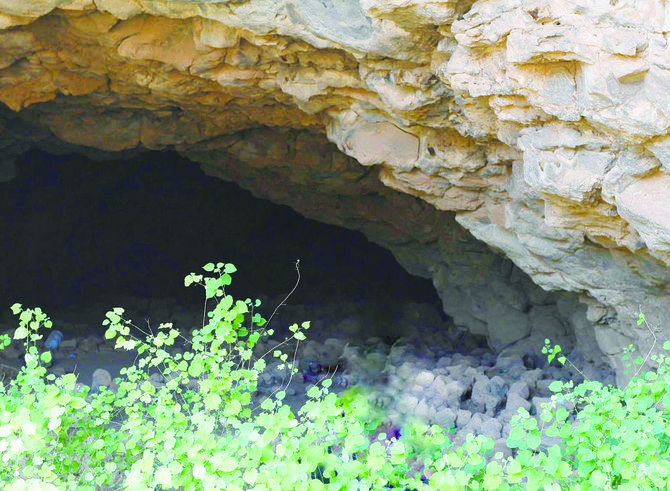
Umm Jirsan cave, located in Harrat Khaybar, north of Madinah, is an important natural landmark, given its moderate weather throughout the year and its unique geological composition, making it a top destination for tourists, explorers, researchers, amateurs and hikers from all over the world.
Geologist Abdul Aziz bin Laboun explained that the Umm Jirsan is a long underground lava tube, tilting from east to west, with multiple openings, inside which many tunnels and narrow and wide grooves can be found, in addition to overhangs of black basalt and calcite.
The cave is about 1,500 meters long, 45 meters wide, with a maximum height of 12 meters, making it the Kingdom’s longest lava tube system. It is surrounded by many craters and volcanic mountains, including Jabal Al-Qadar, Jabal Al-Abyad, Jabal Al-Bayda and Jabal Al-Aqar.
The tube receives torrential water through its openings, and water flows through and collects sand, dust, and clay, and some plants and trees grow inside it, Bin Laboun noted, adding that Umm Jirsan is cold in summer and warm in winter, which is what makes it a top destination for both humans and animals.
He pointed out that traces of ancient humans have been found inside, such as stone tools, writings and drawings on the rocks, in addition to bones, skulls and fossils that were studied using radiocarbon technology, dating back about 7,000 years.


![]()

ThePlace: Umm Jirsan, Saudi Arabia’s longest lava cave located in Harrat Khaybar
Short Url
https://arab.news/zbvjs
ThePlace: Umm Jirsan, Saudi Arabia’s longest lava cave located in Harrat Khaybar
- The cave is about 1,500 meters long, 45 meters wide, with a maximum height of 12 meters, making it the Kingdom’s longest lava tube system


Latest updates


© 2026 SAUDI RESEARCH & PUBLISHING COMPANY, All Rights Reserved And subject to Terms of Use Agreement.