

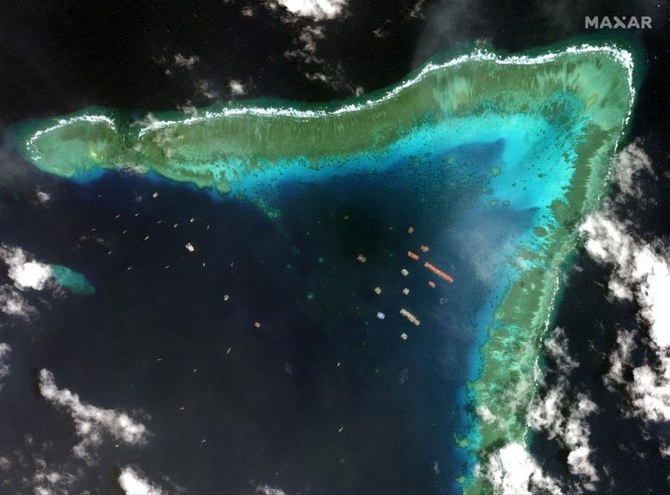
MANILA, Philippines: The Philippine defense chief signed an 18.9 billion peso ($378 million) deal Friday with India to acquire the military’s first shore-based anti-ship missile system that he said would be used to defend the country’s sovereignty especially in the disputed South China Sea.
Defense Secretary Delfin Lorenzana signed the contract with BrahMos Aerospace Director General Atul Dinkar Rane in a ceremony via video and a face-to-face meeting attended by Philippine and Indian government and military officials.
Despite financial constraints and the coronavirus pandemic, the Philippines has managed to proceed with a decades-long program to modernize its military, one of Asia’s most underfunded. It has acquired warships, aircraft and weapons to deal with Muslim and communist insurgencies and China’s increasingly assertive actions in the South China Sea.
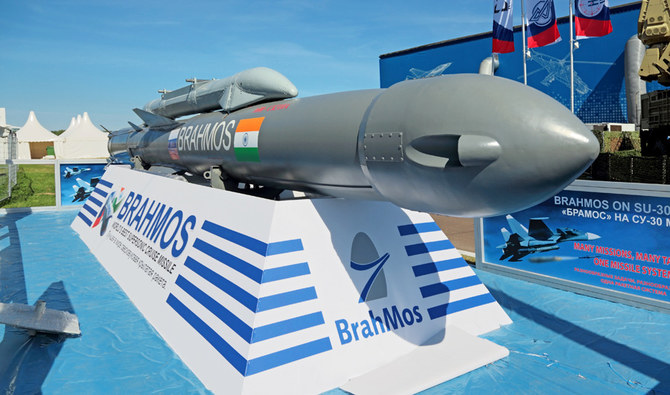
A Brahmos anti-ship missile system is on display in this file photo. (Shutterstock)
“As the world’s fastest supersonic cruise missiles, the BrahMos missiles will provide deterrence against any attempt to undermine our sovereignty and sovereign rights, especially in the West Philippines Sea,” Lorenzana said, using the Philippine name for the disputed waters.
The missile firepower “will provide counterattack capabilities within the Philippines’ exclusive economic zone,” he said.
Lorenzana was referring to a 200-nautical-mile (370-kilometer) stretch of sea where coastal states have been granted exclusive rights to explore and tap fish and other sea resources under the 1982 UN Convention of the Law of the Sea. Many disputes involving Chinese coast guard and fishing ships and Philippine vessels have occurred in the waters off the Philippine archipelago.
The weapons system consists of three batteries of missiles, mobile land-based launchers, training for operators and maintenance units and logistical support, the Department of Defense said. The missiles could travel up to three times the speed of sound, making it hard to interdict, Philippine military officials said, adding the missiles would be employed mainly by the coastal defense units of the Philippine marines.
Security officials from both countries signed a defense cooperation pact in March last year that allowed the Philippines to become the first foreign buyer of the high-tech missiles developed by India and Russia.


