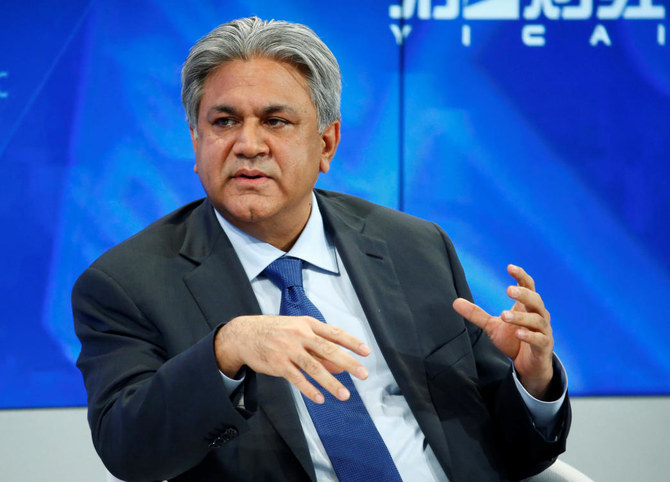
DUBAI, United Arab Emirates: A regulatory body in Dubai said Thursday it is fining the Pakistani-born founder of Abraaj Group, the now defunct Mideast private-equity firm accused of fraud, a staggering penalty of $135.5 million.
The Dubai Financial Services Authority DFSA said CEO Arif Naqvi was slapped with the financial penalty “for serious failings.” The regulator also said it was fining former Abraaj senior manager and one-time Chief Operating Officer Waqar Siddique $1.15 million.
The DFSA said the fine reflects the seriousness of Naqvi’s alleged misdoings and is based on his earnings from the Abraaj Group.
Although the fine is only provisional, it is the latest twist in a saga that has spanned multiple continents and touched some of the world’s wealthiest people. Abraaj managed $14 billion for investors at its peak before its collapse in 2018.
Naqvi and Siddique dispute the regulator’s decision and have referred the notices to the Financial Markets Tribunal, where the parties will present their cases. The DFSA’s decisions are therefore provisional.
Two men attempted unsuccessfully through the tribunal to prevent the notices of fines from being published and to hold the tribunal hearings in private.
Naqvi has asserted his innocence as he fights extradition from the UK to the US, where prosecutors allege that Abraaj Group enticed American investors with the promise of socially responsible investments when instead it engaged in massive fraud. He’s also accused of taking hundreds of millions of dollars from Abraaj for personal gain.
Some of the US investors allegedly defrauded include the Bill & Melinda Gates Foundation and a US government agency that facilitates American business investments in hospitals in developing countries.
A former top executive at the Dubai-based firm told a US court in 2019 that he was wrong to be silent as Abraaj Group tried to recover from massive cash shortfalls by exaggerating its finances to win over new investors. After signing a cooperation deal with US prosecutors, Egyptian-born Mustafa Abdel-Wadood, who oversaw Abraaj investments as a managing partner, pleaded guilty to charges including racketeering conspiracy and securities and wire fraud.
Naqvi founded Abraaj Group in 2002, from which it grew to become the largest private-equity firm in any emerging market. He was the firm’s largest shareholder and its ultimate decision maker, according to the regulator.
The regulator alleges that Navqi used a Cayman Islands-registered firm to mislead investors, withheld sale proceeds from investors less likely to complain or challenge the firm, drafted misleading statements to investors to cover up misuse of their funds, and was involved in the cover-up of a $400 million shortfall by borrowing money to produce bank balances and statements.
Abraaj Group operated out of Dubai’s financial free zone known as Dubai International Finance Center. Known as the DIFC, it is the financial heart of Dubai characterized by sleek mirrored business towers, Michelin-star restaurants and luxury hotels for traveling executives.


![]()

Dubai regulator issues $135.5 million fine on Pakistani founder of Abraaj Group
Short Url
https://arab.news/7jy28
Dubai regulator issues $135.5 million fine on Pakistani founder of Abraaj Group
- Dubai Financial Services Authority DFSA said Arif Naqvi was slapped with the financial penalty ‘for serious failings’
- It also said it was fining former Abraaj senior manager and one-time Chief Operating Officer Waqar Siddique $1.15 million
Latest updates




© 2026 SAUDI RESEARCH & PUBLISHING COMPANY, All Rights Reserved And subject to Terms of Use Agreement.