

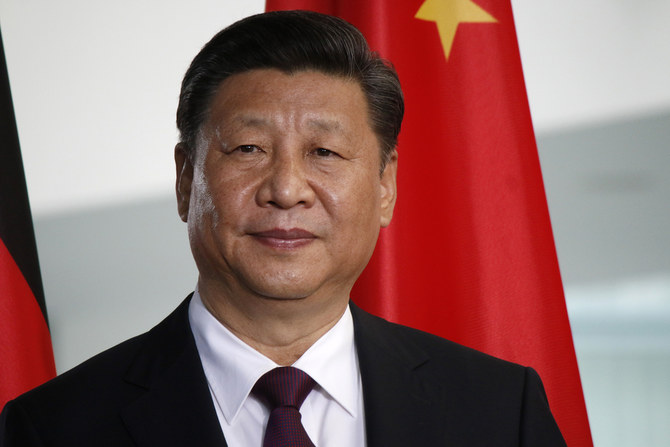
China’s Xi: Climate goals should not reduce our productivity

(Shutterstock)
Short Url
Updated 26 January 2022
Follow

China’s Xi: Climate goals should not reduce our productivity

RIYADH: China’s president, Xi Jinping, has warned the country’s climate objectives should not hold back productivity in the economic powerhouse.

Speaking at a Politburo session on Tuesday, Xi insisted that efforts to decarbonise the Asian country must not jeopardize the supply of vital commodities.

In 2020, Xi vowed to peak emissions by 2030 and deliver a net zero nation by 2060.

According to state news agency Xinhua, the president said: “Reducing emissions is not about reducing productivity, and it is not about not emitting at all.”

He added: “We must stick to the overall planning and ensure energy security, industrial supply chain security and food security at the same time as cutting carbon emissions.”

China’s drive to cut emissions led to a limit in coal, metal, and fertilizers production, causing an increase in their prices. This negatively affected inflation concerns in the country.

However, the country is expected to maintain stable oil, gas, and coal production — particularly amid power shortages across the nation.


Egypt inflation slows to 10.1% in January: CAPMAS  

Updated 16 sec ago
Follow

Egypt inflation slows to 10.1% in January: CAPMAS  

JEDDAH: Egypt’s annual inflation eased to 10.1 percent in January from 10.3 percent a month earlier, while consumer prices rose sharply on a monthly basis, highlighting persistent pressure on household costs. 

The consumer price index climbed to 268.1 points in January from 264.2 in December, the Central Agency for Public Mobilization and Statistics, also known as CAPMAS, said. Monthly inflation accelerated to 1.5 percent, compared with 0.1 percent in December. 

The government has stressed measures to contain inflation, with directives from President Abdel Fattah El-Sisi calling for coordination between the Central Bank of Egypt and the Ministry of Finance. 

Earlier, Prime Minister Mostafa Madbouli said these efforts aim to curb inflation pressures, support economic stability and encourage private sector growth. 

In its latest report, CAPMAS stated: “Among the most important indicators in price changes.... an increase in the prices of the grains and bread group by 0.1 percent, the meat and poultry group by 5.1 percent, the fish and seafood group by 1.7 percent, the dairy, cheese, and eggs group by 0.5 percent, the oils, and fats group by 0.2 percent.”  

Price movements in January contrasted with patterns seen in December 2025. Essential food and beverage categories recorded significant increases after some declines in the previous month. The meat and poultry group rose 5.1 percent in January following a 1.1 percent decline in December. 

Vegetables increased by 8.5 percent after falling 2 percent in December, while coffee, tea, and cocoa rose by 6.7 percent, up from 0.1 percent. Fish and seafood increased by 1.7 percent, dairy, cheese, and eggs by 0.5 percent, grains and bread by 0.1 percent, and tobacco and oils and fats rose by 0.7 percent and 0.2 percent, respectively. 

Housing-related costs continued to rise, with actual rents up 1.6 percent, imputed rents up 1.9 percent, and housing maintenance and repair up 0.8 percent. 

The report also showed hospital services increased by 3.4 percent, while outpatient clinic services rose by 1.0 percent, compared with December increases of 1.8 percent and 1.0 percent, respectively. 

Other consumer categories recorded moderate increases. Clothing and accessories rose by 1.4 percent, ready-made clothing by 1.1 percent, footwear by 0.4 percent, and cleaning, repair, and clothing rental by 1.0 percent. 

Personal care increased by 0.6 percent and transport services rose 0.3 percent, while household items and equipment rose between 0.2 percent and 0.7 percent. 

On the other hand, fruit prices decreased by 2.5 percent, and home appliances declined by 0.4 percent, continuing trends from December in some sectors.