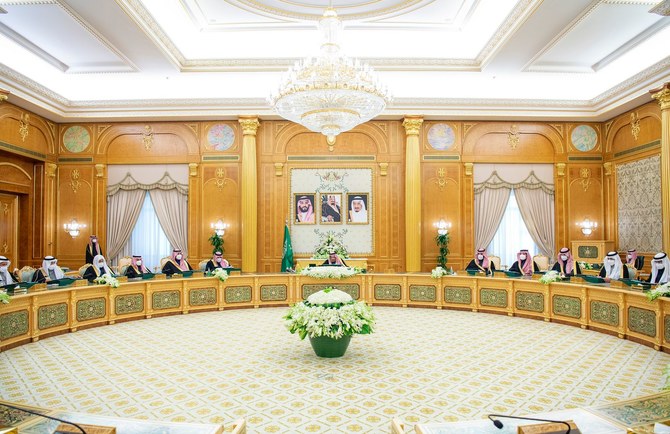
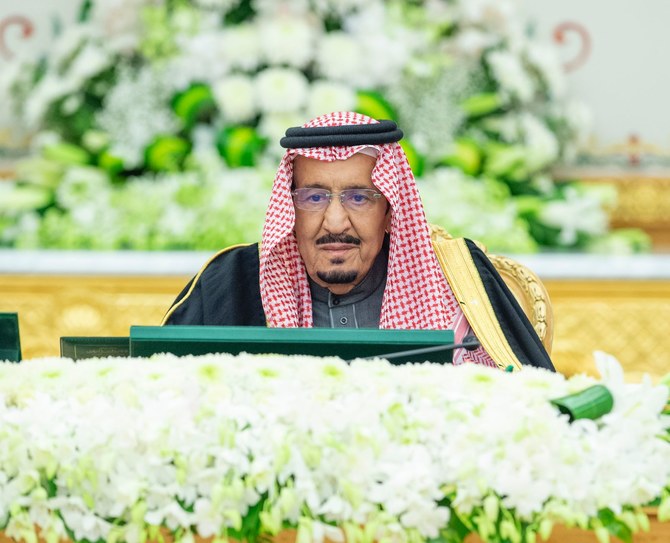

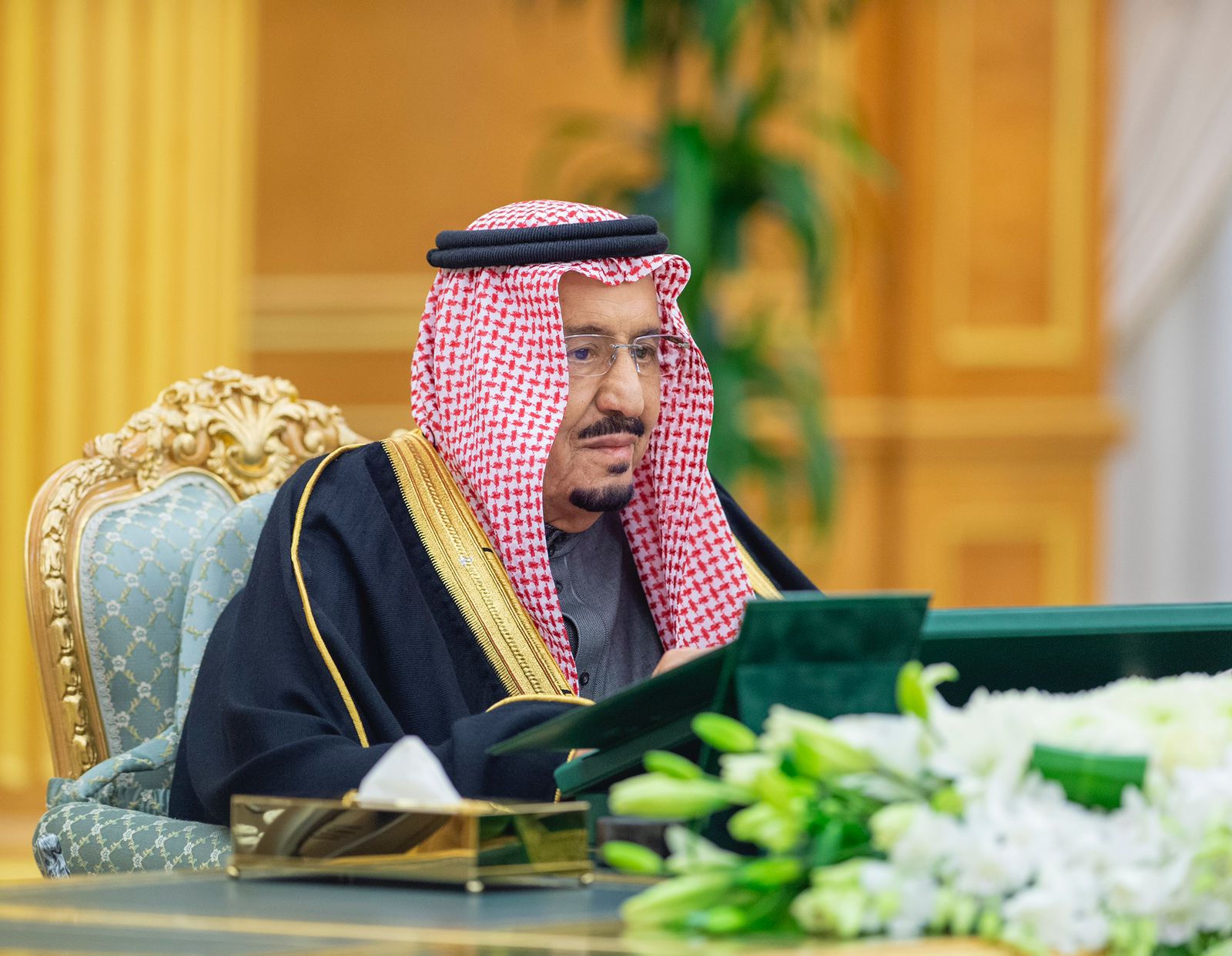
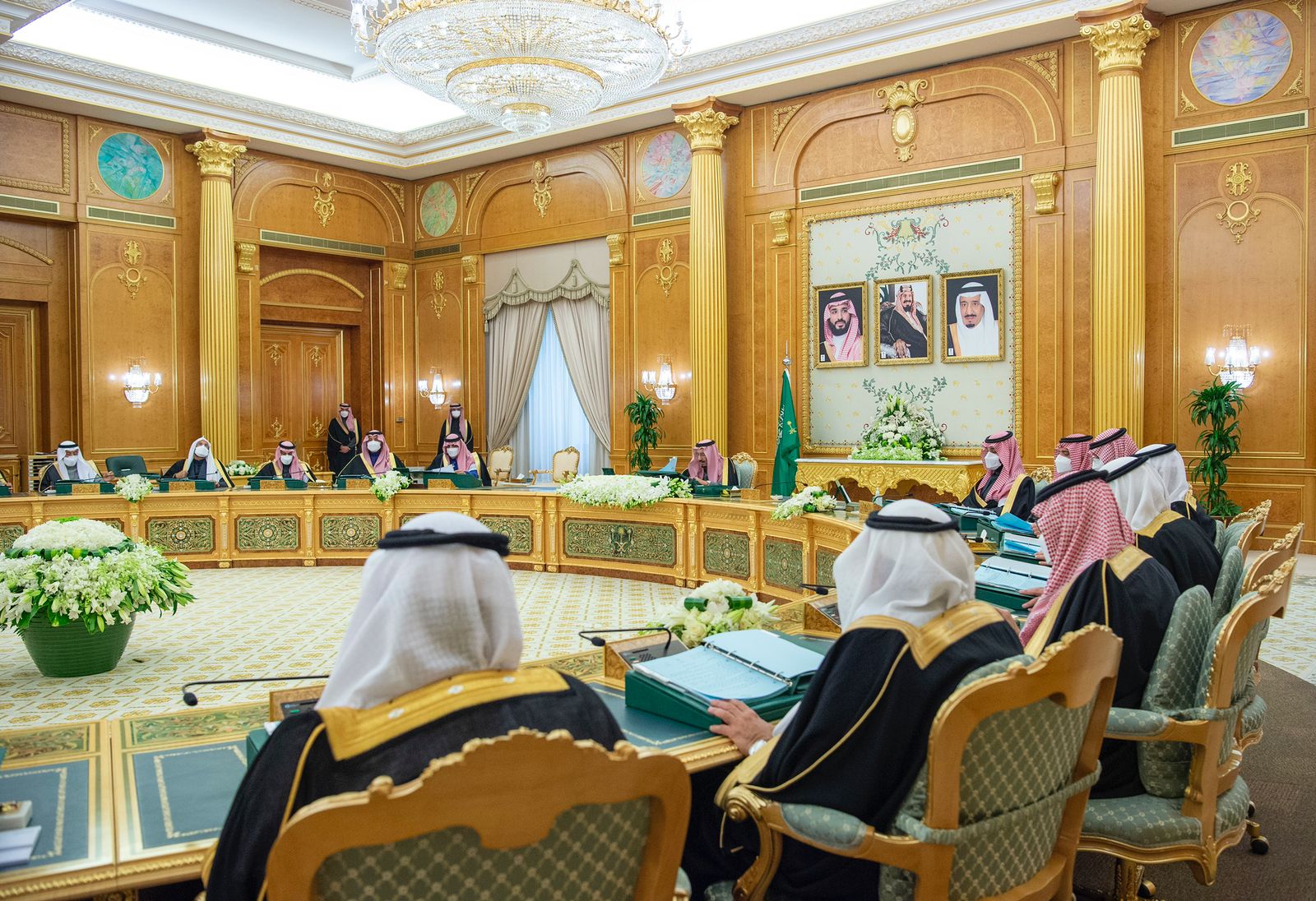
JEDDAH: Saudi Arabia’s King Salman on Tuesday chaired a Cabinet meeting at Al-Yamamah Palace in Riyadh.
The Council of Ministers was briefed on the written message that the king received from South Sudanese President Salva Kiir Mayardit regarding bilateral relations and ways to support and develop them at all levels.
It reviewed the outcomes of meetings and talks that the Kingdom held with a number of countries.
These meetings were aimed at supporting ties, and bilateral and multilateral cooperation in a way that would take relations to new horizons, enhance joint coordination toward international issues, and contribute to the consolidation of security, stability, prosperity, and development in the region and the world.
The council discussed the results of the visit by South Korean President Moon Jae-in to Saudi Arabia and the talks he had with Crown Prince Mohammed bin Salman, during which the two sides reviewed and discussed bilateral relations, ways to support and enhance them. They also discussed regional and international developments and the efforts made in this regard. The council was also briefed on the various field agreements that were reached during the visit.
Acting Media Minister Majed Al-Qasabi told the official Saudi Press Agency that the council discussed developments in various arenas and reiterated the Kingdom’s rejection and condemnation of the attacks launched by the Iranian-backed Houthi militia on civilians and vital installations in Saudi Arabia and the UAE, as well as its attacks on international navigation routes in the Red Sea aimed at destabilizing the region’s security and stability.
The minister added that the council stressed the urgent need for international action, especially by the UN Security Council, to put an end to this aggressive behavior in a manner that preserved international peace and security.
He said the Cabinet touched on what representatives from Western and Gulf Arab countries had concluded after their meeting in Riyadh where they discussed joint efforts to support the stability and prosperity of Sudan.
The Council of Ministers approved draft agreements with Pakistan on prisoner transfer, combating crime, and a memorandum of understanding on combating drug trafficking. It also authorized the minister of interior, or his representative, to negotiate with other countries regarding cooperation against similar crimes.
It commissioned the tourism minister to discuss with Jamaica a draft memorandum of understanding in the field of tourism.
A cooperation agreement between the Saudi Ministry of Tourism and the World Tourism Organization to develop human capabilities through e-learning was also approved.
The council also approved an agreement between Saudi Arabia and Kuwait for cooperation in the field of direct investment promotion, and a draft declaration of intent between the Saudi Ministry of Finance and the UK Foreign, Commonwealth & Development Office. It authorized the Kingdom’s minister of finance, or his representative, to negotiate with the British side in this regard.
The council authorized the chairman of the board of directors at the Saudi Food and Drug Authority to discuss a draft memorandum of cooperation between the Kingdom and Malaysia in the field of mutual recognition of halal certificates for local products.
It approved employee appointments and promotions in several ministries and state agencies.
The in-person appearance of the king at the meeting reflects how Saudi Arabia is returning to normal life despite the COVID-19 pandemic. It also coincides with the return of millions of students to schools.