ISLAMABAD: Special Assistant to Prime Minister on Climate Change Malik Amin Aslam said on Tuesday the green partnership between Pakistan and Saudi Arabia would further strengthen the bilateral relations between the two countries.
Aslam issued the statement during a media talk after holding a meeting with a Saudi delegation which is on a weeklong visit to the country to discuss Pakistan’s environmental initiatives to address the climate change challenge.
Led by Dr. Khalid bin Abdullah Al-Abdulqadir, the chief executive officer of the National Center for Vegetation Cover, the delegation is scheduled to visit plantation sites in different parts of Pakistan along with local experts.
“Today we are starting another chapter in our partnership that is green partnership,” Aslam said during a joint media interaction with members of the Saudi delegation. “We want to offer Pakistan’s experience in [building] national parks and plantation. We hope this green partnership is going to further enhance our brotherly relationship between Pakistan and Saudi Arabia.”
He maintained the leadership of the two countries had developed a very strong green vision.
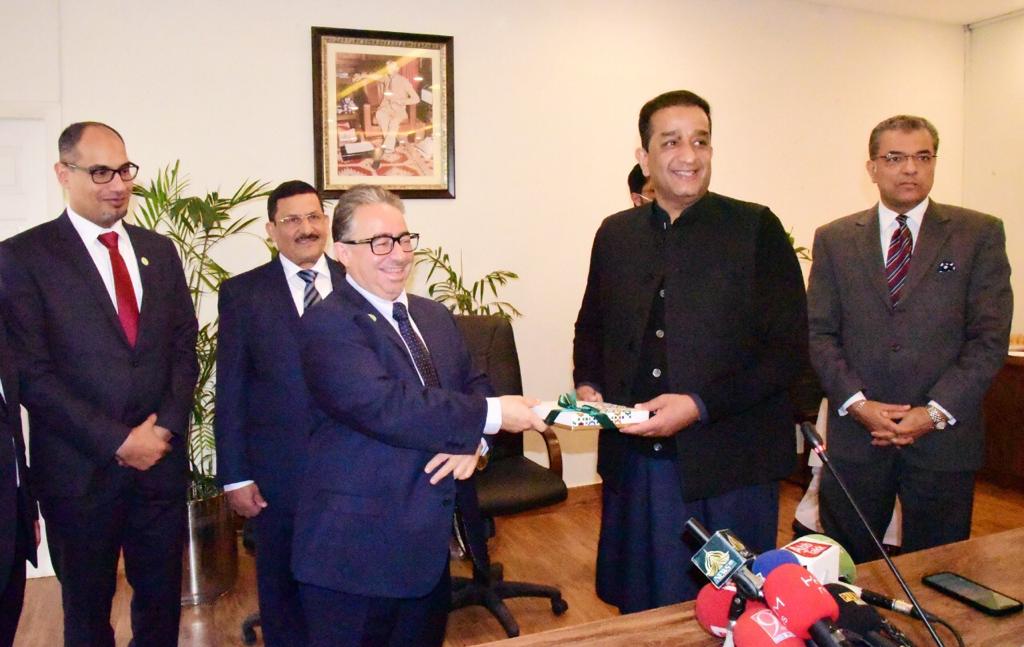
Prime Minister Imran Khan's special aide on climate change Malik Amin Aslam (R) meet a delegation led by Dr. Khalid bin Abdullah Al-Abdulqadir, CEO of the Saudi National Center for Vegetation Cover (L) in Islamabad on Jan 25, 2022. (PID)
Speaking to journalists, Al-Abdulqadir noted: “We just launched a 10 billion tree plantation initiative in Saudi Arabia. And we have also launched 40 billion trees plantation in the Middle East.”
“There is a lot to be learned [from each other] and a lot of information to be exchanged as you in Pakistan have started green initiative a few years ago,” he added.
In October last year, Saudi Crown Prince Mohammed bin Salman announced two initiatives amounting to $10.39 billion to combat climate change.
The projects include an investment fund for carbon economy solutions in the region and a global initiative that will contribute to clean fuel solutions to feed more than 750 million people worldwide. Saudi Arabia will take care of about 15 percent of the cost.

Prime Minister Imran Khan's special aide on climate change Malik Amin Aslam (R) meet a delegation led by Dr. Khalid bin Abdullah Al-Abdulqadir, CEO of the Saudi National Center for Vegetation Cover (L) in Islamabad on Jan 25, 2022. (PID)
It may be recalled that Prime Minister Imran Khan had also traveled to the kingdom in October 2021 on the invitation of the Saudi crown prince to attend the Middle East Green Initiative (MGI) summit in Riyadh and shared his perspective on challenges faced by developing countries due to climate change.
Khan reiterated Pakistan’s support in the implementation of the Saudi initiatives and highlighted the significance his country attached to its strategic ties with the kingdom.
The prime minister told the crown prince his country was willing to share “all the experience that we have had in so far planting 2.5 billion trees in Pakistan” with Saudi Arabia to help with the kingdom’s environmental initiatives.
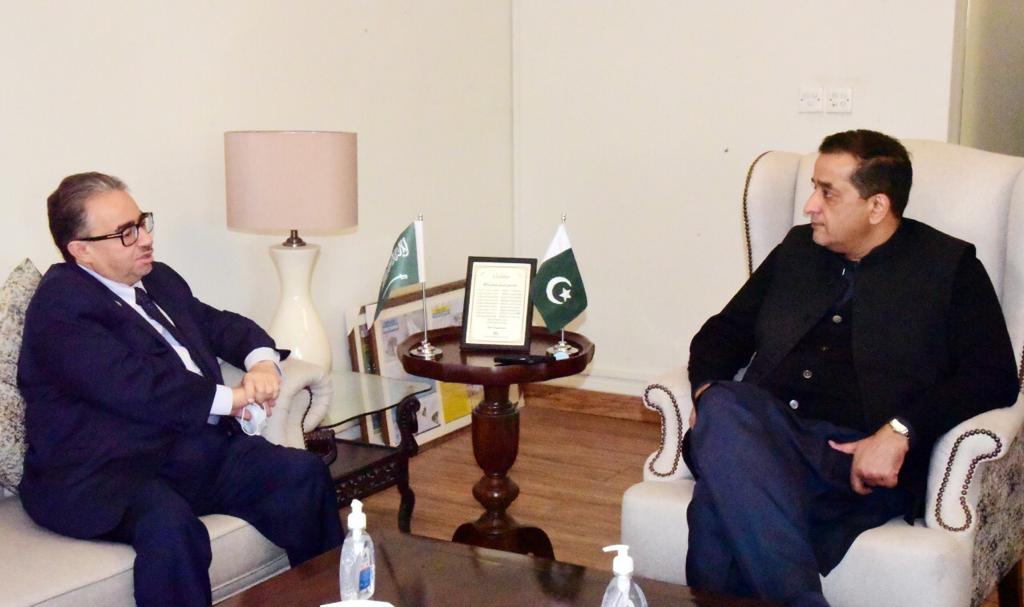
Prime Minister Imran Khan's special aide on climate change Malik Amin Aslam (R) meets Dr. Khalid bin Abdullah Al-Abdulqadir, CEO of the Saudi National Center for Vegetation Cover (L) in Islamabad on Jan 25, 2022. (PID)