

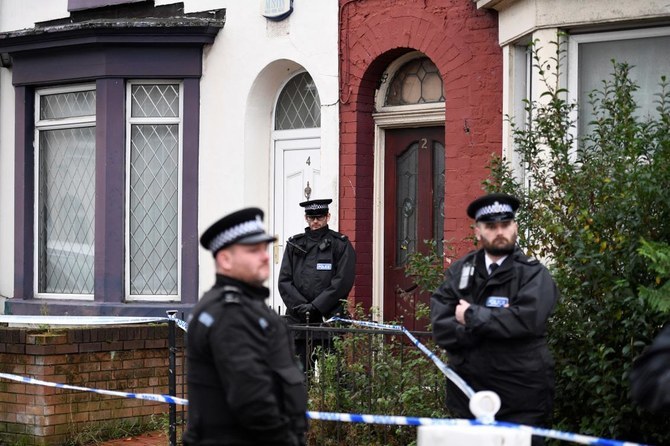

LONDON: A man who blew himself up in an attempted attack on a women’s hospital in England was rejected for an asylum application six years before the failed bombing, it has emerged.
Iraqi-born Emad Al-Swealmeen died after his homemade bomb detonated in a taxi outside Liverpool Women’s Hospital in November 2021. He was the only person killed or harmed.
A series of papers obtained by the BBC and other news outlets reveal new information about the years leading up to his failed attack, and raise questions about the UK’s asylum system.
Al-Swealmeen, 32, first visited Britain in 2013, when he entered on a visitor’s visa and was fingerprinted — a crucial step that later helped authorities uncover a string of lies he told as he sought asylum.
He returned to the UK in May 2014 with a Jordanian passport, but falsely claimed to be of Syrian heritage in his asylum applications, according to the papers.
A judge heard at the time that an Arabic-language expert identified his speech patterns to be Iraqi, and that his story of oppression and suffering in Syria was unlikely to be a retelling of his own experience.
“His account of his time in Syria gives the impression of someone quoting information that is in the public domain rather than having first-hand experience,” ruled the judge when rejecting his application for asylum.
“The appellant did not identify himself with any particular faction or indicate that he would be at risk other than in a general sense.”
An appeal against the decision was then dismissed in 2015. Al-Swealmeen applied again in 2017 under a new name, and was once again rejected in 2020.
He appealed that rejection last year, but a decision on that appeal was never made because months later he was killed in his attack on the hospital.
It is not clear why he was not removed from Britain after his asylum claims were rejected and his falsehoods exposed.
The documents also detailed a slew of mental health issues he was struggling with, including depression, anxiety and post-traumatic stress disorder.
It also emerged that Al-Swealmeen had been imprisoned in Iraq for a serious assault, and had previous convictions in Liverpool for possession of an offensive weapon.
He was caught waving a knife at passers-by in a Liverpool underpass, and was detained under the Mental Health Act.
The Home Office did not comment on the specific circumstances of Al-Swealmeen’s case, but told the BBC that it is “fixing the broken asylum system” in its current legislation.
A spokesperson said: “The new plan for immigration will require people to raise all protection-related issues up front, to tackle the practice of making multiple and sequential claims and enable the removal of those with no right to be in our country more quickly.”


