
LONDON: A covert US task force came close to decimating a major area in Syria by bombing a dam that the Pentagon had put on a “no-strike list,” a new report claims.
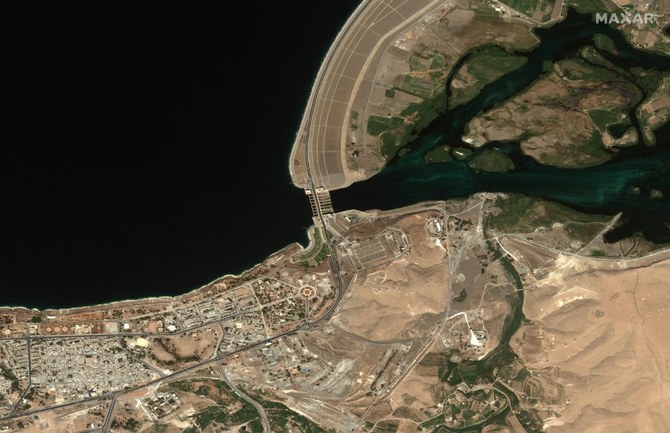
In 2017, the American unit bombed the Tabqa dam on the Euphrates in eastern Syria, upstream of Raqqa, where Daesh fighters were occupying the control towers.
When the attack was originally reported, the US and the Kurdish-led Syrian Democratic Forces claimed that limited munitions were used to seize the location, with the head of the anti-Daesh coalition describing rumors that it was bombed as “crazy reporting.”
But new analysis by the New York Times, which has uncovered and reviewed a slurry of bombing incidents from the war against Daesh, claimed that three 2,000-lb bombs were deployed.
The attack risked tens of thousands of lives, destroying the dam’s machinery and requiring emergency intervention to prevent the reservoir from flooding. The dam was only saved due to a “bunker-buster” bomb failing to explode.
On March 26, 2017, as the SDF closed in on Raqqa, the US launched the strike with support from its Kurdish allies on the ground, with whom it had established a close relationship for calling in high-powered attacks.
The SDF called for a B-52 — the long-range strategic bomber that has been in continual service since the 1950s — as the fighting party was being blocked from advancing by Daesh fighters further ahead up the reservoir.
Spotting the Islamists in fortified positions in the control towers, a bombing run was requested.
Task Force 9 — the US Special Operations force working alongside the SDF on the Raqqa advance — was warned that the dam should not be bombed when it asked the Pentagon’s Defence Intelligence Agency to determine which munitions could be used.
But the unit ignored this advice, using an emergency protocol that allowed it to call in airstrikes beyond the ordinary chain of command during sudden life-threatening moments, such as the battle with Daesh at the reservoir.
However, crew logs from the B-52 flight that undertook the bombing run said it had been required for “terrain denial,” with no reference to lives being at risk from Daesh fighters.
The bombing run was devastating. Fifty feet of water quickly rose as the machinery was bust, with dams on the Euphrates in Turkey further upstream rushing to slow the flow.
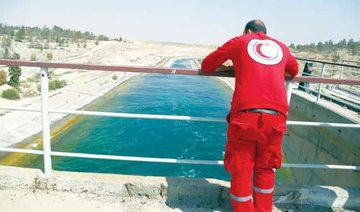
A one-day ceasefire was called to allow a group of 16 engineers from all sides of the conflict to lift the floodgates and prevent further damage.
Three of those engineers were killed after they had successfully used a crane to lift the gates, bombed by a drone while driving home.
The dam strike reportedly shocked US Air Force personnel and military planners. Scott Murray, a retired USAF colonel, was quoted by the NYT as saying: “Using a 2,000 lb bomb against a restricted target like a dam is extremely difficult and should have never been done on the fly. Worst case, those munitions could have absolutely caused the dam to fail.”
The Pentagon defended the strike, saying it had targeted the dam’s control towers, not its structure.
“Analysis had confirmed that strikes on the towers attached to the dam were not considered likely to cause structural damage to the Tabqa dam itself,” said Bill Urban, a US Central Command spokesman, adding that the dam had not collapsed. “That analysis has proved accurate.”