
Google dedicates doodle to slain Pakistani activist Perween Rahman

Google Doodle celebrates the late Pakistani activist Perween Rahman with a doodle marking her 65th birthday anniversary on January 22, 2022, with a customized homepage on the Google search engine. (GoogleDoodles/Twitter)
Short Url
Updated 22 January 2022
Follow

Google dedicates doodle to slain Pakistani activist Perween Rahman

  • Perween Rahman was killed by gunmen in Karachi in March 2013
  • She was an internationally renowned architect, urban planner and social activist

ISLAMABAD: Google on Saturday celebrated the late Pakistani activist Perween Rahman with a doodle marking her 65th birthday anniversary.
Rahman, an internationally renowned architect, urban planner and social activist, was gunned down in a drive-by shooting on her car in Karachi on March 13, 2013 by members of a militant outfit. 
“Today’s Doodle celebrates the 65th birthday of Pakistani social activist, architect, and urban planner Perween Rahman, who devoted her life to uplifting marginalized communities,” Google said. 
At the time of her assassination, Rahman was heading the Orangi Pilot Project initiative, which fought for the land rights of low-income residents in Karachi’s Orangi area and worked on providing housing, water supply, infrastructure, schools and sanitation to the community there. 
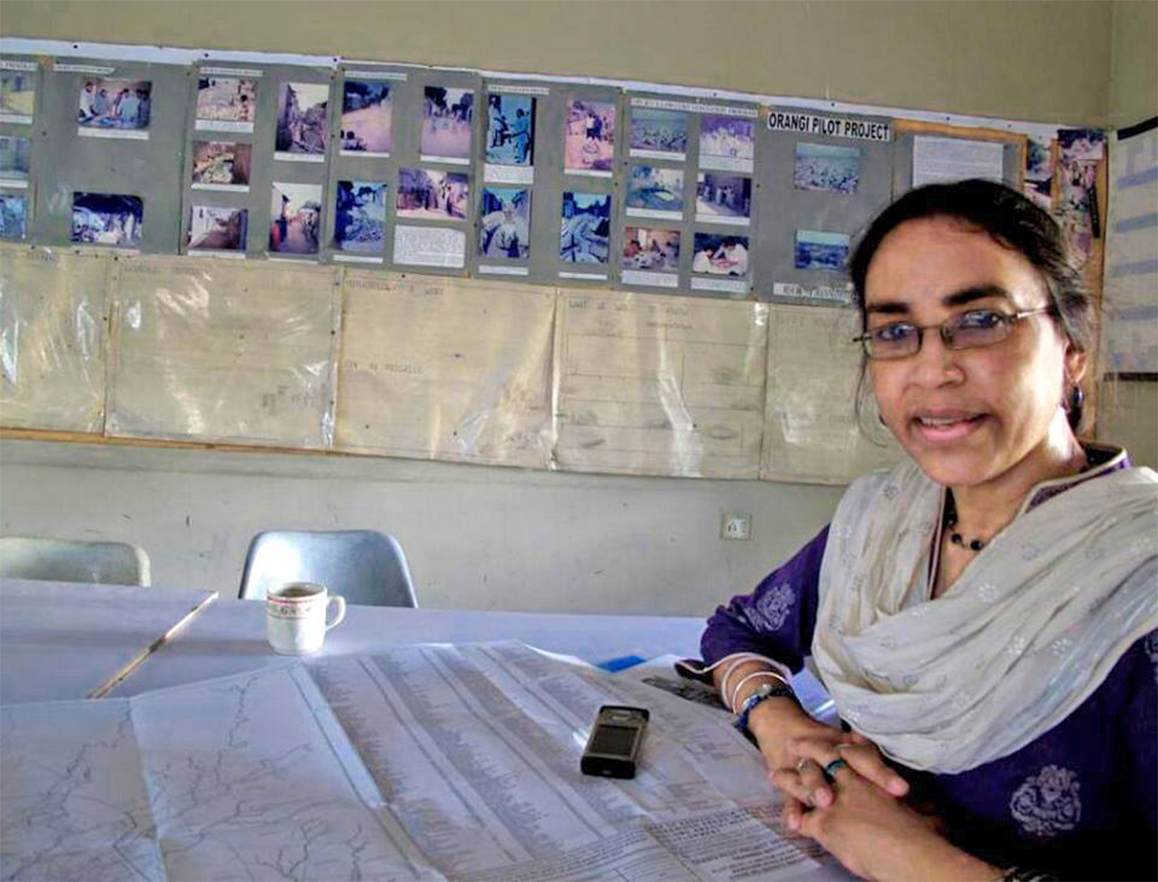


The undated photo shows the late Pakistani activist Perween Rahman. (Photo courtesy: Justice for Perween Rahman/Facebook)

Google said: “From meticulously documenting property boundaries and ownership information to spearheading education and community engagement initiatives, Rahman’s work soon became integral in protecting the region’s precarious community.”
Together with the government, Rahman was able to establish 650 private schools, 700 medical clinics, and 40,000 small businesses for the people in the area. 
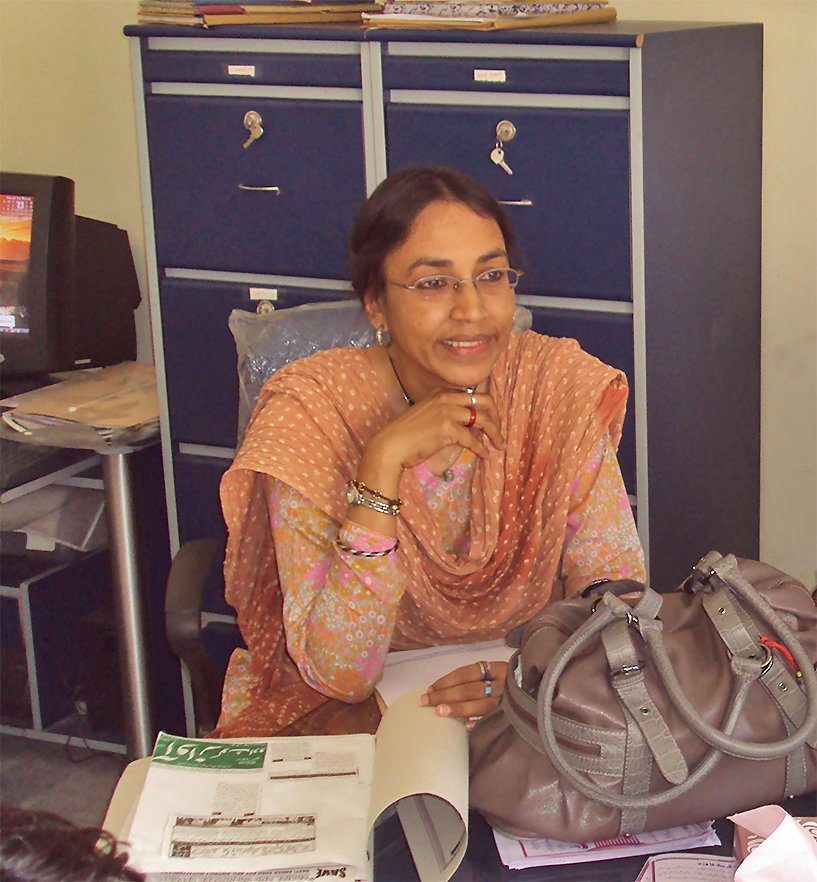


The undated photo shows the late Pakistani activist Perween Rahman. (Photo courtesy: Justice for Perween Rahman/Facebook)

In 2013, she was posthumously awarded the Sitara-e-Shujaat, the second-highest civil award for bravery bestowed by Pakistan, for her welfare work for the people of Orangi Town.


Pakistan, UK sign £35 million Green Compact to strengthen climate resilience

Updated 21 December 2025
Follow

Pakistan, UK sign £35 million Green Compact to strengthen climate resilience

  • Pakistan ranks among nations most vulnerable to climate change and has seen erratic changes in its weather patterns
  • UK will help Pakistan mobilize climate finance, strengthen regulatory frameworks and develop bankable climate projects

ISLAMABAD: Pakistan and the United Kingdom (UK) have formalized a comprehensive climate partnership with the launch of a Green Compact that aims to enhance climate resilience, accelerate clean energy transition and scale up nature-based solutions, including mangrove conservation, Pakistani state media reported on Sunday.

The agreement, signed in Islamabad by Federal Minister for Climate Change and Environmental Coordination Dr. Musadik Malik and UK Minister for International Development Jennifer Chapman, unlocks £35 million in targeted support for green development and long-term climate action, according to Radio Pakistan broadcaster.

Pakistan ranks among nations most vulnerable to climate change and has seen erratic changes in its weather patterns that have led to frequent heatwaves, untimely rains, storms, cyclones, floods and droughts in recent years. In 2022, monsoon floods killed over 1,700 people, displaced another 33 million and caused over $30 billion losses, while another 1,037 people were killed in floods this year.

Mohammad Saleem Shaikh, a spokesperson for Pakistan’s Ministry of Climate Change, described the compact as a “decisive move toward action-oriented climate cooperation,” noting that its implementation over the next decade will be critical for Pakistan which regularly faces floods, heatwaves and water stress.

“The Compact is structured around five core pillars: climate finance and investment, clean energy transition, nature-based solutions, innovation and youth empowerment, and adaptation and resilience,” the report read.

“Under the agreement, the UK will work with Pakistan to mobilize public and private climate finance, strengthen regulatory frameworks for green investment, and develop bankable climate projects.”

Clean energy forms a central component of Pakistan’s transition, with Islamabad planning to expand solar and wind generation to reduce fossil fuel dependence, improve energy security and stabilize power costs, according to Shaikh.

“Renewable energy is now economically competitive, making the transition both environmentally and financially viable,” he was quoted as saying.

“Nature-based solutions, particularly large-scale mangrove restoration, will protect coastal communities from storm surges and erosion while enhancing biodiversity and carbon sequestration.”

Under the Compact, technical support, mentoring and access to investors will be provided to climate-smart startups and young innovators, reflecting Pakistan’s recognition of youth-led initiatives as central to future climate solutions.

On the occasion, Chapman, on her first official visit to Pakistan, underscored the urgency of climate action, highlighting the UK’s support for renewable energy, mangrove and ecosystem restoration, early-warning systems, climate budgeting and international investment flows into Pakistan.

Shaikh described the Green Compact as “a strategic turning point” in Pakistan–UK relations on climate change, saying its effective implementation is essential for Pakistan to meet its national climate targets.