Katmandu: Nepal’s capital shut schools, ordered citizens to carry vaccination cards in public, banned religious festivals and instructed hotel guests to be tested every three days as it battles its biggest COVID-19 outbreak.
The chief government administrator of Katmandu issued a notice on Friday saying all people must carry their vaccination cards when they are in public areas or shop in stores.
Nepal, however, has only fully vaccinated 41 percent of its population. The notice did not say how unvaccinated people will be able to pay utility bills or shop for groceries.
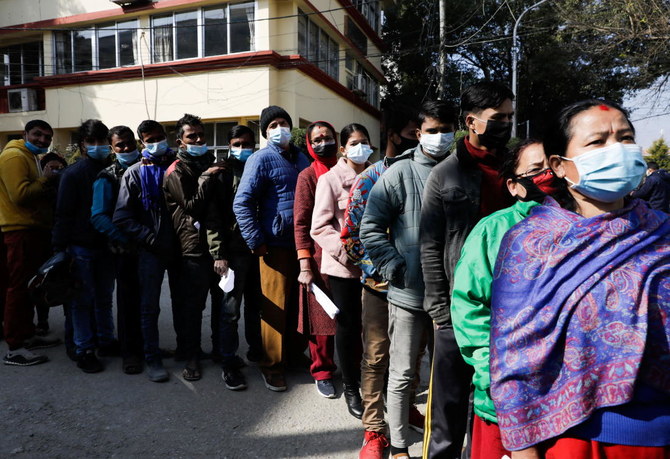
The government says it has enough vaccines in stock, but a new wave of COVID-19 cases propelled by the omicron variant has created long lines at vaccination centers, with many people unable to receive shots.
All public gatherings and meetings will be banned and cinemas and theaters will be closed. Gymnasiums, pools and other sporting venues will also be shut. No public religious festivals or events will be allowed, the notice said. It did not say how long the restrictions would last.
Authorities also halted in-person classes at all schools and indefinitely postponed university examinations.
Wearing face masks and maintaining social distancing in public will be mandatory. Only 20 customers at a time will be allowed in shopping malls and department stores, and all must carry vaccination cards. Employees will be given regular antigen tests to be allowed to work.
Restaurants and hotels can remain open, but employees must wear face masks and other protection. Hotel guests must take antigen tests every three days.
The government is also limiting road traffic, with bans on alternating days for vehicles with odd or even license plates.
The notice said violators will be punished, but did not elaborates. An existing law relating to pandemics says violators can be jailed for a month.
The Health Ministry reported a record 12,338 new cases on Thursday and 11,352 on Wednesday, compared to a few hundred daily cases last month.
Nepal had full lockdowns in 2020 and again from late April to Sept. 1, 2021.


![]()


Nepal imposes tough restrictions as COVID-19 cases set record
Short Url
https://arab.news/6cswf
Nepal imposes tough restrictions as COVID-19 cases set record
- Authorities also halted in-person classes at all schools and indefinitely postponed university examinations


Bangladesh’s Islamist-led coalition submits poll complaints
- Bangladesh Nationalist Party posts sweeping victory in the South Asian nation of 170 million after general elections on Thursday
DHAKA: Bangladesh’s Islamist-led coalition, which lost its chance to form the country’s next government in this week’s polls, submitted complaints to the Election Commission on Sunday, challenging results in 32 constituencies.
The Bangladesh Nationalist Party (BNP), led by Tarique Rahman — the scion of one of the country’s most influential political dynasties — celebrated a sweeping victory in the South Asian nation of 170 million after general elections on Thursday.
They were the first polls since a 2024 uprising ousted the autocratic government of former prime minister Sheikh Hasina.
The BNP alliance won 212 seats, compared with 77 for the Jamaat-e-Islami-led alliance, according to the Election Commission.
Jamaat chief Shafiqur Rahman conceded on Saturday, saying his party would “serve as a vigilant, principled, and peaceful opposition.”
Newly elected lawmakers are expected to be sworn in on Tuesday, after which Rahman is set to become the country’s next prime minister.
But on Sunday, Jamaat officials submitted their complaints.
“We have identified 32 constituencies where our candidates were unfairly defeated,” said senior Jamaat official Hamidur Rahman Azad.
“The election day began smoothly, but the ending was not what we had expected. Fake votes, the circulation of black money (bribes), threats, assaults, and attacks marred the atmosphere.”
Police records show that political clashes during the campaign period left five people dead and more than 600 injured.
But despite weeks of turbulence ahead of the polls, voting day passed without major unrest and the country has so far responded to the results with relative calm.
At least two people were killed in post-poll clashes, while scattered acts of vandalism and assaults were reported in several districts, police said.
Both Jamaat?e?Islami and ally the National Citizen Party (NCP) — formed by student leaders who spearheaded the uprising — reported attacks on their supporters.
NCP loyalists marched through Dhaka University campus against the BNP on Friday.
Police spokesman AHM Shahadat Hossain said that police were deployed to keep the peace.
“Over 150,000 police personnel were trained to tackle pre- and post-election violence,” Hossain said.
The Election Commission said turnout was 59 percent across 299 of the 300 constituencies where voting was held.
Only seven women were directly elected, although a further 50 seats reserved for women will be allocated to parties according to their share of the vote.
Four members of minority communities won seats, including two Hindus — a population that makes up roughly seven percent in Muslim-majority Bangladesh.
The Bangladesh Nationalist Party (BNP), led by Tarique Rahman — the scion of one of the country’s most influential political dynasties — celebrated a sweeping victory in the South Asian nation of 170 million after general elections on Thursday.
They were the first polls since a 2024 uprising ousted the autocratic government of former prime minister Sheikh Hasina.
The BNP alliance won 212 seats, compared with 77 for the Jamaat-e-Islami-led alliance, according to the Election Commission.
Jamaat chief Shafiqur Rahman conceded on Saturday, saying his party would “serve as a vigilant, principled, and peaceful opposition.”
Newly elected lawmakers are expected to be sworn in on Tuesday, after which Rahman is set to become the country’s next prime minister.
But on Sunday, Jamaat officials submitted their complaints.
“We have identified 32 constituencies where our candidates were unfairly defeated,” said senior Jamaat official Hamidur Rahman Azad.
“The election day began smoothly, but the ending was not what we had expected. Fake votes, the circulation of black money (bribes), threats, assaults, and attacks marred the atmosphere.”
Police records show that political clashes during the campaign period left five people dead and more than 600 injured.
But despite weeks of turbulence ahead of the polls, voting day passed without major unrest and the country has so far responded to the results with relative calm.
At least two people were killed in post-poll clashes, while scattered acts of vandalism and assaults were reported in several districts, police said.
Both Jamaat?e?Islami and ally the National Citizen Party (NCP) — formed by student leaders who spearheaded the uprising — reported attacks on their supporters.
NCP loyalists marched through Dhaka University campus against the BNP on Friday.
Police spokesman AHM Shahadat Hossain said that police were deployed to keep the peace.
“Over 150,000 police personnel were trained to tackle pre- and post-election violence,” Hossain said.
The Election Commission said turnout was 59 percent across 299 of the 300 constituencies where voting was held.
Only seven women were directly elected, although a further 50 seats reserved for women will be allocated to parties according to their share of the vote.
Four members of minority communities won seats, including two Hindus — a population that makes up roughly seven percent in Muslim-majority Bangladesh.
Latest updates


Recommended


© 2026 SAUDI RESEARCH & PUBLISHING COMPANY, All Rights Reserved And subject to Terms of Use Agreement.