

Pakistan records most new COVID cases since start of pandemic

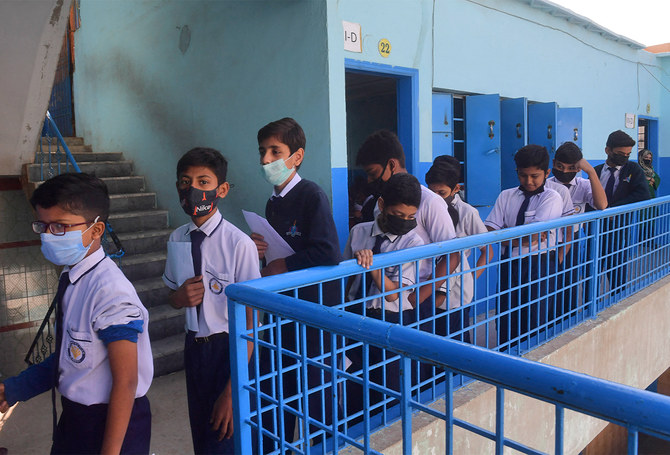
Students wait to receive a dose of the Pfizer vaccine against the coronavirus at a school in Karachi, Pakistan, on January 20, 2022. (AFP)
Short Url
Updated 21 January 2022
Follow

Pakistan records most new COVID cases since start of pandemic

  • Pakistan reported 7,678 new coronavirus cases on Friday, its highest since the start of pandemic in February 2020
  • Previous record high was recorded on June 13, 2020, when 6,825 people tested positive for the infection

ISLAMABAD: Pakistan on Friday recoded over 7,600 new COVID-19 cases, its highest daily caseload since the beginning of the pandemic.
The National Command Operation Center (NCOC), which is overseeing the pandemic response, recorded 7,678 new coronavirus infections and 23 deaths in the past 24 hours, with the positivity ratio shooting up to 12.93 percent from 11.55 percent the previous day.

The previous record high number of daily cases was reported on June 13, 2020, when 6,825 people in Pakistan tested positive for the infection. 
The rise COVID-19 figures comes as authorities the South Asian nation are imposing new restrictions to curb the fast-spreading omicron strain that is fueling the fifth viral wave sweeping the country.
“There shall be a complete ban on all types of indoor dining in Islamabad w.e.f 21st January 2022 instead of 24th January 2022,” a notification from the office of the Islamabad deputy commissioner said on Thursday. 


Earlier this week, the NCOC banned indoor gatherings and imposed restrictions on schools from Jan. 24 in cities where the COVID-19 positivity rate is above 10 percent.
Despite the rapid surge in cases, Prime Minister Imran Khan on Wednesday ruled out a lockdown, saying that Pakistan cannot bring its economy to a standstill.


Pakistan warns of heightened glacial lake flood risk as temperatures rise

Updated 6 sec ago
Follow

Pakistan warns of heightened glacial lake flood risk as temperatures rise

  • NDMA says early heatwave conditions could accelerate glacier melt in northern Pakistan
  • Authorities urge contingency planning, early warnings and evacuations in at-risk areas

PESHAWAR: Pakistan’s disaster management authority warned on Thursday of an elevated risk of glacial lake outburst floods (GLOFs) starting next month as rising temperatures threaten to accelerate snow and glacier melt in the country’s northern regions.

The National Disaster Management Authority (NDMA) said seasonal forecasts point to higher-than-normal temperatures and possible early heatwave conditions that could destabilize glacial lakes in Gilgit-Baltistan and upper Khyber Pakhtunkhwa.

GLOFs occur when water from melting glaciers breaches natural barriers and is suddenly released, triggering fast-moving floods downstream.

“Increasing temperatures during March to June 2026 may accelerate snow and glacier melt in Gilgit Baltistan and Upper Khyber Pakhtunkhwa, heightening the risk of GLOF incidents,” the NDMA said in a statement. “Such events can trigger flash floods, causing damage to homes, infrastructure, agriculture, communication networks and may result in human casualties in vulnerable downstream communities.”

The advisory identified several potentially exposed areas, including valleys in Gilgit-Baltistan such as Ishkoman, Gulkin and Gulmit, as well as parts of Chitral and Upper Dir in Khyber Pakhtunkhwa.

The NDMA urged provincial and local authorities to review contingency plans, strengthen early warning systems and prepare evacuation arrangements where necessary.

Communities living near glacial streams were advised to remain vigilant, avoid unnecessary movement in high-risk zones and follow official instructions.

Climate change has become a major concern for Pakistan, which is frequently ranked among the world’s most vulnerable countries to global warming despite contributing less than 1 percent of global greenhouse gas emissions.

In recent years, the country has endured devastating floods, prolonged droughts and record-breaking heatwaves that have killed thousands of people, damaged critical infrastructure and deepened food security challenges.