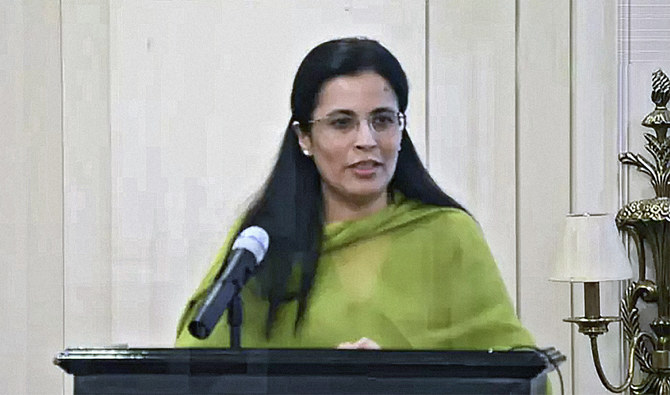
ISLAMABAD: A Pakistani parliamentary committee that deals with the appointment of judges endorsed the elevation of Lahore High Court Justice Ayesha A. Malik to the Supreme Court while maintaining that her appointment would not abolish the principle of seniority that is usually considered in such promotions, reported the local media on Wednesday.
Malik's appointment to the country's apex court was proposed by Chief Justice of Pakistan Gulzar Ahmed in August last year, though there was some controversy over her possible appointment within the legal circles since she is not the most senior judge at the Lahore High Court.
Earlier this month, the Judicial Commission of Pakistan approved her elevation to the Supreme Court in a meeting that was chaired by the chief justice of Pakistan by a majority of five votes against four.
The parliamentary committee upheld the idea of appointing Malik to the apex court under the chairmanship of Senator Farooq Naek on Wednesday.
"According to Farooq Naek, the Judicial Commission of Pakistan (JCP) on January 7 approved the nomination of Justice Ayesha Malik for her appointment as the Supreme Court judge with a vote of five out of nine," Geo News reported. "He further said that the court is not abolishing the procedure to appoint judges based on their seniority, adding that Malik would be the first woman to become an SC judge and she would benefit the country."
Malik's appointment to the Supreme Court can make her the first female judge in the history of Pakistan to become part of the country's top court.
Currently, she ranks fourth in terms of seniority at the Lahore High Court.
She was recently supported by the Women in Law Pakistan initiative that argued that seniority was not a legal requirement for such appointments, adding that "at least 41 times judges have been appointed to the Supreme Court without them being most senior."
Malik has been nominated for the Supreme Court position which will fall vacant after the retirement of Justice Mushir Alam in August.


![]()

Parliamentary committee approves Justice Ayesha Malik's elevation to Supreme Court
Short Url
https://arab.news/pgcfu
Parliamentary committee approves Justice Ayesha Malik's elevation to Supreme Court
- Malik's appointment to the country's apex court was originally proposed by Chief Justice of Pakistan Gulzar Ahmed
- Her elevation can make her the first female judge in the country's history to serve Pakistan's top court
Latest updates


© 2026 SAUDI RESEARCH & PUBLISHING COMPANY, All Rights Reserved And subject to Terms of Use Agreement.