



ISLAMABAD: Pakistan’s foreign minister Shah Mahmood Qureshi on Tuesday condemned an attack by Yemen’s Houthi rebels on an oil facility in the United Arab Emirates (UAE), calling the act a violation of the principle of state sovereignty while demanding an end to such military strikes.
Qureshi issued the statement during a phone call with UAE foreign minister Sheikh Abdullah bin Zayed Al Nahyan who shared details of the recent attack in Abu Dhabi in which three people, including a Pakistani, were killed while six others were wounded.
The UAE official also expressed grief over the death of the Pakistani citizen.
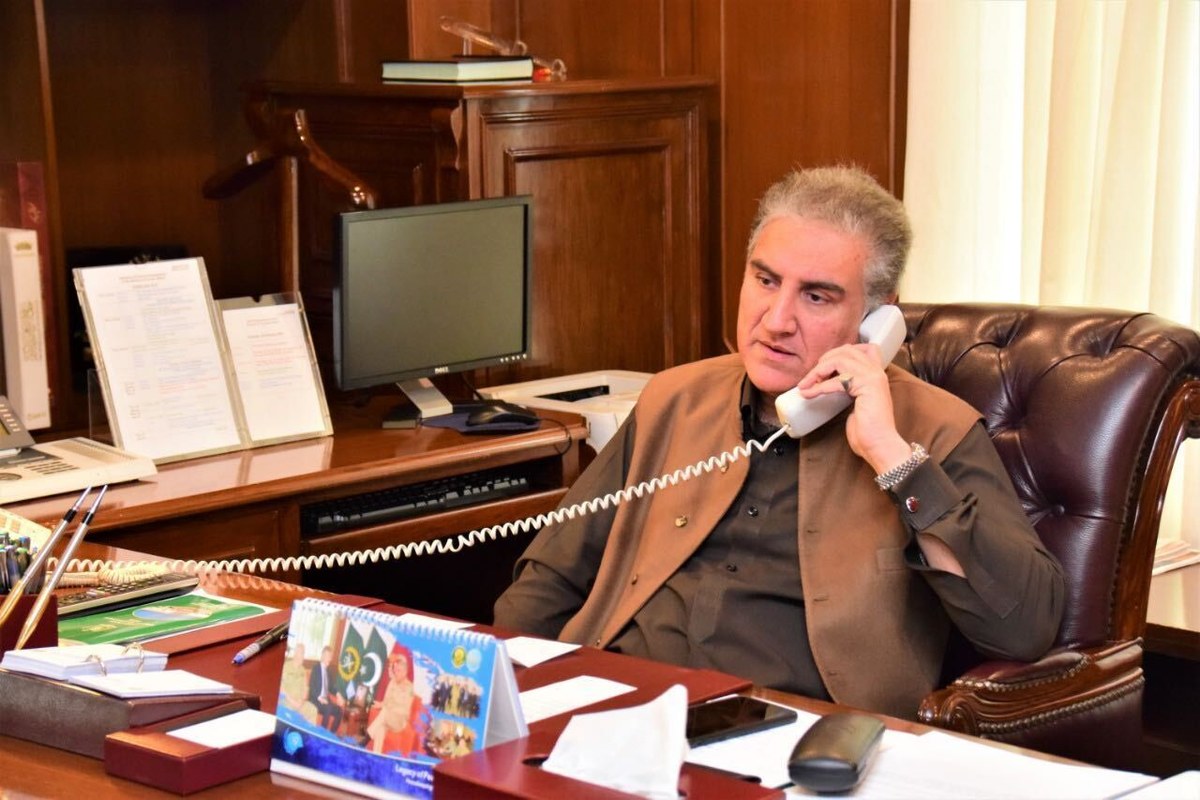
Pakistan's foreign minister, Shah Mahmood Qureshi, holds a phone call with UAE foreign minister Sheikh Abdullah bin Zayed Al Nahyan (not pictured) in Islamabad, Pakistan, on January 18, 2022. (Photo courtesy: Foreign Office of Pakistan)
The UAE is part of Arab Coalition in Yemen which has been fighting Houthi rebels, who have also repeatedly targeted Saudi Arabia with cross-border strikes.
A Pakistani and two Indians working for oil giant ADNOC died as three petrol tanks exploded near a storage facility, while a fire also ignited in a construction area at the Abu Dhabi airport.
The rebel group claimed responsibility of the attack, saying it had used missiles and drones to target the oil facility.
“Such acts of terrorism are a violation of the sovereignty and territorial integrity of the United Arab Emirates,” the Pakistani foreign minister said. “They also pose a serious threat to the overall peace and stability and must be stopped immediately.”
Earlier in the day, the Pakistan embassy in the UAE said in a Twitter post it was closely working “with the family of the victim of 17 January terrorist attack in Abu Dhabi to get his remains repatriated to Pakistan.”
It also confirmed that the injured Pakistanis were getting medical treatment and were in good health.
Pakistan’s foreign office issued a condemnation of the Houthi attack on Monday night, pointing out that it targeted civilian areas in Abu Dhabi while offering condolences to the families of the victims and wishing speedy recovery to the injured.
It maintained such attacks violated the sovereignty of the UAE and posed a grave threat to the regional peace and security while demanding their immediate cessation.
“Pakistan stands in solidarity with the brotherly people and government of the United Arab Emirates in the face of this wanton act of terrorism,” the statement said.
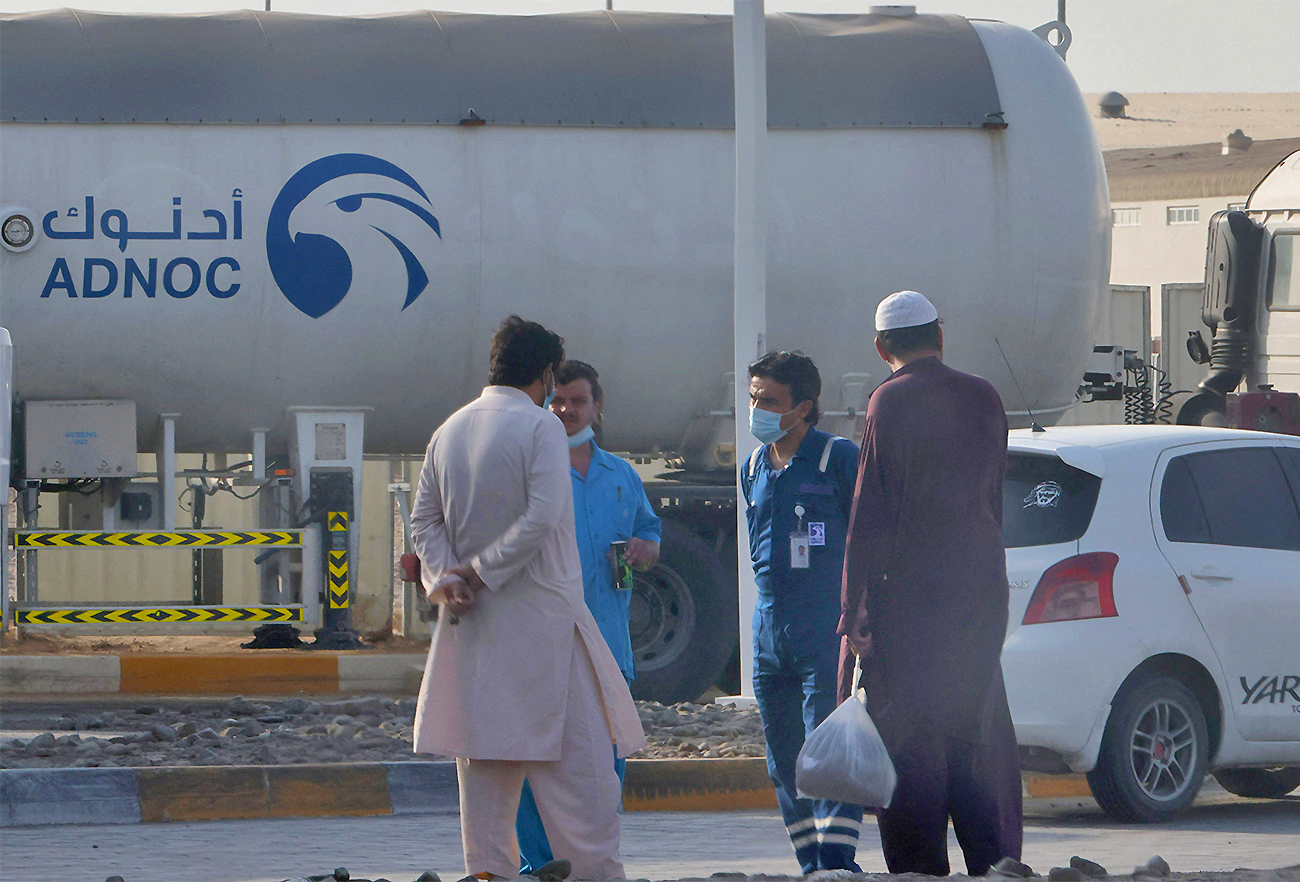
Men stand next to a tank at a storage facility of oil giant ADNOC in the Msaffah industrial district in the Emiarti capital Abu Dhabi on January 17, 2022. (AFP)
Pakistani political leaders also joined the chorus with Saudi Arabia, Bahrain, Qatar and the Organization of Islamic Cooperation (OIC) condemning the “terrorist” attack.
“Pakistan condemns attacks in Abu Dhabi,” Prime Minister Imran Khan’s aide on the Middle East, Tahir Mahmood Ashrafi, said in a statement.
“Pakistan considers security and stability of UAE as security and defense of Pakistan. We assure the UAE of Pakistan’s full support and cooperation.”
Ashrafi said the security and peace of Saudi Arabia and the UAE was “very dear” to Pakistan. “[We] can’t tolerate any step against the security of the Kingdom of Saudi Arabia and the UAE,” he said.
Raja Zafarul Haq, a senior figure of the opposition’s Pakistan Muslim League-Nawaz (PML-N) party, demanded the United Nations Security Council (UNSC) take “swift action” over this unprovoked terrorist act.
“We condemn this unprovoked attack on the UAE and there should be a proper solution to growing aggression [by Houthis],” Haq told Arab News.
“The UNSC and the Arab League should immediately take up this matter to find a solution to this problem which is becoming a danger for the whole region.”
Former Pakistan Peoples Party (PPP) senator Sehar Kamran said the “cowardly” attack was a conspiracy to derail peace in the Middle East and the extended region.
“We condemn this cowardly attack which is an act of terrorism resulting in the loss of innocent lives,” she told Arab News.
“This attack is a conspiracy to derail peace and harmony in the region at a time when relations between the Middle Eastern countries are getting better,” she said, urging the OIC to take strong action against the Yemeni militia.
Kamran warned if the world did not stop Houthis, then such attacks would not just remain limited to Saudi Arabia and the UAE. “They can spread and will affect peace and stability in the whole region and the world,” she said.
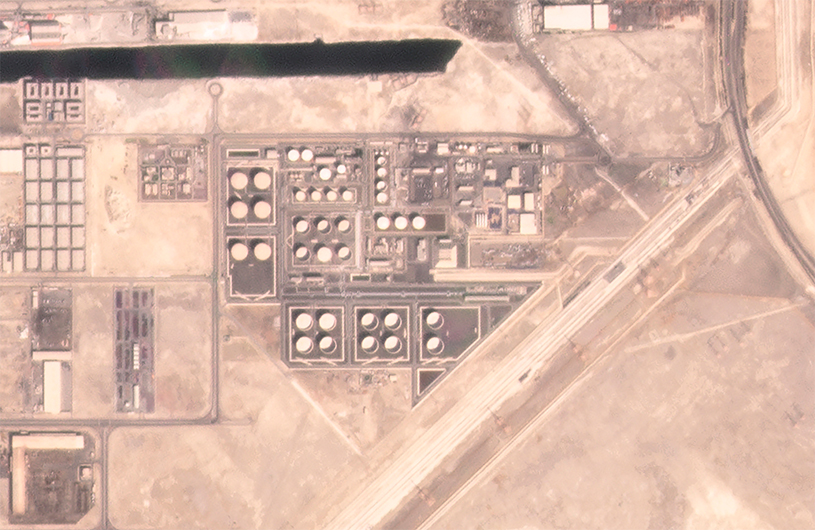
In this satellite image provided by Planet Labs PBC, an Abu Dhabi National Oil Co. fuel depot in the Mussafah neighborhood of Abu Dhabi, United Arab Emirates, is seen Saturday, Jan. 15, 2022, before being targeted in an attack days later. (Planet Labs PBC via AP)
Kamran warned if the world did not stop Houthis, then such attacks would not just remain limited to Saudi Arabia and the UAE. “They can spread and will affect peace and stability in the whole region and the world,” she said.
The UAE has vowed reprisals after the attack on the oil facility.
“We condemn the Houthi terrorist militia’s targeting of civilian areas and facilities on UAE soil today... this sinful targeting will not go unpunished,” UAE Foreign Minister Abdullah bin Zayed Al-Nahyan said in a statement, as his ministry described the attack as a “heinous criminal escalation.”
The incident follows a surge in fighting in Yemen, including advances by UAE-trained troops. The rebels also seized a UAE-flagged ship and its international crew earlier this month.


