



ISLAMABAD: A recent Organization of Islamic Cooperation (OIC) conference in Islamabad helped connect Afghanistan to the outside world, Afghanistan’s acting envoy to Pakistan said this week, welcoming humanitarian assistance that followed the summit, especially from Saudi Arabia and Pakistan.
The abrupt withdrawal of foreign aid last year following the Taliban victory in August left Afghanistan’s fragile economy on the brink of collapse, with food prices rising rapidly and causing widespread hunger.
Western sanctions aimed at the Taliban also prevented the passage of basic supplies of food and medicine, although this has since eased after exemptions were passed by the UN Security Council and Washington last month.
Pakistan has also lobbied world powers to come in aid of Afghanistan, and last month hosted the 17th Extraordinary Session of the OIC’s Council of Foreign Ministers. The meeting, called by Saudi Arabia, was focused on the economic crisis in Afghanistan. At the summit’s conclusion, OIC member states agreed to establish a Humanitarian Trust Fund to channel assistance, appoint a special envoy and work together with the UN in the war-ravaged country.
“It (OIC meeting) was a channel to connect Afghanistan with the world,” Sardar Ahmed Khan Shakib told Arab News in his first media interview since assuming office last year. “Through the OIC conference, we were able to show to the world the true picture of the situation in Afghanistan.”
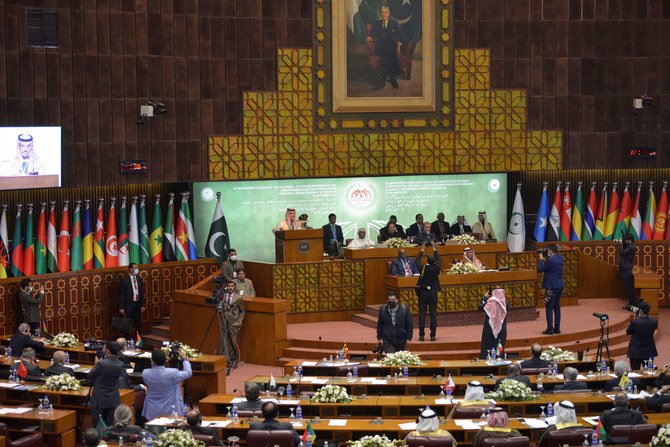
Saudi Arabia's Minister of Foreign Affairs Prince Faisal bin Farhan Al Saud (C) addresses the opening of a special meeting of the 57-member OIC in Islamabad on December 19, 2021. (AFP)
During the summit, Saudi Arabia pledged 1 billion Saudi riyals ($266 million) in aid to the OIC fund for Afghanistan. It has also dispatched relief planes to Afghanistan through the King Salman Humanitarian Aid and Relief Center (KSRelief).
#WATCH: OIC summit in Islamabad helped connect #Afghanistan to the world, #SaudiArabia “very cooperative”, helped Afghans more than any other OIC member state says Taliban envoy in an exclusive interview to #ArabNewsPK || #Pakistan
-
Read: https://t.co/fC1EA3pSSg pic.twitter.com/10VFkk702R— Arab News Pakistan (@arabnewspk) January 13, 2022
“Saudi Arabia is very cooperative and helped Afghans more than any other OIC member state,” Shakib said. “Six aircraft full of humanitarian assistance packages from Saudi Arabia including clothes, food, have already reached the Afghans in need.”
Islamabad has also announced 5 billion rupee ($28.4 million) in medical, food and other humanitarian assistance for its landlocked neighbor.
“The Pakistani government and other organizations, including traders and community members, have also sent assistance and still trying to fully support the Afghan people,” Shakib said.
He added that 2,000 tons of wheat from Pakistan had been donated to Afghanistan and expressed hope other countries that had pledged help would deliver on their promises.
“Some assistance has already reached and been distributed among Afghans,” he said. “But it still is not enough.”


