

Kabul trying to revive stalled peace talks between Pakistan, Tehreek-e-Taliban — envoy

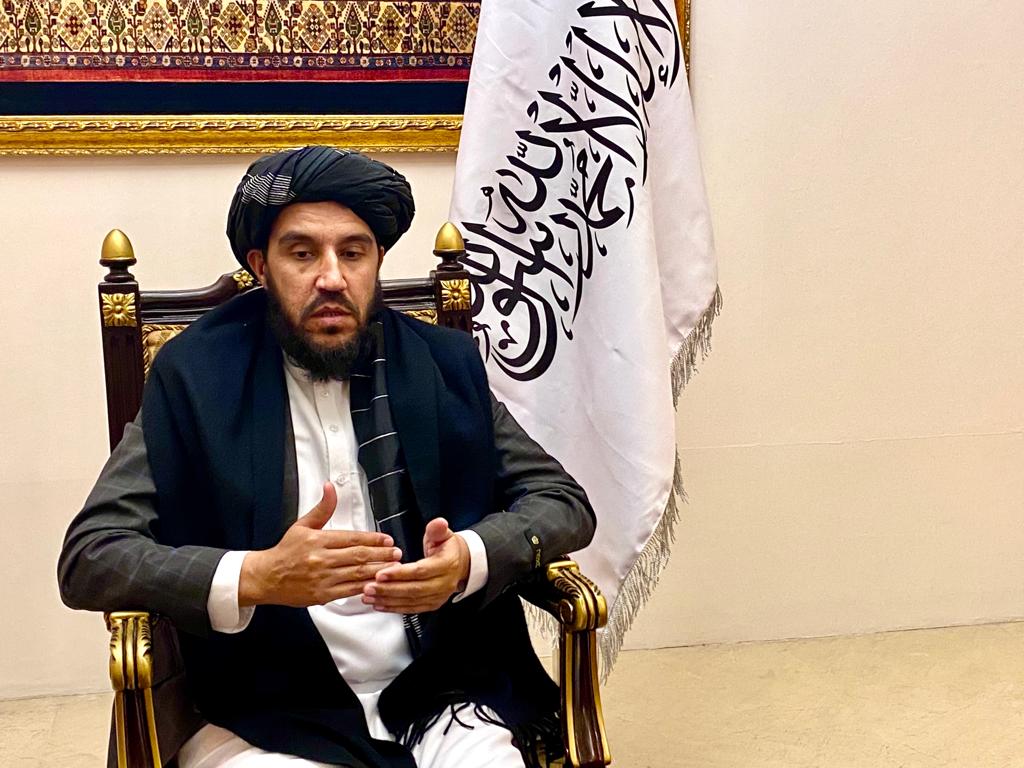
Acting Afghan ambassador to Pakistan, Sardar Ahmed Khan Shakib, speaks with Arab News in an exclusive interview in Islamabad on January 11, 2022. (AN Photo)
Short Url
Updated 13 January 2022
Follow

Kabul trying to revive stalled peace talks between Pakistan, Tehreek-e-Taliban — envoy

  • Afghan acting envoy to Islamabad speaks to Arab News in his first interview to media since taking office last year 
  • Says a delegation each from Afghanistan and Pakistan assigned to deal with border fencing problem 

ISLAMABAD: Kabul is trying to revive suspended peace talks between the Pakistan government and the Tehreek-e-Taliban Pakistan militant group, Afghanistan’s acting envoy to Pakistan said on Tuesday.
The TTP is a separate movement from the Afghan Taliban and has fought for years to overthrow the government in Islamabad and rule with its own brand of Islamic Shariah law. Last month, the group declared an end to a month-long cease-fire arranged with the aid of the Afghan Taliban, accusing the Pakistan government of breaching terms including a prisoner release agreement and the formation of negotiating committees.
The head of the Pakistan army’s media wing said last week armed operations against the group had been relaunched since the end of the cease-fire.


“Islamic Emirates of Afghanistan is trying very hard to convince both the Pakistani government and TTP to return to the negotiating table and resolve their problems through dialogue,” Ambassador Sardar Ahmed Khan Shakib told Arab News in his first interview since he took office last year.
He said the mediation process had not ended, though it may have been “postponed.”
“As we promised, we will not allow the Afghan soil to be used against other countries and their interests,” he said. “We will keep our promise. So, if this issue is not resolved through dialogue, it will create a lot of problems for us in the future.”


Acting Afghan ambassador to Pakistan, Sardar Ahmed Khan Shakib, speaks with Arab News in an exclusive interview in Islamabad on January 11, 2022. (AN Photo)

Asked about tensions between Islamabad and Kabul over the fencing of the Pakistan-Afghanistan border, Shakib said Afghanistan had a “strong desire” to address all issues through diplomatic channels.
Pakistan has fenced most of the 2,600 km border despite protests from Kabul, which has always contested the British-era boundary demarcation that splits families and tribes on either side. In recent weeks, there have been multiple incidents of Afghan Taliban border guards trying to remove the fence or disrupt construction work.

The fencing was a main reason behind the souring of relations between previous Afghan governments and Islamabad. The current standoff indicates the matter remains a contentious matter for the Taliban, despite its close ties to Islamabad.

“Two delegations, one from Afghanistan and the other from Pakistan, have been assigned to deal with the problem that recently happened along the Durand Line and related to the fencing project which is about 94 percent complete,” Shakib said, adding:
“We cannot decide about the Durand Line from a governmental perspective … This is not my or foreign minister’s or the whole government’s decision. It should be determined through a very comprehensive decision which will be made by the nation of Afghanistan.”
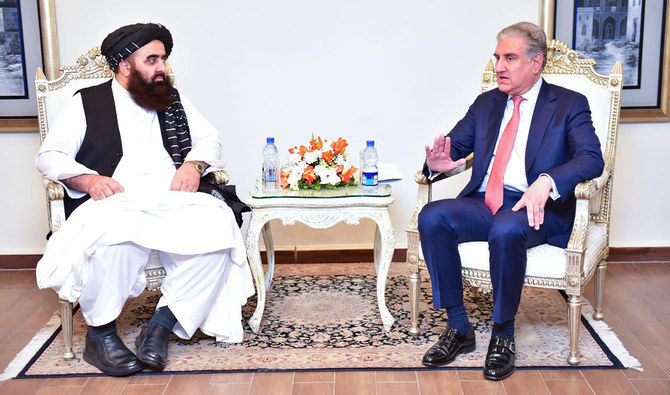


Afghanistan's acting foreign minister Amir Khan Muttaqi, left, with Pakistan's FM Shah Mahmood Qureshi in Islamabad, Pakistan, on December 18, 2021. (Photo courtesy: Pakistan foreign office)

The Afghan envoy appealed to the Pakistani government and other neighbors to recognize the Taliban administration and set a precedent for the rest of the world.
No country has formally recognized the Taliban government since the insurgents took over the country in August, while billions of dollars in Afghan assets and funds abroad have also been frozen, even as the country faces severe economic and humanitarian crises.
“They [the international community] have their own challenges,” Shakib said. “So, they say they cannot do it (recognize Afghanistan) alone and need to join some other countries. It is our humble request, especially from our neighbors, to recognize the newly established Islamic government in Afghanistan.”
The Afghan envoy said the Kabul administration met all the requirements of an independent government, including sovereignty, security, employment creation and being cooperative with neighboring states.


“So, this is the basic right of the Afghans to be recognized,” he added. “We call on the international community once again to recognize us which will lead us to a new era and establish communication with all members of the world community and international bodies.”
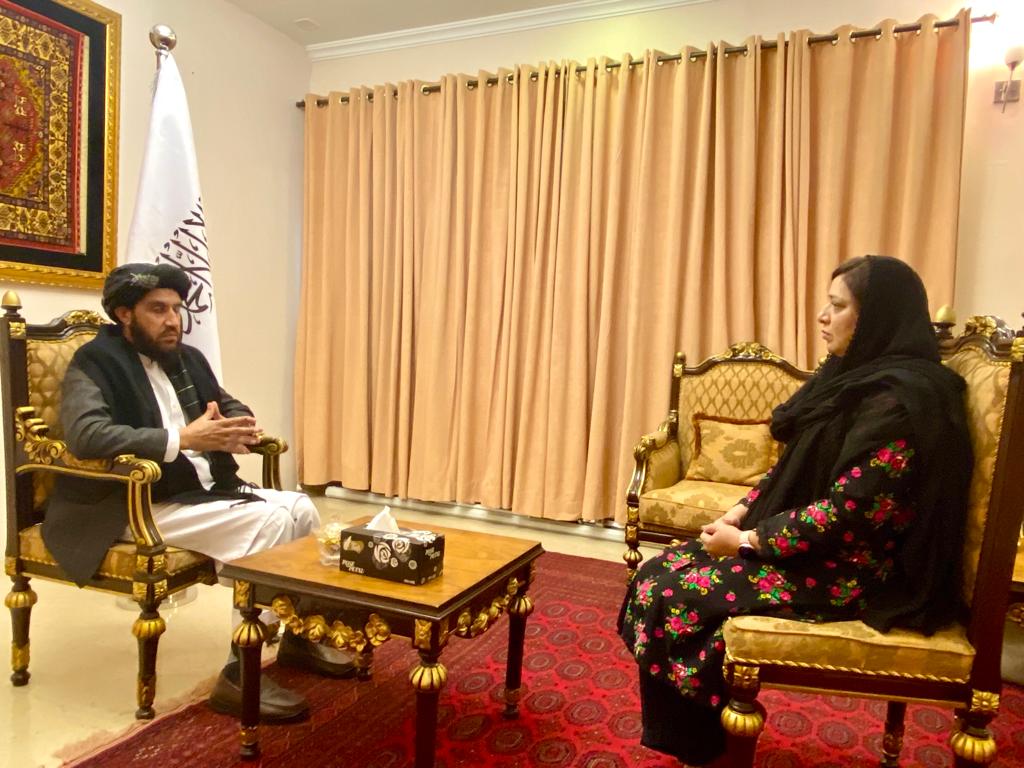


Acting Afghan ambassador to Pakistan, Sardar Ahmed Khan Shakib, speaks with Arab News in an exclusive interview in Islamabad on January 11, 2022. (AN Photo)

Shakib said his government’s international recognition would also help to resolve the financial woes of Afghanistan, which the UN and other aid agencies say is on the brink of humanitarian catastrophe.
“I ask the United States and other countries to unfreeze Afghan assets and remove their sanctions,” Shakib said. “These sanctions are blocking channels of humanitarian assistance which is creating a crisis.”


Pakistan, Qatar resolve to boost strategic, economic cooperation at Doha talks

Updated 25 sec ago
Follow

Pakistan, Qatar resolve to boost strategic, economic cooperation at Doha talks

  • Both countries urge dialogue on Afghanistan amid renewed border tensions between Islamabad and Kabul
  • Discussions focus on bilateral trade and investment, energy, defense, manpower and labor and culture

ISLAMABAD: Pakistan and Qatar on Tuesday agreed to deepen their strategic and economic cooperation during high-level talks between Prime Minister Shehbaz Sharif and his Qatari counterpart Sheikh Mohammed bin Abdulrahman bin Jassim Al Thani, Sharif’s office said.

Sharif visited Qatar along with a high-level delegation on the invitation of Qatari emir Sheikh Tamim bin Hamad Al Thani. The Pakistan premier also held meetings with Qatar’s trade and defense minister to discuss cooperation in various domains.

The visit came at a time when Pakistan is seeking closer economic engagement with Gulf partners amid its broader push to stabilize the economy and attract investment, while maintaining security and defense cooperation with key regional states.

During their meeting in Doha, PM Sharif and Qatar’s Sheikh Mohammed discussed bilateral relations and exchanged views on regional and international developments, according to the Pakistan prime minister’s office.

“They reaffirmed the strong brotherly relations between Pakistan and Qatar and expressed satisfaction at the growing momentum in political, economic and institutional ties,” Sharif’s office said.

“Discussions focused on enhancing cooperation in the fields of trade and investment, energy, defense, manpower and labor and culture, with both sides stressing the importance of their task force to accelerate cooperation in all these areas.”

Pakistan and Qatar maintain strong trade and investment ties. In 2022, the office of Qatar’s emir said the Qatar Investment Authority planned to invest $3 billion in Pakistan, targeting sectors including transport, aviation, education, health, media, technology and labor.

Nearly 300,000 Pakistanis live and work in Qatar, according to Pakistan’s foreign office, with many employed in health, education, engineering and public services, as well as construction and transport. The two countries engage through forums such as the Bilateral Political Consultations and the Joint Ministerial Commission.

Sharif said he had productive discussions with Qatar’s emir Sheikh Tamim bin Hamad Al Thani on how the two sides could transform their brotherly ties into mutually beneficial economic relationships. 

“We also took stock of the regional situation,” he said. “Pakistan and Qatar will continue to work together for peace and stability in the region and beyond.”

Prime Minister Shehbaz Sharif (second right) meets the Qatari Emir Qatar’s emir Sheikh Tamim bin Hamad Al Thani (left) in Doha, Qatar, on February 24, 2026. (PID)

DIALOGUE WITH AFGHANISTAN

Earlier, Sharif and Qatar’s Deputy PM Sheikh Saoud Al-Thani discussed the situation in Afghanistan and called for dialogue to support regional stability.

The meeting took place amid renewed tensions after Islamabad carried out airstrikes last week on what it described as Tehreek-e-Taliban Pakistan (TTP) targets inside Afghanistan. Kabul said the strikes killed civilians and vowed to respond to what it called a violation of its sovereignty.

“Regional developments were also discussed, in particular the situation in Iran and Afghanistan,” Sharif’s office said in a statement. “Both sides emphasized the importance of dialogue, de-escalation and collective efforts to promote peace and stability in the region.”

This was the second time in less than six months that Pakistan conducted airstrikes in Afghanistan. The last strikes triggered heavy, weeklong clashes between the neighbors along their border before Qatar and Turkiye mediated a ceasefire between them in Oct. last year.

Separately, Sharif held meetings with Qatar’s State Minister for Trade Dr. Ahmed bin Mohammed Al-Sayed and a delegation of the Qatar Businessmen Association (QBA), highlighting Pakistan’s investment-friendly reforms.

He invited QBA members to explore opportunities in infrastructure, logistics, energy, agriculture, technology and export-oriented manufacturing, his office said.