

What We Are Reading Today: Moneyball: The Art of Winning an Unfair Game

Short Url
Updated 08 January 2022
Follow

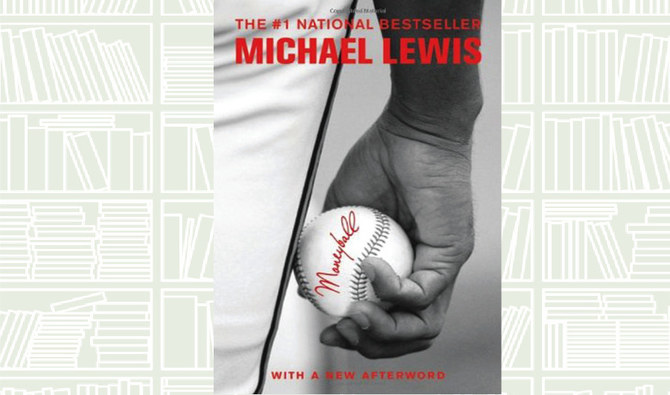
What We Are Reading Today: Moneyball: The Art of Winning an Unfair Game

Author: Michael Lewis

Billy Beane, general manager of MLB’s Oakland A’s and protagonist of Michael Lewis’s Moneyball, had a problem: How to win in the Major Leagues with a budget that’s smaller than that of nearly every other team. Conventional wisdom long held that big name, highly athletic hitters and young pitchers with rocket arms were the ticket to success.
Besides being one of the most insider accounts ever written about baseball, Moneyball is populated with fascinating characters.
But the most interesting character is Beane himself. A speedy athletic can’t-miss prospect who somehow missed, Beane reinvents himself as a front-office guru, relying on players completely unlike, say, Billy Beane.
Lewis, one of the top nonfiction writers of his era (Liar’s Poker, The New New Thing), offers highly accessible explanations of baseball stats and his roadmap of Beane’s economic approach makes Moneyball an appealing reading experience for business people and sports fans alike.


What We Are Reading Today: Power and Possession in the Russian Revolution by Anne O’Donnell

Updated 09 March 2026
Follow

What We Are Reading Today: Power and Possession in the Russian Revolution by Anne O’Donnell

The revolutions of 1917 swept away not only Russia’s governing authority but also the property order on which it stood. The upheaval sparked waves of dispossession that rapidly moved beyond the seizure of factories and farms from industrialists and landowners, envisioned by Bolshevik revolutionaries, to penetrate the bedrock of social life: the spaces where people lived.

In Power and Possession in the Russian Revolution, Anne O’Donnell reimagines the Bolsheviks’ unprecedented effort to eradicate private property and to create a new political economy—socialism—to replace it.

O’Donnell’s account captures the story of property in reverse, showing how the bonds connecting people to their things were broken and how new ways of knowing things, valuing them, and possessing them coalesced amid the political ferment and economic disarray of the Revolution.