


Oil prices rose and were heading for their biggest weekly gains since mid-December on Friday as unrest in Kazakhstan and outages in Libya spurred concerns over supply, according to Reuters.
Brent crude climbed 70 cents, or 0.9 percent, to $82.69 a barrel at 1229 GMT. US West Texas Intermediate (WTI) crude rose 59 cents, or 0.7 percent, to $80.05 a barrel.
Brent and WTI were on track for gains of almost 6.5 percent in the first week of the year, with prices at their highest since late November, as supply concerns overtook worries that the rapid spread of the Omicron coronavirus variant might hurt demand.
“The upward jump in oil prices mostly reflects the market jitters as unrest escalates in Kazakhstan and the political situation in Libya continues to deteriorate and sideline oil output,” Rystad Energy analyst Louise Dickson said.
Kazakhstan bonds
Kazakh dollar bonds and Russia’s rouble ticked up after Kazakhstan's president said constitutional order has mostly been restored in the country.
Kazakh 2045 dollar bond enjoyed small gains after hefty falls to over 20-month lows in recent days.
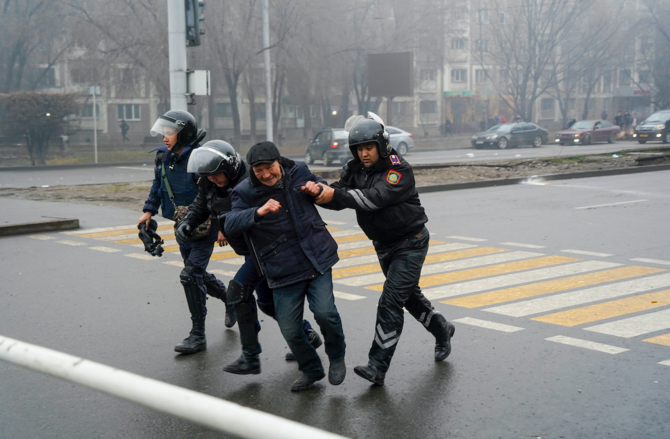
Security forces appeared to be in control of the streets of Kazakhstan's main city Almaty on Friday morning, a day after Russia sent troops to put down a countrywide uprising.
“I would say that the immediate market impacts or economic impacts from the current situation in Kazakhstan will be very limited,” said Minna Kuusisto, chief analyst, global macro research at Danske Bank.
Fuel price cap
Kazakhstan has imposed a 180-day price cap on vehicle fuel and halted any utility rate increases, as the government seeks to quell the unrest that has left dozens of protestors and police dead.
Kazakhstan has experienced the worst street protests since the country gained independence three decades ago.
The demonstrations began over a near-doubling of prices for a type of vehicle fuel and quickly spread across the country, reflecting wider discontent over the rule of the same party since independence.
The uprising led to a rise in the global price of uranium, as the central Asian country is responsible for about 40 percent of global supplies of the metal.
However, Kazatomprom, the world's biggest uranium producer, said on Thursday it was operating normally with no impact on output or exports despite the unrest.
“Bandits” resposible, says President
Speaking on Friday, Kazakhstan’s President Kassym-Jomart Tokayev said he had given shoot-to-kill orders to deal with further disturbances from those he called bandits and terrorists, adding that those who failed to surrender would be “destroyed.”
Up to 20,000 “bandits” had attacked the biggest city Almaty and had been destroying state property, Tokayev said in a televised address after a week when protests over fuel prices exploded into a countrywide wave of unrest.
He said as part of the “counter-terrorist” operation, he had ordered law enforcement agencies and the army “to shoot to kill without warning.”
“The militants have not laid down their arms, they continue to commit crimes or are preparing for them. The fight against them must be pursued to the end. Whoever does not surrender will be destroyed,” Tokayev said on state television.
He dismissed calls to hold talks with protesters.
“What stupidity. What kind of talks can we hold with criminal and murderers?” he said.
“We had to deal with armed and well-prepared bandits, local as well as foreign. More precisely, with terrorists. So we have to destroy them, this will be done soon.”
Tokayev thanked Russian President Vladimir Putin and the leaders of China, Uzbekistan and Turkey for their assistance.
He said peacekeeping forces sent from Russia and neighbouring states had arrived on Kazakhstan's request and were in the country on a temporary basis to ensure security.
It was critically important to understand why the state had “slept through the underground preparation of terrorist attacks, of militant sleeper cells,” Tokayev added.


