RIYADH: Saudi Arabia’s Cabinet on Tuesday urged people to follow COVID-19 health and safety measures and to register for a booster shot as soon as possible as the country’s daily number of cases was witnessing a sharp increase.
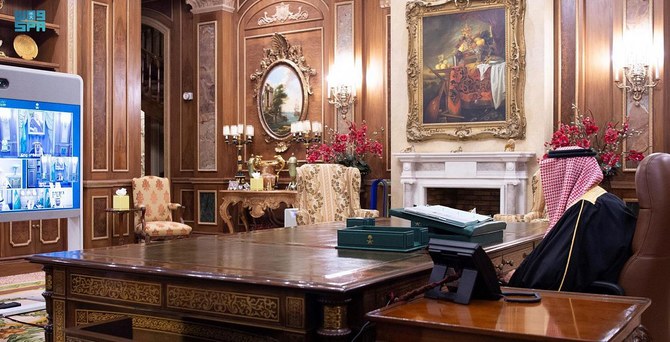
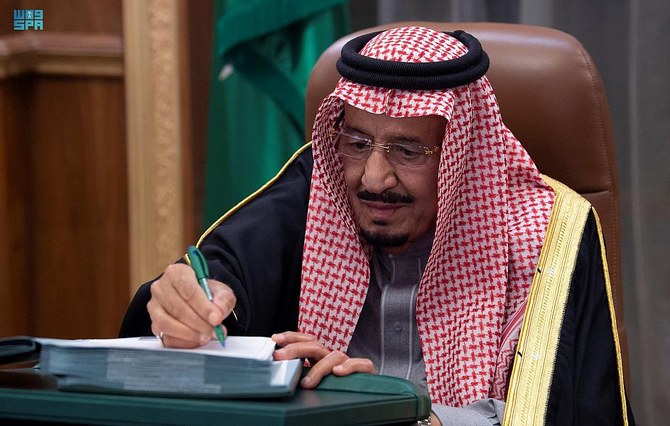
The announcement was made following a weekly Council of Ministers meeting that was chaired remotely by King Salman from Riyadh, with the Kingdom’s Health Ministry recording 2,585 new infections in the past 24 hours.
The Cabinet reviewed developments in the epidemiological situation of coronavirus and its mutations, reports on the latest local and international statistics and indicators, and the evaluation of the precautionary measures taken to protect the health of citizens, residents and visitors to the Two Holy Mosques and preserve their safety, Acting Minister of Information Majid Al-Qasabi said.
At the beginning of the session, King Salman thanked the Shoura Council for its efforts in carrying out its functions and tasks, while the Council of Ministers reviewed the content of the king’s annual speech during the opening of the Shoura Council’s work for the second year of the eighth session.
The king laid out a comprehensive vision that reflected the established constants to achieve internal growth, prosperity and progress in various fields in line with the Vision 2030, the Kingdom’s foreign political and economic positions, its efforts to enhance regional and international peace and security, and to support the lowest-income and afflicted countries, refugees and people affected by crises.
The Cabinet reviewed the meetings and talks that took place between the Kingdom and a number of countries over the past few days, aimed at strengthening joint cooperation and working toward upgrading relations.
Al-Qasabi said that the Council of Ministers dealt with a number of regional and international issues and developments, and the global efforts made to enhance security, peace, stability and prosperity.
The Cabinet authorized the information minister to sign a draft memorandum of understanding in the field of media cooperation with Iraq, and for the finance minister to sign an MoU with the UK to enhance cooperation in developing financial and public financial services.
The ministers also approved a MoU between the Ministry of Environment, Water and Agriculture and Japan’s Ministry of Environment for cooperation, and an MoU with Oman for cooperation in the field of investment promotion.
The Cabinet authorized the president of the Islamic University to sign a draft agreement with the Organization of Islamic Cooperation, and approved a MoU between the Saudi Saline Water Conversion Corporation and Russia’s Ufa State Petroleum Technological University for cooperation in the field of desalination technologies and the operation and maintenance of pipelines.
The ministers agreed to regulate the governance of export prevention and control measures and approved the elderly rights and care system.
The Cabinet also reviewed other topics on its agenda, including annual reports for the Saudi Standards, Metrology and Quality Organization, the Royal Commission for Jubail and Yanbu, the Makkah Region Development Authority, and the Sharqia Development Authority, and took the necessary measures.


![]()
![]()

People urged to follow COVID-19 measures as Saudi Arabia’s daily cases soar
Short Url
https://arab.news/b5kjw
People urged to follow COVID-19 measures as Saudi Arabia’s daily cases soar
- Cabinet also told people to register for a booster shot as soon as possible


Latest updates




Recommended


© 2026 SAUDI RESEARCH & PUBLISHING COMPANY, All Rights Reserved And subject to Terms of Use Agreement.