

Indian taxi driver’s ‘dress bank’ saves poor brides from financial ruin

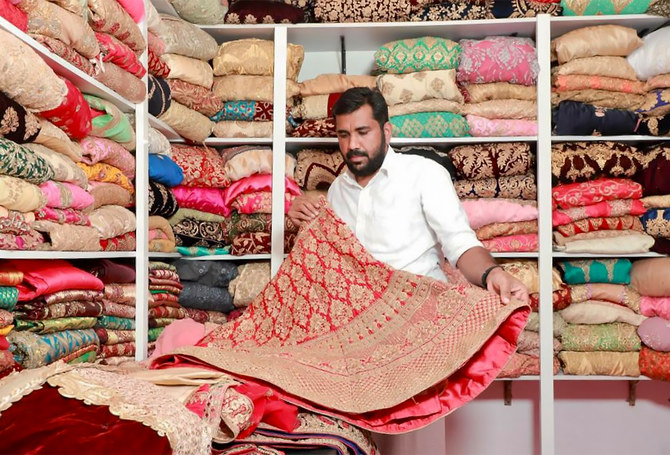
Nasar Tootha folds a bridal gown at his "dress bank" in Thootha village, Malappuram district in India's southern Kerala state. (Photo courtesy: Nasar Tootha)
Short Url
Updated 01 January 2022
Follow

Indian taxi driver’s ‘dress bank’ saves poor brides from financial ruin

  • Nasar Tootha’s initiative has helped provide bridal dresses to 300 families across India
  • Wedding costs are often beyond the reach of lower-class families, forcing them into debt

NEW DELHI: Rabbia Banu was increasingly in despair as her daughter’s wedding neared and they still had no money to buy a bridal dress. It was early December, two weeks before the nuptials, that help came through an unexpected route: from a charity shop run by a taxi driver to help impoverished families like hers. 
The Indian wedding is an occasion often marked joyful and colorful days-long celebrations. But to many families it also comes as with enormous social and financial pressure that not all are able to meet. 
A bridal dress may cost as little as $40 or as much as tens of thousands of dollars, if not more. But even the cheapest ones may be too expensive for lower-class families, often forcing them into debt they will struggle to repay for years. 
The bride’s family usually bears the brunt of wedding costs. Earning their livelihood as daily wage workers in Mettupalayam, a village in southern Tamil Nadu state, Banu and her husband knew they could not afford even the most basic wedding expense such as bridal attire.
“Me and my husband, who works as a waiter in a restaurant in the village manage to earn not more than 200 bucks ($3) every day,” Banu told Arab News. “Buying a bridal dress was beyond our reach.” 
But on Dec. 13, she happily married off her daughter in a wedding gown on which she had not spent a rupee. It came from Malappuram district in neighboring Kerala state, from taxi driver Nasar Tootha who runs a charity initiative to ease the burden on those who cannot bear it. 
“Within three days I got the bridal dress without paying any money and without paying any transportation charges,” Banu said.
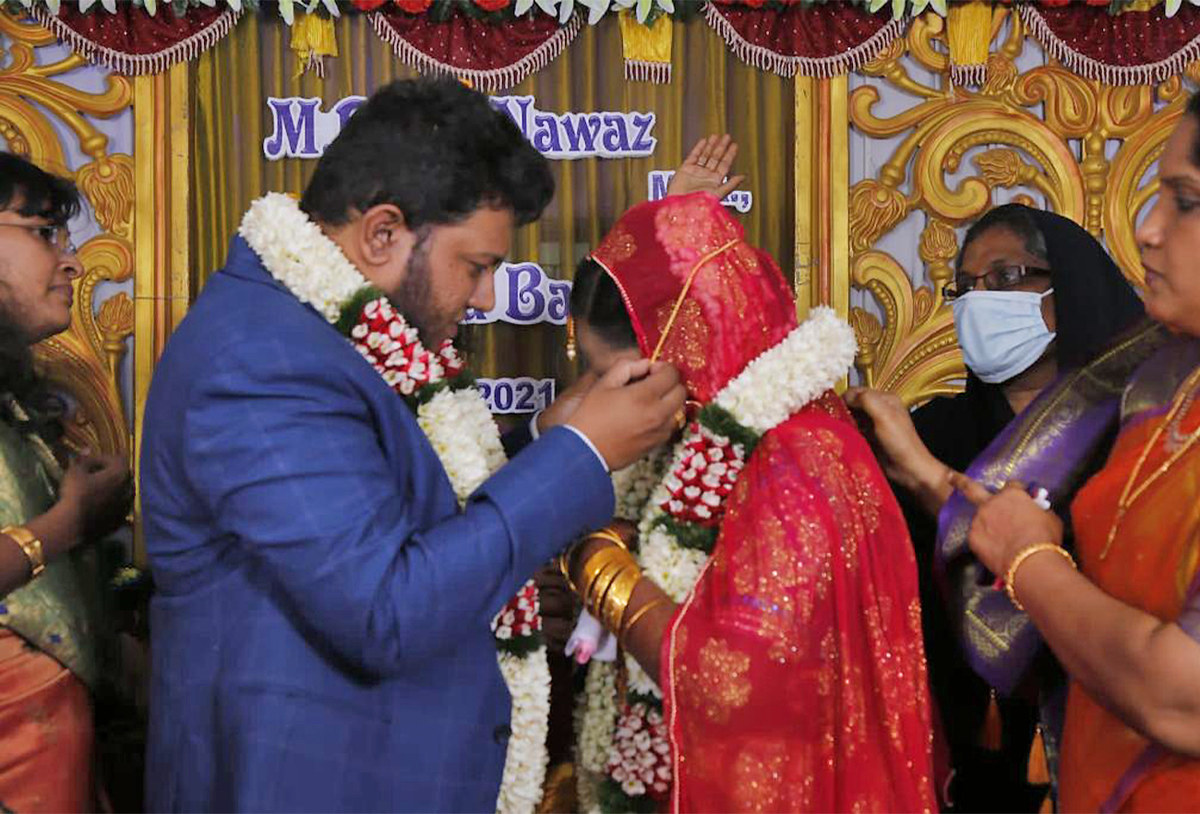


Nasira Banu wears a bridal dress borrowed from Nasar Tootha's "dress bank" during her wedding in Mettupalayam, in India's southern Tamil Nadu state on Dec. 13, 2021. (Photo courtesy: Rabbia Banu)

Her family is one of some 300 across India who have benefited from what Tootha calls his wedding “dress bank.” 
The 38-year-old father of four said the idea to start the initiative, which is based on donations, came to him two years ago. 
“I met many families who were struggling to afford a bridal dress for their daughters, and I thought of helping them,” he told Arab News. 
Through social media, he started asking wealthier families to contribute to the cause after their weddings. 
“We don’t use bridal dresses even once after a wedding ceremony is over, and they remain unused the whole life. I requested people to donate them.” 
At a shop he rents in Thootha village, where he lives, Tootha now has 600 gowns and says donors now reach out to him themselves to support the dress bank. The dresses are usually transported by ordinary people or bus drivers whose routes go through the destinations where the brides live. They are returned the same way. 
“Local people support me and they appreciate my charity work, and I also find pleasure in doing this,” he said, as it makes him happy to “bring smiles on the faces of new brides.” 


Trump invites Colombia’s Petro to White House after earlier threat of military action

Updated 08 January 2026
Follow

Trump invites Colombia’s Petro to White House after earlier threat of military action

  • Relations between Trump and Petro have been frosty since the Republican returned to the White House in January 2025

WASHINGTON/BOGOTA: Days after threatening Colombia with military action, US ​President Donald Trump on Wednesday said arrangements were being made for the country’s President Gustavo Petro to visit the White House, following a call between the two leaders. Trump and Petro said they discussed relations between the two countries in their first call since the US president on Sunday said that a US military operation focused on Colombia’s government “sounds good” to him. That threat followed Trump ordering the US capture of the president of neighboring Venezuela, who ‌was flown to ‌the US to face drug and weapons charges.
“It ‌was ⁠a ​great honor ‌to speak with the President of Colombia, Gustavo Petro, who called to explain the situation of drugs and other disagreements that we have had. I appreciated his call and tone, and look forward to meeting him in the near future,” Trump wrote on social media.
Trump added “arrangements are being made” for a meeting in Washington between himself and Petro, Colombia’s first leftist president, but gave no specific ⁠date for a meeting.
“We have spoken by phone for the first time since he became president,” Petro ‌told supporters gathered at a rally in ‍Bogota meant to celebrate Colombia’s sovereignty, ‍adding he had requested a restart of dialogue between the two countries.
A ‍source in Petro’s office told Reuters the call was “cordial” and “respectful.”
Relations between Trump and Petro have been frosty since the Republican returned to the White House in January 2025.
Trump has repeatedly accused the administration of Petro, without evidence, of enabling a steady ​flow of cocaine into the US, imposing sanctions on the Colombian leader in October.
On Sunday Trump referred to Petro as “a sick ⁠man, who likes making cocaine and selling it to the United States.”
The US in September had revoked Petro’s visa after he joined a pro-Palestinian demonstration in New York following a meeting of the United Nations General Assembly and called on US soldiers to “disobey the orders of Trump.”
Petro, who has been a vocal opponent of Israel’s war in Gaza, had accused Trump of being “complicit in genocide” in Gaza and called for “criminal proceedings” over US missile attacks on suspected drug-running boats in Caribbean waters.
The Trump administration has carried out more than 30 strikes against suspected drug boats since September, in a campaign that has killed at least ‌110 people.