



TORONTO: Canadian Prime Minister Mark Carney said late Sunday trade talks with US have resumed after Canada rescinded its plan to tax US technology firms.
US President Donald Trump said Friday that he was suspending trade talks with Canada over its plans to continue with its tax on technology firms, which he called “a direct and blatant attack on our country.”
The Canadian government said “in anticipation” of a trade deal “Canada would rescind” the Digital Serves Tax. The tax was set to go into effect Monday.
Carney’s office said Carney and Trump have agreed to resume negotiations.
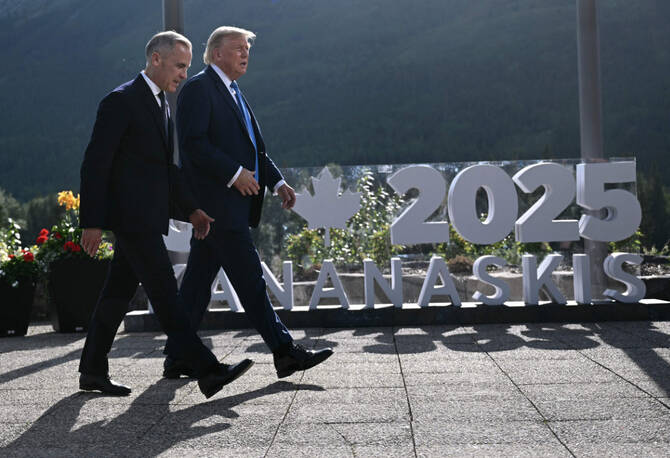
“Today’s announcement will support a resumption of negotiations toward the July 21, 2025, timeline set out at this month’s G7 Leaders’ Summit in Kananaskis,” Carney said in a statement.
Carney visited Trump in May at the White House, where he was polite but firm. Trump traveled to Canada for the G7 summit in Alberta, where Carney said that Canada and the US had set a 30-day deadline for trade talks.
Trump, in a post on his social media network last Friday, said Canada had informed the US that it was sticking to its plan to impose the digital services tax, which applies to Canadian and foreign businesses that engage with online users in Canada.
The digital services tax was due to hit companies including Amazon, Google, Meta, Uber and Airbnb with a 3 percent levy on revenue from Canadian users. It would have applied retroactively, leaving US companies with a $2 billion US bill due at the end of the month.
“Rescinding the digital services tax will allow the negotiations of a new economic and security relationship with the United States to make vital progress,” Canadian Finance Minister François-Philippe Champagne said in a statement.
Trump’s announcement Friday was the latest swerve in the trade war he’s launched since taking office for a second term in January. Progress with Canada has been a roller coaster, starting with the US president poking at the nation’s northern neighbor and repeatedly suggesting it would be absorbed as a US state.
Canada and the US have been discussing easing a series of steep tariffs Trump imposed on goods from America’s neighbor.
Trump has imposed 50 percent tariffs on steel and aluminum as well as 25 percent tariffs on autos. He is also charging a 10 percent tax on imports from most countries, though he could raise rates on July 9, after the 90-day negotiating period he set would expire.
Canada and Mexico face separate tariffs of as much as 25 percent that Trump put into place under the auspices of stopping fentanyl smuggling, though some products are still protected under the 2020 US-Mexico-Canada Agreement signed during Trump’s first term.


