
LONDON: Discussing mental health is becoming more acceptable among Muslim communities in Britain and misconceptions are being properly addressed, experts have claimed.
“Mental health has been around for a long time, but we have not accepted it or actually sought help, and now we need to get minority communities in the UK, and globally, to understand that mental health is not a stigma, it’s not black magic or jinn possession, it is actually an illness,” Mohammed Kothia, an emotional support specialist, told Arab News.
“There’s a realization now that it’s ok to not be ok, it’s better to speak and address the problems one has, rather than suffer in silence or brush it under the carpet,” he said.
Another common misconception is that non-religious mental health professionals will impose their views on you and undermine your Islamic beliefs, Kothia added.
Muslim communities tend to go spiritual healers who may have no mental health background, rather than skilled, qualified professionals who have ethical obligations and a code of conduct.
“It’s important to seek help in the correct place, and I think as a community, maybe we have failed at times to do that,” he said, adding: “If Islam and your spirituality is an important factor in your life, then you should have an open discussion with your therapist or counselor.”
Kothia said that Muslims have the same issues as everyone else.
For example, the COVID-19 outbreak and lockdowns have caused stress, anxiety, depression and isolation to affect all groups. Families have struggled with death and grieving, especially when they were unable to see loved ones during the final stages of their lives or to perform normal funeral rites due to government restrictions.
Kothia said financial implications may become more severe in the months to come due to the pandemic, a rise in inflation, unemployment — especially among youth — cost of living, and a worsening energy crisis.
Personal wellbeing in the UK during the first and second wave of the pandemic was among the lowest levels in a decade, the Office for National Statistics said in its annual report earlier this month.
There has been a significant increase in the number of people accessing mental health services in the last year, according to the UK National Health Service, and as a result, a number of charities and organizations have taken a proactive focus to address the core of the problem.
Kothia, who is also heavily involved at his local mosque in east London and sees the issues in the community firsthand, said in the last five years, there had also been a massive rise in Muslim and other minority counselors and emotional support volunteers that are “breaking barriers,” and the next stage is to get more Muslim specialists in the field.
The other positive is the youth are now being taught about mental health, with hopes that it will not be stigmatized.
This comes down to education, Kothia said, which is why “awareness in the Muslim community and the wider society, will lead to more of us working in the field, and the more awareness we can bring to our communities, then naturally, that collective work will lead to a positive outcome.”

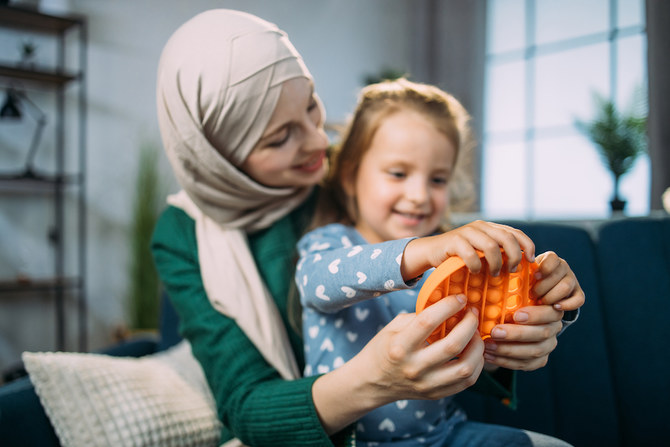
Muslim communities tend to go spiritual healers who may have no mental health background, rather than skilled, qualified professionals who have ethical obligations and a code of conduct. (Shutterstock)
The London-based mental health and bereavement charity Supporting Humanity runs a free emotional support helpline, and said in the last three months they have seen a sharp increase in calls.
Many people feel they are not heard and are worried of being judged, so the key is active listening, anonymity and confidentiality, Kothia, who also volunteers at the helpline, said. “We underestimate the power of lending an ear and listening.”
Supporting Humanity, which was set up at the start of the pandemic and has trained nearly 30 people to be mental health advisers, said the elderly were among their top callers.
“The pandemic has left a lasting impact on our elderly, and their anxiety and depression levels, and I think the government hasn’t addressed this issue that ‘shielding’ has had a massive impact on our society,” Kothia said.
Levels of loneliness in Britain have increased since last spring, and 5 percent of people (about 2.6 million adults) said that they felt lonely “often” or “always,” and that proportion increased to 7.2 percent of the adult population (about 3.7 million) by February, the ONS said in April.
“Some of them have been struggling for years and they talk about how they thought about committing suicide numerous times, how they trap themselves in a room because they’re embarrassed or scared to go and talk to other people, there’s so many people out there with various different mental health issues,” said Idris Patel, the charity’s CEO.
He also said more marketing campaigns and outreach programs are needed in community centers, schools and universities, businesses, GP surgeries as well as religious centers and mosques as they are “catchment areas” for people who are suffering or contemplating suicide.
The charity also regularly trains imams to explain the differences between black magic and mental health, directing people to professionals and charities, and highlighting free services.
Suicide and attempted suicide rates in the Muslim community have increased, particularly among youth, which account for half of the British Muslim population. A report released in July by the Better Community Business Network, a Muslim-led organization supporting mental health and positive wellbeing of Muslim communities across the UK, in partnership with the University of East London, found that 64 percent of Muslim youth said they experience suicidal thoughts and nearly one-fifth said they had turned to no one when undergoing difficulties.
Addiction is another major issue, Patel said, as parents are not tackling the root of the problem, are embarrassed to admit their child has a drug or alcohol problem, and do not seek professional help. So is domestic violence, he added.

Idris Patel, CEO of Supporting Humanity, was awarded the British Citizen Awards and the British Empire Medal by Queen Elizabeth II in October for his work in the community. (Supplied/Supporting Humanity)
Shamam Chowdhury was introduced to the charity after her 22 year-old son was murdered and needed funeral services, and was also introduced to mental health and emotional support.
British-Bangladeshi Mohammed Aqil Mahdi, an accounting and finance student at Greenwich University, was found stabbed to death in east London on Nov. 6. An online fund has been set up in his memory to raise money for a mosque in Egypt.
“I was very overwhelmed because I’ve never been in this kind of situation and one, I’ve just lost my son, which was shocking itself, and second, not knowing or understanding anything,” she said.
With police inspectors contacting her for statements, and then finding out she would not be able to see her son until after the postmortem examination, the 45 year-old single mother felt lost and alone.
The charity stepped in and handled all the paperwork, logistics, postmortem, the ghusl (the washing process Muslims have to undertake before burial), the burial and the funeral (janazah) prayer, as part of the end-to-end bereavement services its offers to help people focus on grieving.
“When you are in that kind of situation where you’ve just lost, I would say, your most valuable thing in this world, and then being in a situation where you have no clue how to go about these things,” she said, describing the torment of her experiences, but added that an emotional support adviser made her feel “like there was a light at the end of the tunnel.”
She continued: “(The counselor) would take his time in the conversation to give me that emotional support, just simply by listening, asking simple questions like ‘how are you feeling today?’ And then from the Islamic side, he would give examples of hadith or Qur’anic verses that gave me comfort and content, it made a huge difference and it gave me confidence,” Chowdhury said.

British-Bangladeshi Mohammed Aqil Mahdi, an accounting and finance student at Greenwich University, was found stabbed to death in east London on Nov. 6. (Supplied/Shamam Chowdhury)
Describing herself as a strong woman, and the family sharing a tight-knit, unique bond, his sudden death hit them quite hard, having never experienced mental health issues before, the whole situation was unfamiliar to them.
Chowdhury also received emotional support for her two daughters, Anjuman, 25, and Hidayah, 10, and the eldest also became involved in some of the charity’s work, “because helping others meant that would help her to overcome it as well.”
She added that she has no problem paying for mental health services, but thinks the majority of services give “false hope,” charge extremely high prices, and in most cases don’t produce qualitative results.
Chowdhury, who is self-employed and has been teaching the Qur’an for 18 years, said talking, sharing and getting that support is so important, and urged people not to be afraid and not to let society take over.
“Our Muslim society plays a big role in people seeking help, because they make them feel it’s something that you should just get on with (and) we all feel sometimes that seeking help, or seeking support, or sharing is a sign of weakness, but it’s not, it’s is actually a sign of strength.”