

Saudi irrigation body signs deal with UN for 2 projects

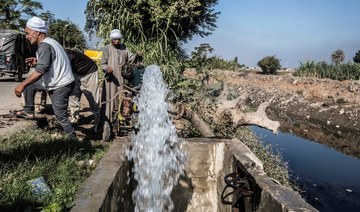
The two organizations will develop and design key strategies to promote water use efficiency in the Kingdom. (Supplied)
Short Url
Updated 29 December 2021
Follow

Saudi irrigation body signs deal with UN for 2 projects

  • Association between FAO and the Kingdom has also further developed in the past 15 years through four major projects

ROME: The Saudi Irrigation Organization (SIO) and Food and Agriculture Organization of the UN (FAO) announced this week new cooperation to support the Kingdom’s national irrigation strategy in accordance with Vision 2030.

SIO manages and develops the irrigation sector in the Kingdom, conserves natural resources, maintains an integrated irrigation system and upgrades field efficiency through the expansion of non-conventional water use.

Two new project agreements, aimed at “promoting efficient irrigation and water productivity among farmers” and “enhancing national capacities for irrigation management,” were signed by SIO President Dr. Fuad bin Ahmed Al-Sheikh Mubarak and FAO-KSA Program Director Dr. Abubakr Mohamed, on behalf of the FAO director general, the Rome-based UN agency said in a statement.

The two organizations will develop and design key strategies to promote water use efficiency in the Kingdom.

They will advance Saudi irrigation technologies and practices, efficient drainage management, codes and standards, and will build a national irrigation database.

With a fund provision of $6.8 million, the new collaboration reinforces the Kingdom’s position as a leading partner of the FAO, both in the Middle East and worldwide.

Mubarak said that the new cooperation with FAO will enhance national capacities to develop and manage the irrigation sector in the Kingdom.

Mohamed praised the SIO “for the trust it places in FAO and for its constructive contributions to support the efforts aimed at promoting the country’s sustainable management and development of irrigation systems.”

He also hailed Saudi Arabia’s support for the FAO and its efforts, noting that that first technical cooperation between FAO and the Kingdom took place in Jazan in 1952.

The association between FAO and the Kingdom has also further developed in the past 15 years through four major projects, he added.

Deal signed to boost hospitality, heritage studies

Updated 12 sec ago
Follow

Deal signed to boost hospitality, heritage studies

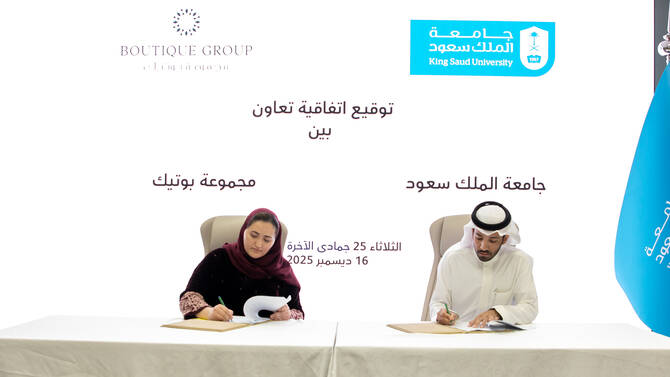
Riyadh: Boutique Group, a hospitality company owned by the Public Investment Fund, has signed a memorandum of understanding with King Saud University in Riyadh to strengthen collaboration between the hospitality and academic sectors, promote heritage and cultural activities, and support scientific research.

The MoU was signed by Boutique Group CEO Christophe Maris and Ali Al-Mismali, acting president of the university, according to a press release.

Maris said the partnership supports the group’s vision of creating a Saudi model of luxury hospitality rooted in the Kingdom’s values and heritage.

“At Boutique Group, we are building a Saudi model of luxury hospitality that draws on the Kingdom’s values and heritage and presents them to the world at global standards,” he said.

“The palaces we revive are not just hospitality destinations; they are cultural masterpieces that preserve regional memory. This partnership empowers national talent and advances research and practical specializations that safeguard Saudi heritage while delivering refined, contemporary hospitality experiences.”

Salman Al-Otaibi, dean of the College of Tourism and Archeology, said the agreement aligns with the college’s strategy to build impactful partnerships.

“Collaboration with Boutique Group is a key pillar in advancing applied education and enhancing our students’ readiness for national and international markets,” he said.

“This partnership will strengthen the university’s role in preserving and revitalizing historical palaces, support Saudi Vision 2030, and reinforce the college’s leading position in developing the Kingdom’s heritage and hospitality sectors.”

Under the agreement, both parties will exchange expertise in preserving rare artifacts and developing academic competencies to safeguard national heritage and prepare future specialists.

The collaboration also includes architectural surveys and documentation of historical palaces in line with the highest scientific standards.

The MoU establishes a framework for cooperation across educational and professional tracks, including programs related to heritage, museums, crafts, and traditional industries, as well as cultural activities that enrich visitor experiences.

It also includes joint efforts to develop specialized training programs aligned with future market needs.