

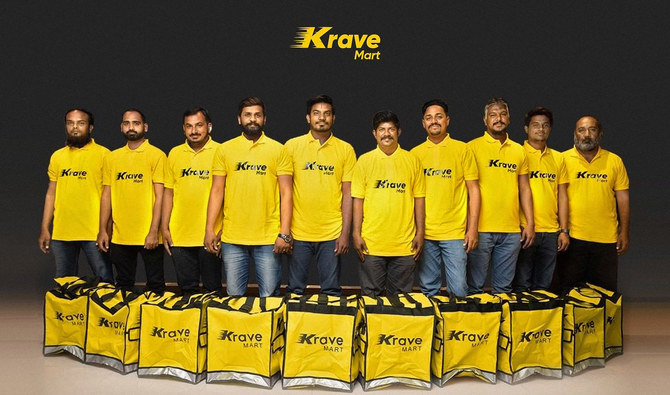

KARACHI: Krave Mart, a Karachi-based quick-commerce startup that delivers goods within 10 minutes and recently raised $6 million in a pre-seed funding round, plans to expand to Lahore and Islamabad and create around 8,000 jobs locally as well as launch in major South Asian countries, the company’s founder said this week.
Pakistan has seen more money flow into its nascent technology sector during 2021 than in the previous six years combined. Many global venture capital firms have invested in Pakistan for the first time in the current wave, including Kleiner Perkins, an early investor in Google and Amazon.com Inc.
Traditional e-commerce revolutionized the delivery landscape through online ordering, but even today delivery times average between 3-5 business days and larger orders are encouraged, for example through free delivery incentives etc. Q-commerce brings small quantities of goods to customers almost instantly. It has boomed in the past year as the pandemic forced shopping online and put a new premium on ultra-rapid deliveries of food and goods from relatively local stockrooms or hubs.
Krave Mart, the first to introduce q-commerce in Pakistan, has attracted funding from Chinese MSA Capital, Russian ru-Net, German Global Founders Capital and Islamabad-based Zayn Capital. Saison Capital, +92Ventures, 2AM, Mehta Ventures, Jeddar Capital, Lakson Investment and multiple strategic angel investors also participated in the funding round.
“The funds would be utilized to set up over 100 supply hubs across Pakistan to ensure fastest deliveries in 10 minutes,” founder and CEO Kassim Shroff told Arab News on Monday.
Krave Mart was co-founded in November this year by a team of former executives of Daraz, Foodpanda and Swvl. It is currency operating in five areas of Karachi and is in process of expanding to 12 others. The startup has adopted the hub and spoke model to ensure delivery takes place within 10 minutes in an up to three kilometer radius in Karachi.
The hub and spoke model refers to a distribution method in which a centralized "hub" exists and everything either originates in the hub or is sent to the hub for distribution to consumers. From the hub, goods travel outward to smaller locations owned by the company, called spokes, for further processing and distribution.
“By the end of January 2022 we expect to cover around 100 percent of Karachi’s targeted population,” Shroff said. “By end of January or early February 2022, we would start operations in Lahore and then move on to Islamabad.”
The startup hopes to create around 8,000 jobs once it has over 100 hubs in major cities of Pakistan.
“On average each hub creates job opportunities for around 80 people, including the riders,” Shroff said. “Operationalization of all hubs would create huge job opportunities,” he added.
The Krave Mart chief said the startup planned to start operations in Bangladesh, Sri Lanka and Nepal in future: “We want to focus on South Asian for overseas expansion.”
A funding frenzy in Pakistan’s startup scene this year has seen investments cross $300 million after two e-commerce companies raised fresh funds.
Bookme, the largest online travel and ticketing platform in the country, raised $7.5 million in its Series A round, according to its founder Faizan Aslam. Bagallery, a beauty and fashion startup, separately raised $4.5 million in a similar round, co-founder Salman Sattar said. Both rounds were co-led by Zayn Capital, Lakson Venture Capital and Hayaat Global.
Pakistan’s e-commerce industry is just picking up with online retail accounting for about 2% of gross domestic product, compared with 20% in Indonesia. Alibaba Group Holding Ltd.’s Daraz Group, the largest e-commerce company in Pakistan, expects to double its retail volume every year over the next five years, sustaining the pace of the past four years, Bloomberg has reported.



