BETHLEHEM: After collecting dust for nearly two years, the 228 rooms at Bethlehem’s Ararat Hotel were scrubbed last month in anticipation of a post-lockdown Christmas boom, hopes that have again been dashed by the coronavirus.
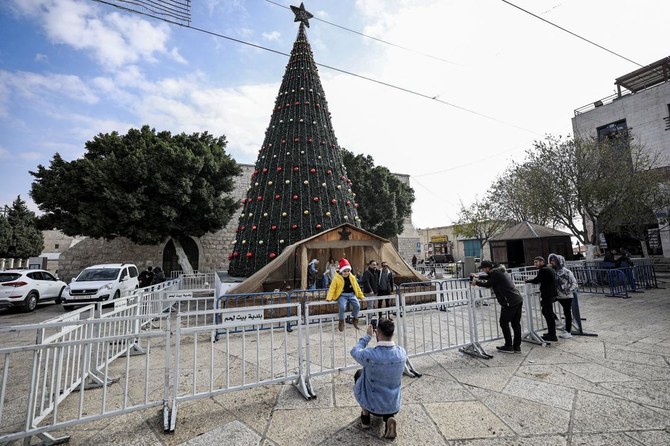
A large Christmas tree and decorations did little to brighten a deserted lobby.
Like other hotels in Bethlehem, the Ararat has no guests, with the tree offering cheer to no one but the seven out of 105 employees who have not been fired.
“We were expecting 70 percent occupancy for Christmas but all overseas reservations have been canceled,” said Augustine Shomali, a manager at the hotel.
The people of Bethlehem — a Palestinian city in the Israeli-occupied West Bank considered the place of Christ’s birth according to Christian tradition — are used to welcoming an influx of tourists each December.
After a near-total pandemic lockdown last year, Bethlehem began to hope for a joyous Christmas when Israel, which controls all access points to the city, announced in October that it would reopen to foreign tourists on November 1.
But less than a month later, just as hotels were getting a makeover and businesses were replenishing their stocks in anticipation of the holiday season, Israel closed again.
The first case of omicron — a highly transmissible strain of the coronavirus detected by South Africa on November 24 — had been discovered in Israel, and foreign tourists were barred from entry.
All that Shomali can hope for now is a meagre amount of local tourism, and only a dozen rooms at Ararat have booked for Christmas weekend.
The hotel manager is closely following the news in Israel in hopes a reopening to tourists could save his establishment, but Israeli media have reported that with omicron raging across much of the West the government is considering tightening restrictions, not loosening them.
While Israeli hotels have been compensated by the Jewish state, Palestinian ones have received nothing, and Shomali’s livelihood is hinging on the policies of a government in a country where he cannot vote.
Before the Covid-19 pandemic, more than three million people visited Bethlehem each year.
More than 20 percent of the city’s population is employed in the tourism sector, but the jobless rate has risen from 23 percent to 35 percent through the pandemic.
The Palestinian Authority, the civil authority in parts of the West Bank, is mired in an economic crisis and has only offered affected workers in Bethlehem’s hard-hit tourism sector a one-time stipend of 700 shekels ($224).
Sitting outside his Armenian ceramics shop next to the Church of the Nativity, marked as the site of Christ’s birth, Afram Shaheen told AFP “there is no work.”
“I open the shop, drink a cup of coffee, and go home,” he said, smoking a cigarette.
Shaheen said that since Bethlehem became the first Palestinian city to go into lockdown in March 2020, he has had just one customer, a French woman who bought $23 worth of ceramics — his total sales revenue so far during the pandemic.
“This used to be pocket money for me,” he said, explaining that he smokes three packs of cigarettes a day, which cost him about $27 (24 euros).
Like many tourist shops in Bethlehem, Shaheen is selling old merchandise. “I didn’t order anything new, there is no market, no demand.”
In the shop next door, which sells olive wood icons, Nadia Hazboun said the city’s handicraft shops specializing in woodwork and mother of pearl have stopped working entirely.
“Many people sold their businesses,” she said, adding that in the absence of any government assistance, owners and employees were facing debt and lawsuits.
“Two years ago, Bethlehem was a capital,” said Hazboun, I used to close the shop at 9:00 pm. And now it’s completely destroyed. This lockdown is a disaster.”
Bethlehem has survived past crises, notably waves of unrest during the Israeli-Palestinian conflict that have also dampened tourism, and Shomali said residents were surviving on hope.
Asked if he has hope for next Christmas, Shomali answered “Next Christmas? I have hope for Easter.”


![]()

In Bethlehem, omicron ruins hope for Christmas boom
Short Url
https://arab.news/4beqp
In Bethlehem, omicron ruins hope for Christmas boom
- A large Christmas tree and decorations did little to brighten a deserted lobby
- The first case of omicron had been discovered in Israel, and foreign tourists were barred from entry


Latest updates


Recommended


© 2026 SAUDI RESEARCH & PUBLISHING COMPANY, All Rights Reserved And subject to Terms of Use Agreement.