ISLAMABAD: The Punjab government has decided to hold an in-jail trial of suspects in the lynching of a Sri Lankan factory manager who was beaten and set ablaze by a mob in Pakistan over blasphemy allegations last Friday, local media reported on Sunday.
In Pakistan, mere allegations of blasphemy can trigger mob attacks. The country’s blasphemy law carries a possible death penalty.
The decision to hold the trial in the case inside the prison was taken after a meeting between the prosecution team and the provincial government.
“The prosecution has asked the jail administration to make the necessary arrangements to conduct the trial [inside jail], while the police have been directed to complete the necessary legal procedures and submit the completed challans to the court as soon as possible,” the Express Tribune newspaper reported.
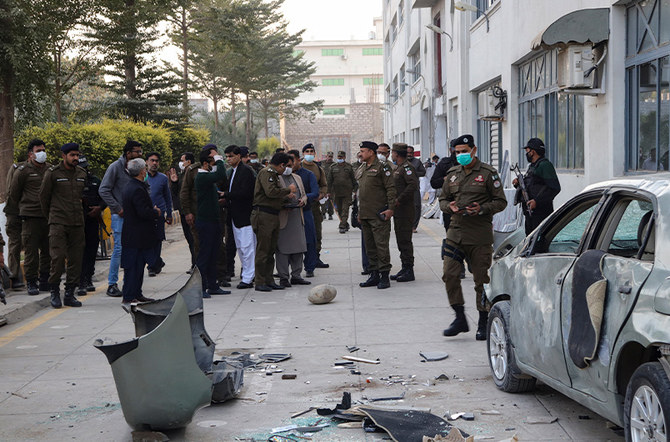
Priyantha Kumara was assaulted by a mob of hundreds of people and was dragged into the street and set on fire last Friday in the Pakistani city of Sialkot where he helped run a sports equipment factory. Workers at the factory accused him of desecrating posters bearing the name of Islam’s Prophet Muhammad (PBUH).
Pakistani police have arrested dozens of people in connection with the violence, and Prime Minister Imran Khan has promised severe punishment for those found guilty.

Punjab government says Sialkot lynching accused to be tried inside jail
https://arab.news/n5w4r
Punjab government says Sialkot lynching accused to be tried inside jail
- Sri Lankan Priyantha Kumara was lynched by a mob over blasphemy suspicions last week
- In Pakistan, mere allegations of blasphemy can trigger mob attacks
EU, Pakistan sign €60 million loan agreement for clean drinking water in Karachi
- Project will finance rehabilitation, construction of water treatment facilities in Karachi city, says European Investment Bank
- As per a report in 2023, 90 percent of water samples collected from various places in city was deemed unfit for drinking
ISLAMABAD: The European Investment Bank (EIB) and Pakistan’s government on Wednesday signed a €60 million loan agreement, the first between the two sides in a decade, to support the delivery of clean drinking water in Karachi, the EU said in a statement.
The Karachi Water Infrastructure Framework, approved in August this year by the EIB, will finance the rehabilitation and construction of water treatment facilities in Pakistan’s most populous city of Karachi to increase safe water supply and improve water security.
The agreement was signed between the two sides at the sidelines of the 15th Pak-EU Joint Commission in Brussels, state broadcaster Radio Pakistan reported.
“Today, the @EIB signed its first loan agreement with Pakistan in a decade: a €60 million loan supporting the delivery of clean drinking water for #Karachi,” the EU said on social media platform X.
Radio Pakistan said the agreement reflects Pakistan’s commitment to modernize essential urban services and promote climate-resilient infrastructure.
“The declaration demonstrates the continued momentum in Pakistan-EU cooperation and highlights shared priorities in sustainable development, public service delivery, and climate and environmental resilience,” it said.
Karachi has a chronic clean drinking water problem. As per a Karachi Water and Sewerage Corporation (KWSC) study conducted in 2023, 90 percent of water from samples collected from various places in the city was deemed unsafe for drinking purposes, contaminated with E. coli, coliform bacteria, and other harmful pathogens.
The problem has forced most residents of the city to get their water through drilled motor-operated wells (known as ‘bores’), even as groundwater in the coastal city tends to be salty and unfit for human consumption.
Other options for residents include either buying unfiltered water from private water tanker operators, who fill up at a network of legal and illegal water hydrants across the city, or buying it from reverse osmosis plants that they visit to fill up bottles or have delivered to their homes.
The EU provides Pakistan about €100 million annually in grants for development and cooperation. This includes efforts to achieve green inclusive growth, increase education and employment skills, promote good governance, human rights, rule of law and ensure sustainable management of natural resources.


