MANILA: A gunman shot and killed a journalist who was watching TV at a store in a central Philippine city, in a brazen attack in what has long been regarded as one of the world’s most dangerous countries for journalists.
Jesus Malabanan, a 58-year-old provincial correspondent for the Manila Standard newspaper, died while being transported to a hospital after being shot once in the head by one of two motorcycle-riding men Wednesday night at a family store he was tending in Calbayog city in Samar province, police and officials said Thursday.
The suspects escaped and a police investigation is underway to identify them and a motive for the attack.
Media watchdog groups condemned the killing, including Malabanan’s colleagues in Pampanga, a province north of Manila where he was based and worked for years as a news correspondent and as a stringer for Reuters.
A media protection body created by President Rodrigo Duterte strongly condemned the killing and vowed to arrest the killers. But Duterte himself has long been in the crosshairs of media watchdogs and human rights groups, which have repeatedly condemned him for fostering impunity among the police forces that have enforced his crackdown against illegal drugs and left thousands of mostly petty suspects dead.
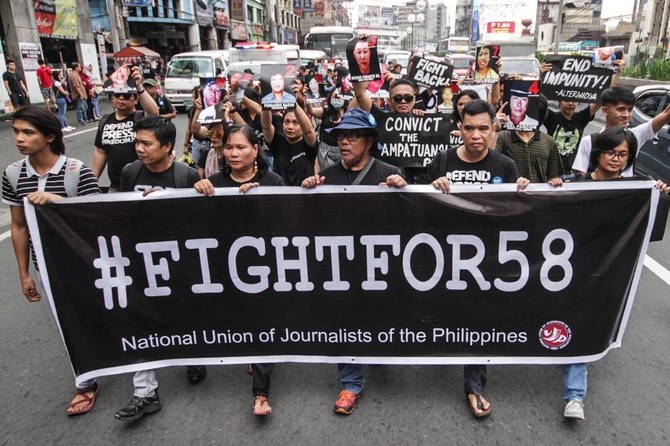
Dozens of journalists have been killed or come under attack under Duterte and his predecessors. In 2009, members of a powerful political clan and their associates gunned down 58 people, including 32 media workers, in a brazen execution-style attack in southern Maguindanao province that horrified the world.
While the mass killing was later linked to a violent electoral rivalry common in many rural areas, it also showcased the threats faced by journalists in the Philippines. A surfeit of unlicensed guns and private armies controlled by powerful clans and weak law enforcement in rural regions are among the security concerns journalists face in the poverty-stricken Southeast Asian country.
Thirty-two of those gunned down in Maguindanao’s Ampatuan town were local reporters and media workers. It was the deadliest single attack on journalists in recent history, media watchdogs say.
A Philippine court found key members of the Ampatuan family guilty of the mass killings in 2019 but many more suspects remain at large.


![]()

Filipino journalist shot dead while watching TV in store
Short Url
https://arab.news/rvt87
Filipino journalist shot dead while watching TV in store
- Jesus Malabanan is provincial correspondent for the Manila Standard newspaper
- A media protection body created by President Rodrigo Duterte strongly condemned the killing


Latest updates



Recommended


© 2026 SAUDI RESEARCH & PUBLISHING COMPANY, All Rights Reserved And subject to Terms of Use Agreement.