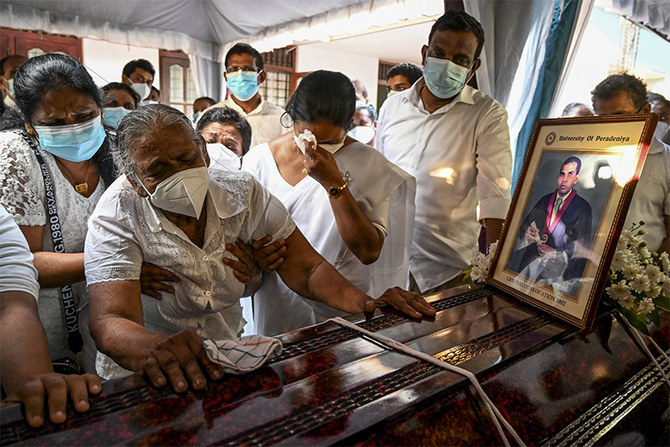
COLOMBO, Sri Lanka: The body of a Sri Lankan factory manager who was tortured and set on fire by a mob in Pakistan for alleged blasphemy was buried in his native village with state honors on Wednesday.
Buddhist clergy performed religious rites at the home of Priyantha Kumara before police led a procession in which family and friends carried the casket with his charred remains to the cemetery.
The road was decorated with condolence banners and white flags symbolizing mourning.
Kumara was assaulted by a mob of hundreds of people and was dragged into the street and set on fire last Friday in Sialkot, Pakistan, where he helped run a sports equipment factory. Workers at the factory accused him of desecrating posters bearing the name of Islam’s Prophet Muhammad (PBUH).
The victim’s brother, Arunasiri Wasantha Kumara Diyawadana, who also works as a technical director at a garment factory in Pakistan, said factories should have a secure environment.
“That was not happening in this particular case,” he said.
He called for an improvement in management practices so any dispute can be resolved before it is too late.
He said the two governments should determine “the actual root cause for this, either if it’s a religious matter or an industrial dispute, and accordingly they have to find a solution.”
In Pakistan, mere allegations of blasphemy can trigger mob attacks. The country’s blasphemy law carries a possible death penalty.
Pakistani police have arrested dozens of people in connection with the violence, and Prime Minister Imran Khan has promised severe punishment for those found guilty.


![]()

Sri Lankan man lynched in Pakistan laid to rest in native village with state honors
Short Url
https://arab.news/6mqxx
Sri Lankan man lynched in Pakistan laid to rest in native village with state honors
- The road to the cemetery was decorated with condolence banners and white flags symbolizing mourning
- Priyantha Kumara’s brother, who also works at a garment factory in Pakistan, called for secure work environment
Latest updates


© 2026 SAUDI RESEARCH & PUBLISHING COMPANY, All Rights Reserved And subject to Terms of Use Agreement.