Red Sea Film Festival a ‘breakthrough’ for Arab and international films, says Jack Lang

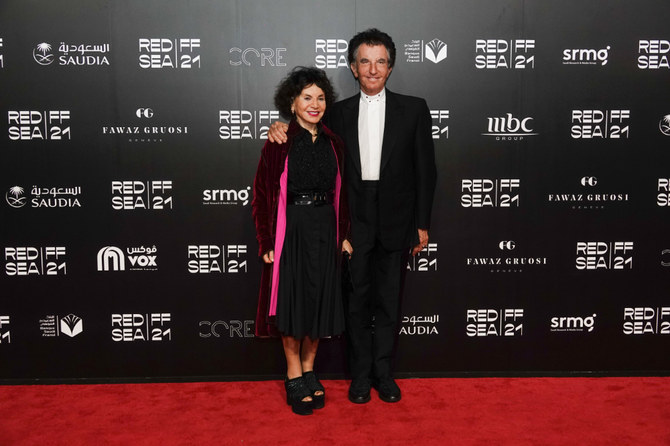
Lang said it is an event designed “for Arab cinema” and for international filmmakers to make a breakthrough. (AN photo by Huda Bashatah)
Short Url
Updated 09 December 2021
Follow

Red Sea Film Festival a ‘breakthrough’ for Arab and international films, says Jack Lang

  • According to the Arab World Institute president: ‘A real cultural revolution is underway in Saudi Arabia — it is extraordinary’

JEDDAH: The enthusiasm of Jack Lang, president of the Arab World Institute in Paris, is contagious as he shares his thoughts about the inaugural Red Sea International Film Festival with Arab News en Francais.

Lang, who also served as minister of culture in his native France in the 1980s and 90s, said that even two years ago he could not have imagined an international film event such as this taking place in Jeddah.

“It was an absurd idea,” he said and yet now “a real cultural revolution is underway in Saudi Arabia” under the direction of the country’s leaders. “It is extraordinary,” he added. In particular, he praised the role Minister of Culture Prince Badr bin Abdullah bin Farhan has played.

Since cinemas reopened almost three years ago there has been a major cultural renaissance in the Kingdom on all levels, Lang said. He praised the great developments in arts and culture, particularly in film through the launch of the Red Sea Film Festival, which began on Dec. 6 and continues until Dec. 15. Lang said it is an event designed “for Arab cinema” and for international filmmakers to make a breakthrough.

It is also a sign of the winds of change that have been blowing though Saudi Arabia in the past few years, and this is something that is not lost on Lang.

The authorities in the Kingdom understand that “culture, education, knowledge and science” represent the future, he said, and “a source of happiness as well as human and economic development for citizens.”

Support for culture and the arts, in their various forms, has been a significant driver of the longstanding relationship between France and Saudi Arabia. Lang said he is a member of the consultative council to the Royal Commission for AlUla, and that he appreciates the efforts Saudi authorities are making to preserve, renovate and develop this important historical and cultural site not only for Kingdom but for the entire world.


GALLERY

Stars shine at RSIFF on the third night of the film festival


“France is very present (in projects in AlUla) and I, myself, am participating in the development of the splendid site” by helping to organize an exhibition on AlUla, he said. “We plan on making the exhibition international” by taking it to Russia, the US and other countries.

“Here in the Kingdom there is ambition, a vision,” Lang added, as he thanked and congratulated the Saudi authorities for all they have done to develop arts and culture.

“There is a freedom to meet one another and to share” in the Saudi Arabia of today, he said. “I am not saying everything is perfect but I have confidence in humanity and in the ability to invent a new society in Jeddah.”

This story originally appeared in French on Arab News en Francais 


Review: Netflix docuseries highlights the ugly truth of ‘America’s Next Top Model’

Updated 25 February 2026
Follow

Review: Netflix docuseries highlights the ugly truth of ‘America’s Next Top Model’

DHAHRAN: Out this month, nearly a decade after the successful show went off air, there is understandably a lot to unpack in Netflix’s three-episode documentary series “Reality Check: Inside America’s Next Top Model.”

Premiering in 2003 and running for 24 seasons until 2018, “America’s Next Top Model” invited aspiring models from across America to compete for a coveted modeling contract, and a glossy magazine cover (remember those?).

All this while juggling growing pains, random challenges cooked up by producers, marvelously messy makeovers, photoshoots, and living — and competing — with fellow contestants.

What could go wrong? Turns out — plenty. The show’s intimate format made for compelling TV.

Tyra Banks, one of America’s top models, was the show’s brainchild.

The young contestants were impressionable and eager, full of sky-high dreams and sky-high heels. They came from fractured backgrounds or from small towns. They were meant to have a mentor in Banks.

Instead, their deepest, most shameful moments were broadcast for the world to see. To my knowledge, while some contestants became semi-successful, none truly reached the “top model” level.

The docuseries hits like a punch in the face. And maybe that is the point.

Three episodes, each just an hour long, barely scratches the surface of the trauma, chaos, and behind-the-scenes drama on and off the screen.

The series is essentially a catwalk down nostalgia lane — but the road is uneven and swerving, much like the show itself. The style of filming is also similar to the show, which makes it all the more compelling for avid fans.

Designed for the TikTok-and-meme generation, these bite-sized scenes in the docuseries are tailor-made for viral clips.

Banks appears alone in every scene. Speaking directly at the camera, she seems to shrug through every apology and justify her past behavior.

The docuseries highlights interviews with main judges: Jay Manuel, Nigel Barker, and most prominently, a shocking update on beloved judge J. Alexander, known as “Miss J.” All claim to be estranged from Banks.

A few former contestants are also featured, each seated alone as tears or rage bubble to the surface. Nobody speaks favorably about Banks, especially while replaying clips showing her old judging panels.

Was this backlash justified? Are the vicious things said about Banks fair? The docuseries offers viewers the chance to be the judge in what invariably turns into a trial of Banks and her role on the show.

The docuseries ends on a cliffhanger, teasing a possible revival for cycle 25. Mixed feelings aside, there is clearly an audience for it.