

CPJ condemns Iraqi journalist’s arrest

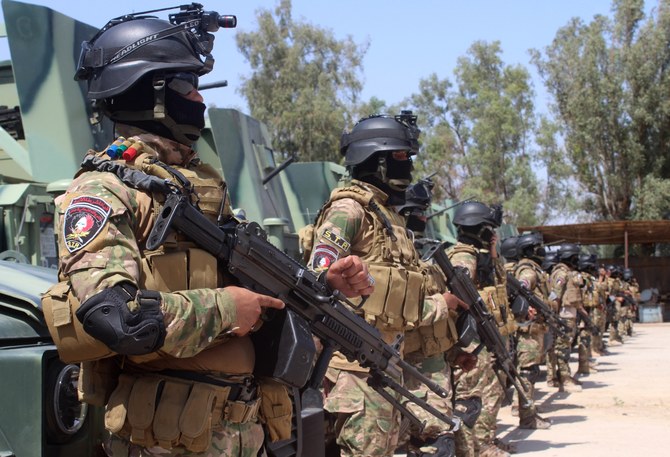
n the 2021 World Press Freedom Index, Iraq ranked 163rd out of 180 countries. (File/AFP)
Short Url
Updated 09 December 2021
Follow

CPJ condemns Iraqi journalist’s arrest

  • The Committee to Protect Journalists condemned the arrest of Iraqi reporter Hamid Majed and urged Iraqi police to release him immediately

LONDON: The New York-based Committee to Protect Journalists on Thursday condemned the arrest of Iraqi reporter Hamid Majed and urged Iraqi police to release him immediately. 

Hamid Majed, a reporter for Al-Ahd TV, was called to the Anbar Crime Directorate in the city of Habbaniyah on Wednesday to discuss an “important topic” over coffee. Once Majed arrived, however, police officers arrested him. 

“Luring a journalist to a police station to arrest him is not only shameful practice, but an abuse of police power,” said CPJ’s Middle East and North Africa representative Ignacio Miguel Delgado. 

“We call on Iraqi authorities to release Hamid Majed immediately and allow journalists to do their work freely and without fear of retaliation.”

Director of public relations at Al-Ahd TV, Reda Al-Akaili, said that Majed’s arrest is likely related to his reporting on the deteriorating conditions and public services in Anbar province in Iraq.

His reporting “has angered the relevant authorities and officials in Anbar province and prompted them to arrest Majed and prevent him from performing his duties,” Al-Akaili said.

In the 2021 World Press Freedom Index, Iraq ranked 163rd out of 180 countries. Since the 2019 anti-government protests, Iraqi journalists have increasingly been targeted for covering protests, investigating corruption, and reporting the demands of demonstrators. 


DCO and Arab News partner to combat digital misinformation, explore AI’s impact on media

Updated 06 February 2026
Follow

DCO and Arab News partner to combat digital misinformation, explore AI’s impact on media

KUWAIT CITY: The Digital Cooperation Organization (DCO) and the international Saudi newspaper Arab News have signed a Letter of Engagement aimed at strengthening knowledge and expertise exchange on the impact of artificial intelligence in the media sector, as well as leveraging expert insights to develop best practices to combat online misinformation amid accelerating technological advancements.

DCO said this step aligned with its efforts to strengthen collaboration with international media institutions to support responsible dialogue around digital transformation and contribute to building a more reliable, inclusive, and sustainable digital media environment.

Commenting on the agreement, Deemah AlYahya, Secretary-General of the Digital Cooperation Organization, said: “At a moment when AI is reshaping how truth is produced, distributed, and trusted, partnership with credible media institutions is essential.”

She added that “working with Arab News allows us to bridge technology and journalism in a way that protects integrity, strengthens public trust, and elevates responsible innovation. This collaboration is about equipping media ecosystems with the tools, insight, and ethical grounding needed to navigate AI’s impact, while ensuring digital transformation serves people and their prosperity.”

Faisal J. Abbas, Editor-in-Chief of Arab News, emphasized that the partnership enhances media institutions’ ability to keep pace with technological shifts, noting that engagement with representatives of DCO Member States enables deeper understanding of emerging technologies and regulatory developments in the digital space.

He added: “DCO’s commitment to initiatives addressing online content integrity reflects a clear dedication to supporting a responsible digital environment that serves societies and strengthens trust in the digital ecosystem.”

The Letter of agreement was signed on the sidelines of the Fifth DCO General Assembly held in Kuwait City under the theme “Inclusive Prosperity in the Age of AI”, alongside the second edition of the International Digital Cooperation Forum, held from 4–5 February, which brought together ministers, policymakers, business leaders, entrepreneurs, and civil society representatives from more than 60 countries to strengthen international cooperation toward a human-centric, inclusive, and sustainable digital economy.