

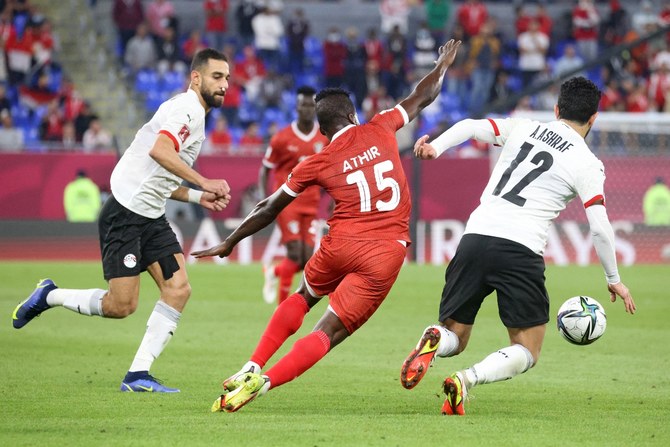

With two rounds of matches of the 2021 FIFA Arab Cup group stages already over, the tournament is starting to take shape, with several teams, including hosts Qatar, Egypt and Algeria, confirming qualification to the quarterfinals. Here are five things we learned from the latest action:
1. Syria finally have some luck against careless Tunisia
It has been a tough few months for the Syrian national team, with just two points from the first six games in the final round of qualification for the 2022 World Cup, but on Friday they managed to shock Tunisia with a 2-0 win.
The Eagles of Carthage will be kicking themselves, especially as Fabrouk Ben Mustapha really should have saved a fairly tame shot from Oliver Kass Kawo in the fourth minute. Tunisia did everything they could to score, but just could not get the equalizer — a task that was made much harder at the end of the first half when Mohamed Ben Romdhane was sent off for an elbow.
Then, early in the second half, came a beautiful curling shot from Mohammed Anz that was good enough to win any game. Nevertheless, Tunisia had the possession and the chances to take at least a point, and will rue their missed opportunities. They must now beat UAE in the third game to be sure of a place in the knockout stage, while Syria are very much in the hunt.
2. Qatar not yet in top gear but progress
Qatar’s 2-1 win over Oman showed the benefits of competitive games. Oman have been active in the final round of qualification for the World Cup and are doing pretty well. They matched the Asian champions on their home turf and only a 97th-minute winner stopped them from taking a point.
The hosts will not mind too much that the goal only just crossed the line since it guaranteed top spot in Group A and a place in the quarterfinals. It remains to be seen what kind of team coach Felix Sanchez puts out in the remaining group match against Iraq on Tuesday. With the last-eight clash taking place just three days later, the Spanish boss will be tempted to rest some of his stars, including Akram Afif, who caused problems and scored the opening goal. But Qatar look a little rusty and more games are what this team needs.
3. Morocco could press their way to the title
Jordan looked pretty good in their 1-0 win over Saudi Arabia in the opening game, but were then swept aside by Morocco, losing 4-0. Their hopes looked slim after 15 minutes, already a goal down and losing star forward Baha Faisal to injury, but things continued downhill from there.
It was just not much of a contest as the North Africans were a level above: Clinical in attack and working hard all over the pitch to deny Jordan time, possession and chances. At times, the pressing from the Atlas Lions was up to Liverpool’s standards.
Despite being without their European-based stars, this Morocco team were simply too good for a Jordan team that looked solid against the Saudis. It bodes well for the rest of the tournament. After two games, they have scored eight and conceded none. There is still a long way to go, but on this form they will take some stopping. Jordan’s goal difference has taken a battering and they will have to bounce back against Palestine.
4. Egypt and Algeria too good and rob tournament of crunch clash
It was always likely that Egypt, who defeated nine-man Sudan 5-0, and Algeria, who picked up a 2-0 victory over Lebanon, would end up taking the top two spots in Group D. It is a shame for the Arab Cup, however, that both these great rivals are already through to the quarterfinals ahead of their meeting on Tuesday — though the likelihood that top spot will mean that red-hot Morocco are avoided in the next round may add some spice.
As expected, Egypt were just too strong for Sudan and were three goals to the good by the half hour. The first, by Ahmed Refaat, was a real stunner and an early contender for goal of the tournament. The Pharaohs had no need to get out of second gear, with Hussein Faisal impressing on the right side of midfield on his international debut.
Algeria had a much more difficult second game against Lebanon, though they will not mind that. The Cedars are tough to beat and asked a lot of questions of the African champions. It means that the game with Egypt will lack tension, but on current form, these North African giants could end up meeting again.
5. Despite perfect record, UAE in danger of elimination
The UAE defeated Mauritania 1-0 to move onto six points. Usually, two wins from the first two games of the group means an early place in the knockout stage, or as good as, but not for UAE. The Whites may be three points clear of Tunisia and Syria, but need to be careful.
There was widespread relief at the 93rd-minute goal from Khalil Ibrahim that gave a 1-0 win over Mauritania. The African team withstood everything that the Asian team threw in their direction, with goalkeeper Mbacke Ndiaye deservedly winning man of the match.
But a goal difference of plus two after two wins is a danger. If the UAE lose to Tunisia, who thrashed Mauritania 5-1 and were unlucky to lose to Syria, and Syria win against Mauritania, then UAE will be going home.


