



LOS ANGELES: Amid the uncertainty about the future of arts and entertainment in Sudan after the military takeover, the Sudanese short film “Al-Sit” may make the short list for an Oscar this month.
Currently touring 160 international film festivals, “Al-Sit” has already won 23 awards, including three that qualify it for Oscar consideration. It has lifted both filmmaker Suzannah Mirghani and the fledgling renaissance of Sudanese cinema into the international spotlight.
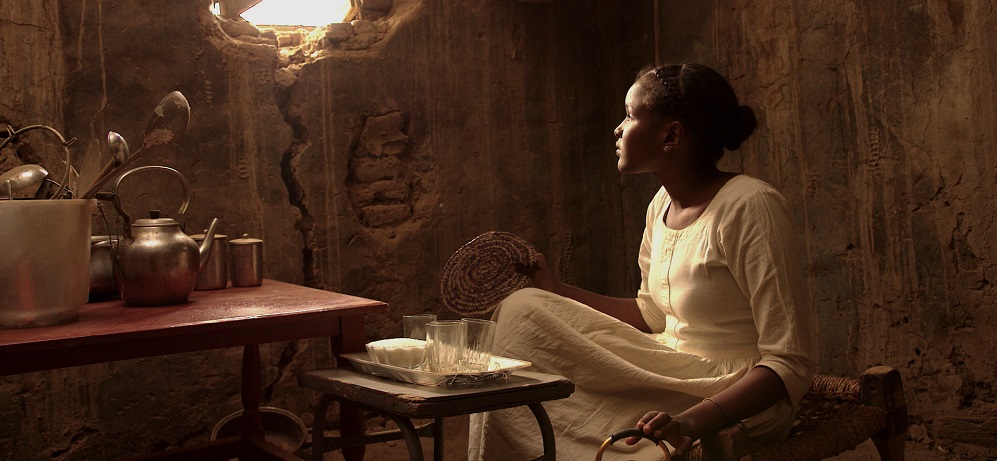
“Al-Sit” has already won 23 awards, including three that qualify it for Oscar consideration. Supplied
The 20-minute short film was created by a crew of mostly Sudanese actors and filmmakers, during what Mirghani described as a “honeymoon period for artists” after the 2019 revolution. The film tells the story of Nafisa, played by Mihad Murtada, a 15-year-old girl being pulled between the marriage her parents have arranged for her, the plans for her life being laid out by her village matriarch grandmother — Al-Sit — and the desire to choose for herself.
“That idea has always stuck in my head. What does this girl really want in her life, and how does she deal with the situation?” Mirghani said.
The child of a Sudanese father and a Russian mother, Mirghani grew up in Sudan and watched many of her friends grapple with the same situation she would one day write about.
“Arranged marriages are very common in our part of the world, and it’s not necessarily a bad thing because the family just wants to do the best for the child. But sometimes too much love is suffocating, and the person who is supposed to be the most protected turns out to be the person with the least choice and the least voice.”
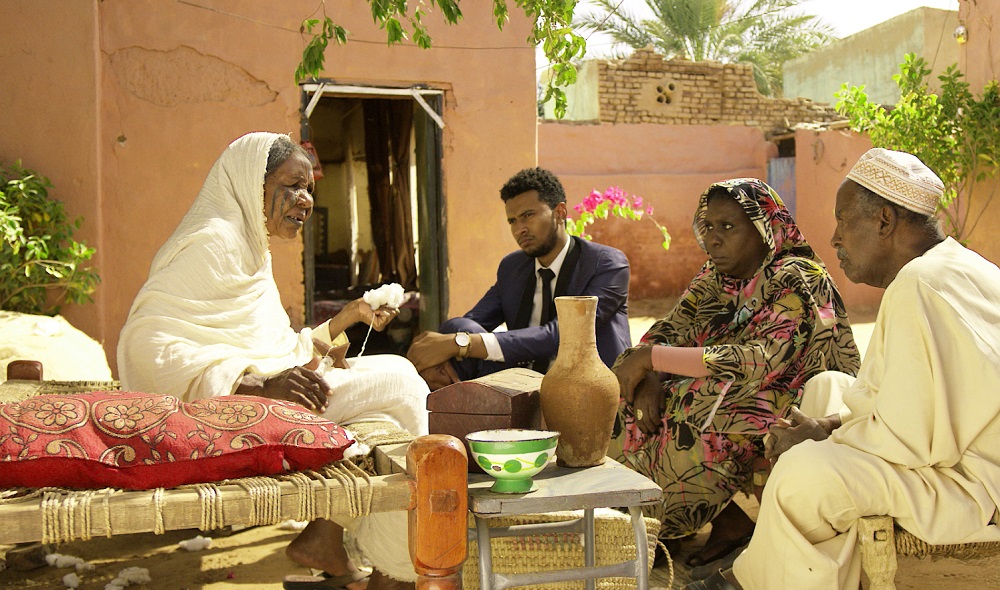
The short has lifted both filmmaker Suzannah Mirghani and the fledgling renaissance of Sudanese cinema into the international spotlight. Supplied
These questions stayed as a young love of movies grew into a passion for filmmaking. After studying media and communication at university, she moved to Qatar and took classes at the newly opened Doha Film Institute. She produced five short films before returning to Sudan for “Al-Sit” with partial funding provided by the institute.
“I was really pleasantly surprised about how beautifully you can make a film in Sudan even though there is no film industry,” said Mirghani, who pulled triple-duty as writer, director and producer.
Lead actor Murtada was chosen from a pool of five girls, the only five in the country who auditioned.
“We advertised the entire time. We only got five girls because it’s not really a profession that is encouraged in general,” Mirghani said. However, the first-time actor was perfect for the role.
“We got maybe over 100 young men to audition because acting, Hollywood, this is something that they aspire to and because young men in the Arab world are generally more free to choose their own path, which says a lot about the politics of this film as well.”
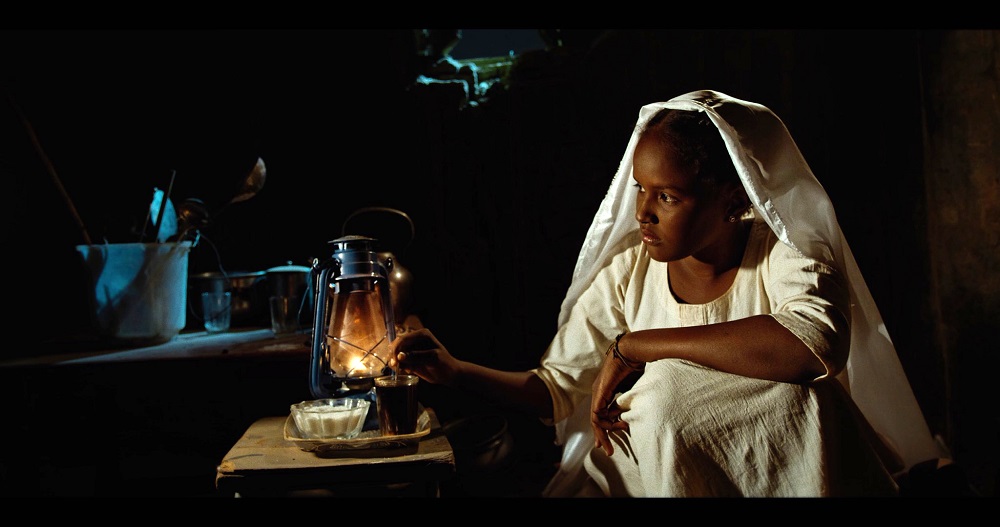
Lead actor Murtada was chosen from a pool of five girls, the only five in the country who auditioned. Supplied
The role of Nafisa’s businessman husband-to-be went to Mohammed Magdi Hassan, who, like Murtada and the rest of the young cast, had no prior film experience. The older actors, such as Rabeha Mohammed Mahmoud, who plays Nafisa’s grandmother, were also new to film acting, but all had careers as theatrical performers.
“Everyone just did it,” Mirghani said, recalling how her early concerns about working with such a new team were happily proven wrong.
“We were location scouting and when my production manager heard that we needed a cotton field he said, ‘Why don’t you use my cotton field?’ It was a perfect connection.”
Filming was done primarily in the village of Aezzazh, but when it came to filming Nafisa’s family’s home, which Mirghani intended to be a traditional Sudanese home made with dried clay and mud, she was surprised to find that all of the village houses were made with bricks.
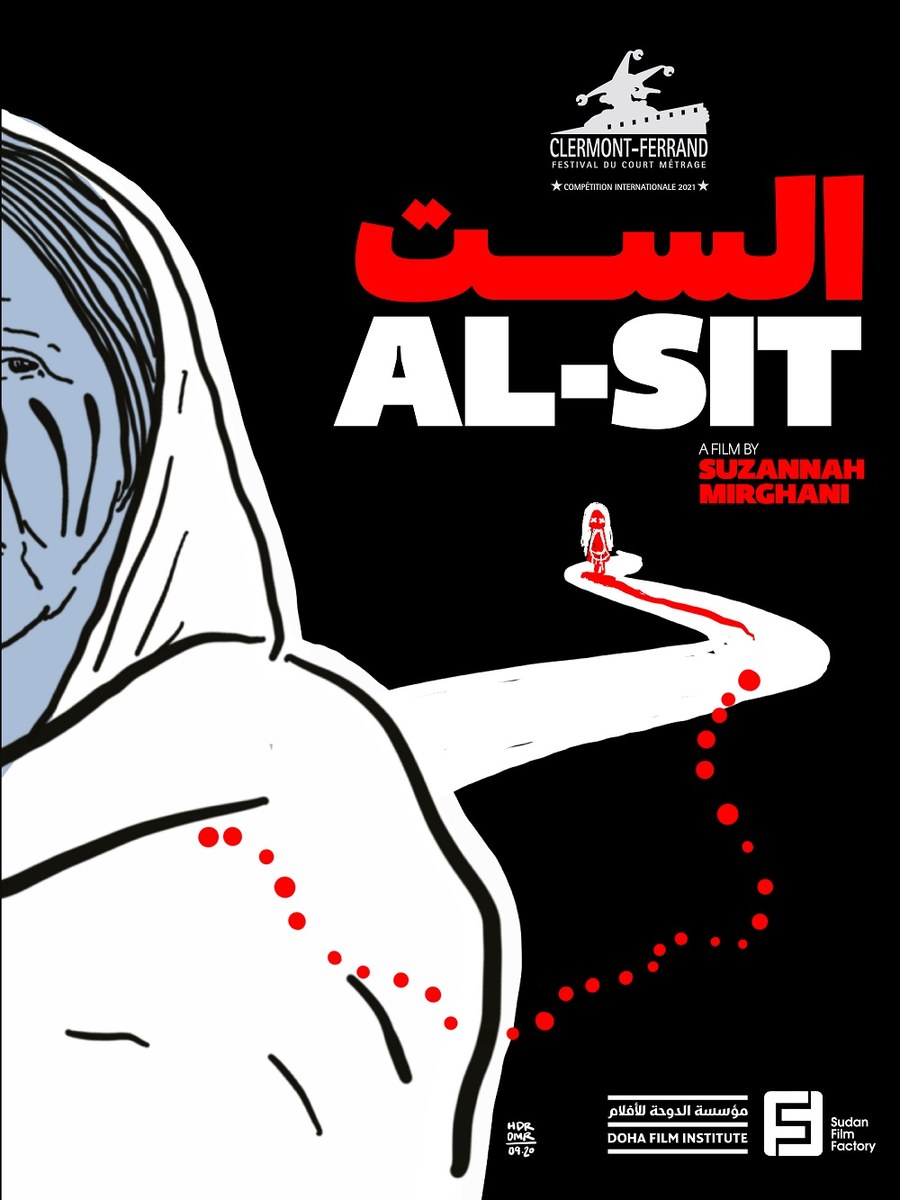
“Al-Sit” is distributed by Mad Solutions in the Arab World and will continue screening at film festivals internationally. Supplied
“They were fancy,” she said. “A lot of the men in the village work in the Gulf. They bring back money, and they have fancy houses in the villages.”
The shoot was saved when a crew member once again offered their family’s home as a production location.
“We had to shoot the mud house in Khartoum, in the capital,” Mighani said, smiling about the irony of the situation. “You learn a lot about yourself and your own preconceived notions.”
Mirghani is very happy that the film she and her team worked hard to produce has received such a positive reaction from audiences around the world. She’s eagerly looking forward to seeing if “Al-Sit” can represent Sudanese cinema at the 2022 Oscars.
“This is the beauty of making a film in Sudan, where you don’t have a film industry, but you have really passionate enthusiastic people,” she says. “We are now in danger again of going back to military rule and stifling creative expression, so we hope and pray for the best.
“Al-Sit” is distributed by Mad Solutions in the Arab World and will continue screening at film festivals internationally.


