ISLAMABAD: Gwadar Gas Port Limited (GGPL) is awaiting approval to get a provisional construction license from the Oil and Gas Regulatory Authority (OGRA) to import a ‘virtual’ LNG pipeline to provide gas at half price to the deep sea port, industry and residents of Gwadar City, CGPL has told parliament, Pakistani media reported.
A liquefied natural gas virtual system, or LNG virtual distribution grid, is one of the solutions used to supply gas to populations in places where it is not possible to build regasification terminals. It consists of a small or medium-scale liquefaction plant, a fleet of cryogenic transport tanks, mobile regasification units and satellite regasification stations (SRSs) located in strategic points.
This means the fleet of transport tanks can connect the liquefaction plant with the SRSs, where the LNG is regasified and introduced into the network of distribution pipelines to reach people’s homes and industry.
GGPL is a joint venture comprising the Pakistan GasPort, Al-Qasim Gas and Jamshoro Joint Venture. It plans to invest $94.04 million in a ‘virtual pipeline’ to deliver imported LNG at the doorsteps of industrial and other private sector consumers at competitive prices via cryogenic bowsers.
“We are waiting for the issuance of National Occupational Classification (NOC) from OGRA,” the Business Recorder newspaper quoted GGPL Chairman Iqbal Z Ahmad as saying at a briefing before the Senate Standing Committee on Planning, Development and Special Initiatives during a visit to Gwadar. “We will provide 50 percent low-priced gas as compared to LPG to the consumers. We will provide a liquefied cylinder with a fitted device to convert into gas to the local people at half the price of an LPG cylinder.”
“The GGPL has completed all formalities and is waiting for Ogra to issue a provisional construction license to the GGPL,” Ahmad said. “We will deliver gas at the doorstep of the customers without any subsidy or use of any government-owned gas infrastructure in the country.”
He said despite the development of Gwadar Port, industrial activity in the free zone was held up due to a lack of gas, power, and water supplies. Recently, the people of Gwadar have held large demonstrations, including this week, to demand basic needs.
“Gwadar International Terminal Limited (GITL) and Gwadar Gasport (Private) Limited (GGPL) have agreed to make gas available at Gwadar Port for its development and for power generation and general industry and also to meet demands of the local population,” Ahmad said.
“The project envisages that it shall have a floating storage unit (LNG vessel) to be berthed permanently at Berth 3 of the Port. The LNG will be replenished in the Floating Storage Unit (FSU) using LNG carriers; Qatar Abu Dhabi/Oman being close to Gwadar will be sources of supply. The company targets delivery of LNG at the doorstep of customers, at competitive prices. Around 300 mmcfd or 2.25 million tons per year (MTPA) of LNG will become available.”
Gwadar Port Authority (GPA) chairman Naseer Ahmed Kashani told the Senate Committee he had held a meeting with the prime minister to discuss this matter, adding that the PM had constituted a committee to address issues relating to framework and regulation. He said the Committee would take a final decision on the matter.


Pakistan's Gwadar Gas Port Limited says awaiting approval for import of ‘virtual’ LNG pipeline

https://arab.news/c7hb2
Pakistan's Gwadar Gas Port Limited says awaiting approval for import of ‘virtual’ LNG pipeline
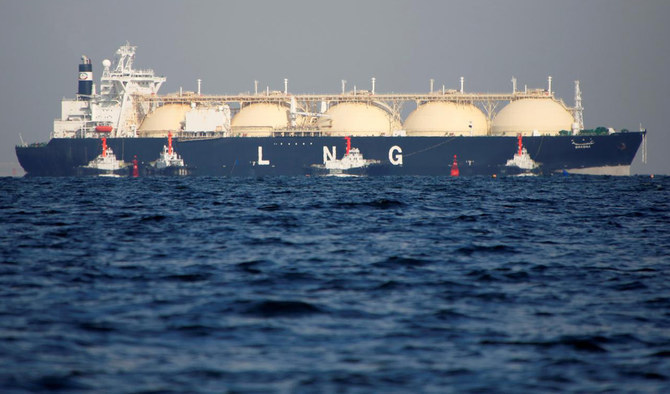
- LNG virtual distribution grid is used to supply gas to places where it is not possible to build regasification terminals
- Recently, people of Gwadar have held large demonstrations, including this week, to demand basic needs such as gas, power, water

Pakistan says it seized 32 square kilometers inside Afghanistan as border clashes escalate
- Security official describes ‘limited tactical action’ in Gudwana after Afghan assaults
- Islamabad accuses Kabul of sheltering militants as UN, China and Russia urge restraint
ISLAMABAD: Pakistan has seized a 32-square-kilometer area inside Afghanistan following overnight fighting, a security official said on Saturday, as cross-border clashes between the two countries escalated sharply.
A Pakistani security official, speaking on condition of anonymity, said troops carried out a “limited tactical action” in the Gudwana area opposite the Zhob sector along the frontier, capturing Afghan territory after responding to attacks on Pakistani positions.
“On the night of Feb. 26/27, posts opposite the Zhob sector launched anticipated physical attacks on multiple Pakistani positions,” the official said, referring to fighters linked to Afghanistan’s Taliban authorities, whom Islamabad identifies as Tehreek-e-Taliban Afghanistan (TTA).
“In response to aggressive unprovoked fire and physical attacks, Pakistan security forces launched a limited tactical action on the night of Feb. 27/28 in the general area of Gudwana with a view to capture TTA Tahir Post,” he continued, adding that 32 square kilometers of Afghan territory were seized.
The official said special combat teams crossed the border after preparatory bombardment, supported by intelligence, surveillance and reconnaissance assets providing “real-time battlefield awareness.”
He said 24 Afghan Taliban fighters were killed and 37 wounded, with no Pakistani casualties reported.
The claims could not be independently verified, and there was no immediate confirmation from Taliban authorities in Kabul of any territorial loss in the Gudwana area.
The latest clashes erupted after Pakistani airstrikes targeted what Islamabad described as militant hideouts inside Afghanistan over the weekend, triggering retaliatory fire along the frontier and sharply escalating long-running tensions. Islamabad accuses Kabul of sheltering Pakistani Taliban militants responsible for attacks inside Pakistan, an allegation that Afghanistan denies.
Pakistan’s Information Minister Attaullah Tarar said on Saturday evening that 352 Afghan Taliban fighters had been killed and more than 535 wounded since the latest phase of hostilities began.
Tarar said Pakistani strikes had destroyed 130 check posts, 171 tanks and armored vehicles and targeted 41 locations across Afghanistan by air. Those figures could not be independently verified.
The United Nations, as well as China and Russia, have called for restraint.
The United States said Pakistan has the right to defend itself against cross-border militancy.


