MADAIN, Iraq: Iraq's 1,400-year-old Arch of Ctesiphon, the world's largest brick-built arch, is undergoing restoration work as part of efforts to return it to its former splendour, authorities said Wednesday.
The famed sixth-century monument, located around 30 kilometres (20 miles) south of the capital Baghdad, is the last structure still standing from the ancient Persian imperial capital Ctesiphon.
Restoration work on the arch, also known as Taq-i Kisra from its Persian name, was carried out in 2013 after a massive slab fell off due to damp caused by heavy rain.
But the new bricks too have begun to fall following downpours last year.
A first phase of "emergency" works that began in March are due to end next month, said David Michelmore, a conservation expert working with a team of archaeologists from the University of Pennsylvania.
"What is falling down at the minute is not the original Sassanian construction, it's the modern repairs," he told AFP.
"There was quite a lot of reconstruction done in 2013-2014 and probably all of this will need to be taken down and replaced," he said.
Construction of the arch began in AD 540 during the Persian Sassanid dynasty's long wars with the Byzantine Empire. It formed part of a palace complex started three centuries earlier.
At 37 metres (122 feet) tall and 48 metres (158 feet) long, it is the largest brick-built arch in the world.
Iraqi Culture Minister Hassan Nazim said the works aimed to "consolidate" the site, which is near the bank of the Tigris River and is at risk of groundwater infiltration.
The current phase is financed thanks to a budget of $700,000 from the International Alliance for the Protection of Heritage in Conflict Areas (ALIPH), said Laith Majid Hussein, director of the Iraqi State Board of Antiquities and Heritage.
He lamented "numerous mistakes" in the previous restoration, including the installation of a heavy "layer of cement on the arch".
The next stage would be a "total restoration" that would help strengthen the structure and prevent any collapse, he said.
In 2004, the Global Heritage Fund said that, as a result of disrepair, the arch was "in danger of collapse".
Those warnings proved prescient -- in late 2012, a slab about two metres (six feet) in length fell off.


New restoration works shore-up Iraq’s historic Arch of Ctesiphon

https://arab.news/p3dv2
New restoration works shore-up Iraq’s historic Arch of Ctesiphon

- The famed sixth-century monument, located around 30 kilometres (20 miles) south of the capital Baghda


‘The Wild Within’ sees artists breathe new life into Mideast buildings
DUBAI: Lens-based artist Ryan Koopmans and digital artist Alice Wexell are staging a showcase at Dubai’s Leila Heller Gallery that breathes new life into regional buildings.
The series of digital artworks is part of the exhibition “The Wild Within,” featuring images of old structures in Beirut, Istanbul, and Abu Dhabi filled with wild flowers.
Two of the largest works, “Heartbeats” and “The Wish,” are displayed using Ventana, a microLED architectural display surface created by visual technology company Megapixel.
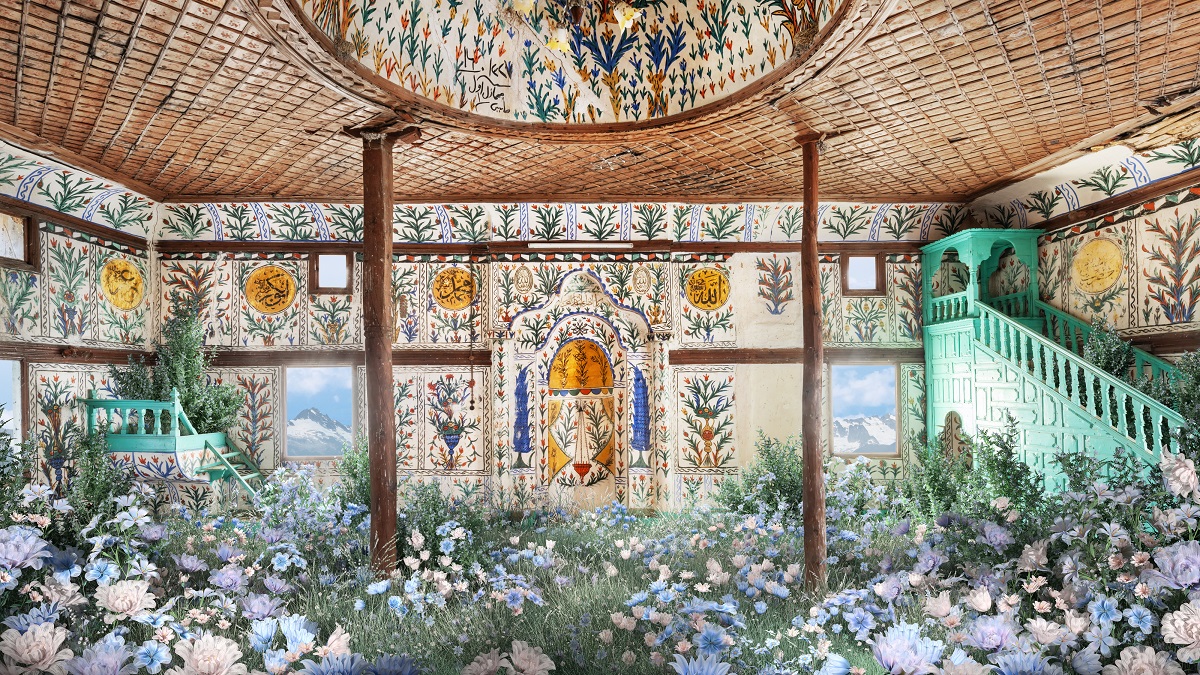
The former artwork depicts the entrance hall of Qasr Al-Watan, the UAE’s presidential palace in Abu Dhabi, while the latter reimagines the upper floors of the Emirates Palace Mandarin Oriental in Abu Dhabi.
“Each building we work with comes to us through a combination of research, travel, and intuition,” the artists told Arab News in a joint statement.
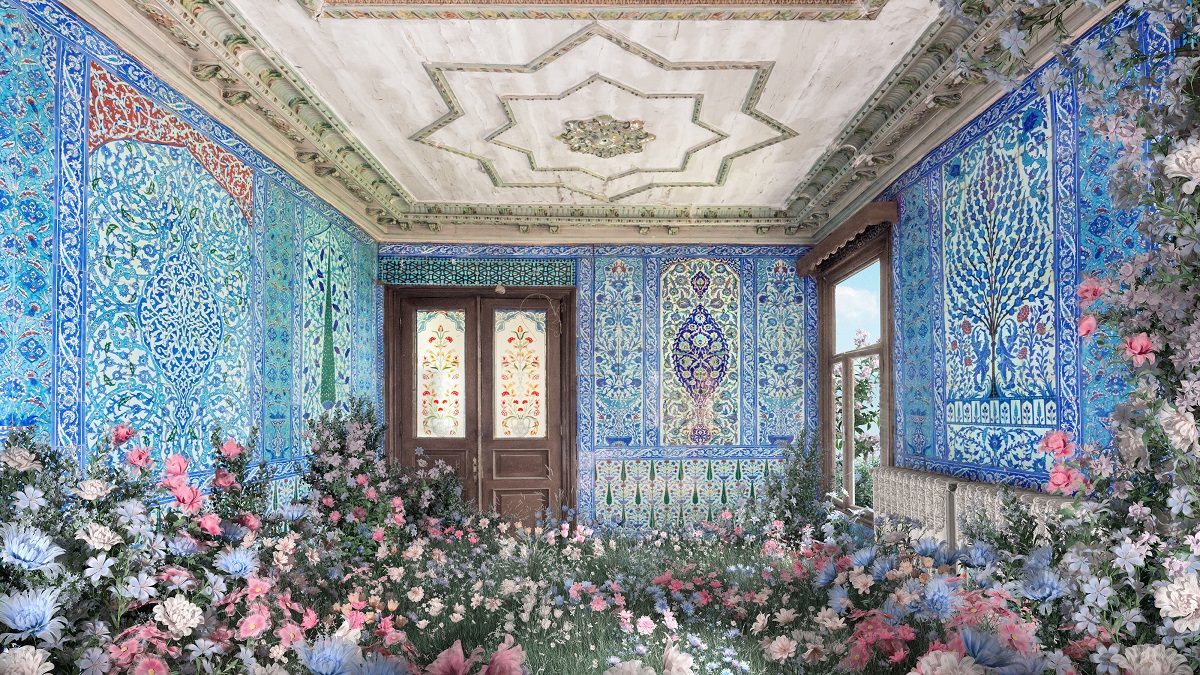
“We are drawn to structures that carry both emotional and historical resonance, often buildings that once embodied human ambition and now exist in a state of quiet transformation.”
Koopans and Wexell made sure to research the context of each building they choose to recreate, saying “an old villa in Jeddah or a former school in Sharjah each hold their own cultural memory, influencing everything from the lighting and atmosphere to the plants and flowers that we digitally sculpt and implement into the photographs.”
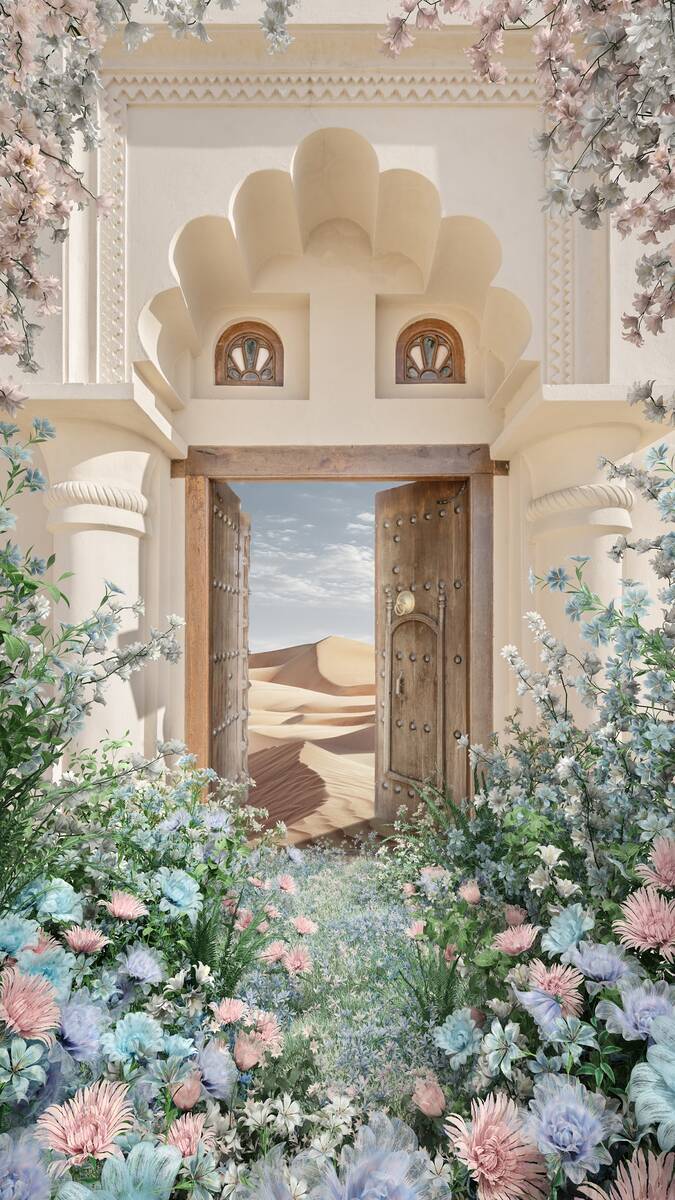
The hypnotic works depict the interior of buildings in the region, with digitally rendered flowers carpeting the floor in a bid to “(reimage) these spaces (and) explore the relationship between nature, place, and time, while celebrating each site as a unique work of architecture with its own spirit and story,” the artists said.
Koopmans is of dual Canadian and Dutch heritage, while Wexell is Swedish and based in Stockholm, so it is noteworthy that both artists chose to explore the Middle East for their latest project.

“In the Middle East especially, the architecture reflects a layered past that merges different styles and eras, while also expressing a sense of renewal and forward-looking energy, particularly in the region’s fantastic contemporary buildings. We are drawn to the symmetry, geometry and patterns that are found not only in nature itself, but in the architectural language of the region both past and present,” they said.
The series — featuring works such as “Adore You,” “Between Worlds,” and “Blossom of the Ancestors” — explores contrasts between the natural world and human-made forms, as well as the traditional and contemporary worlds.
“We are interested in how these elements coexist and merge into one another, creating a sense of hyperrealism that feels both familiar and imaginary. By merging photography with digital sculpture, the artworks question where the boundary lies between documentation and invention, and how technology can extend rather than replace our sense of the natural world.”

Although the scale of the artworks ensures they leave the viewer entranced, it did pose challenges, according to the artists.
“Presented at a large scale, every texture in these artworks becomes visible, which can be demanding but is also incredibly rewarding. The magnified detail allows the visceral and atmospheric layers of the pieces to come through with greater impact,” they said, adding that each piece took “many months” to create.
“Ultimately, we want our collectors to experience a sense of wonder and contemplation, as if they are standing inside a dream that feels both entirely real yet unreal.”
The exhibition runs until Jan. 15, 2026.


