WELLINGTON: New Zealand will reopen its borders to the world over the coming months, the government announced Wednesday, allowing for the return of displaced residents from January and tourists from April.
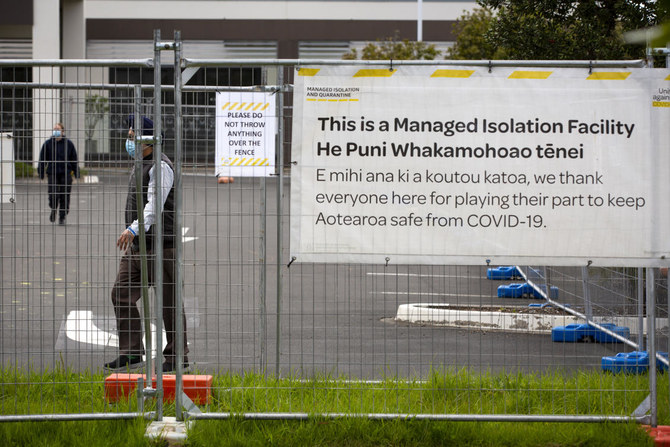
The South Pacific nation imposed harsh border restrictions when the pandemic began, effectively banning tourists and requiring returning residents to spend two weeks in a quarantine hotel run by the military.
At times, demand for quarantine beds has far outstripped supply, causing some displaced residents to wait months for available slots.
For the first 18 months of the pandemic, the border measures were considered vital in keeping New Zealand free from the virus.
But an August outbreak proved impossible to stamp out, prompting New Zealand to abandon its elimination strategy in October. Vaccination rates have also been rising, making the border measures increasingly hard to justify.
COVID-19 Response Minister Chris Hipkins said the government had made difficult trade-offs to keep New Zealanders as safe as possible throughout the pandemic.
“We acknowledge that it has been very tough. Families have been separated. People have found themselves having to shelter in places they did not expect to stay for prolonged periods of time,” Hipkins said. “We are acutely aware of the impact that these restrictions have had on individuals’ lives and their livelihoods.”
Under the government’s plan, all incoming travelers will still be required to isolate themselves for seven days, at least for now.
Hipkins said it wanted to mitigate the virus risk posed by incoming travelers by reopening the border in stages.
Fully vaccinated New Zealanders will be able to return from Australia without staying in quarantine from Jan. 16 and from other countries after Feb. 13. The door will then open in stages to tourists and other travelers from April 30.
New Zealand is also removing a very-high-risk designation from certain countries including Indonesia, India and Brazil, allowing people from those countries to return or visit.
New Zealand announced earlier this week that bars, restaurants and gyms can reopen in Auckland from Dec. 2, removing the last remnants of a lockdown that began in the nation’s largest city in August.
It also signaled a new phase in New Zealand’s response to the pandemic, in which people around the country will need to be fully vaccinated in order to participate in anything from getting a haircut to watching a concert.
About 69 percent of New Zealanders are fully vaccinated, including 84 percent of those aged 12 and over. New Zealand has reported just 40 coronavirus deaths since the pandemic began.


New Zealand to start reopening borders to world from January
https://arab.news/42c3d
New Zealand to start reopening borders to world from January

- The South Pacific nation imposed harsh border restrictions when the pandemic began
- New Zealand is also removing a very-high-risk designation from certain countries


UK starts visa requirements for St. Lucians
- Saint Lucia’s government said it was actively engaging with British government
- It said it would continue talks to “explore pathways for maintaining strong mobility arrangements“
CASTRIES: Britain has introduced a visa requirement for Saint Lucians effective from Thursday citing a “notable increase” in nationals from the small Caribbean nation claiming asylum, Saint Lucia’s government said in a statement.
Immigration is one of Britain’s most politically sensitive issues, and Prime Minister Keir Starmer’s government has sought to show it is tightening the system as the populist Reform UK party gains ground in opinion polls.
Saint Lucia, a former British colony, has a population of about 180,000. Last year, the World Bank estimated a net emigration of just 23 people.
Its government said it was actively engaging with British government and would continue talks to “explore pathways for maintaining strong mobility arrangements.”
It said it was informed in a letter dated Wednesday.
Saint Lucia is a member of the Commonwealth, an association of mostly former British colonies. Before the 1970s, nationals of many of these had the right to live and work in the UK. Saint Lucians previously needed a 16 pound Electronic Travel Authorization (ETA) to travel to the UK. \
There will be a six-week transition for ETA holders, its government said.
On Tuesday, Britain said it would block study visas for Afghanistan, Cameroon, Myanmar and Sudan and halt work visas for Afghans.


