

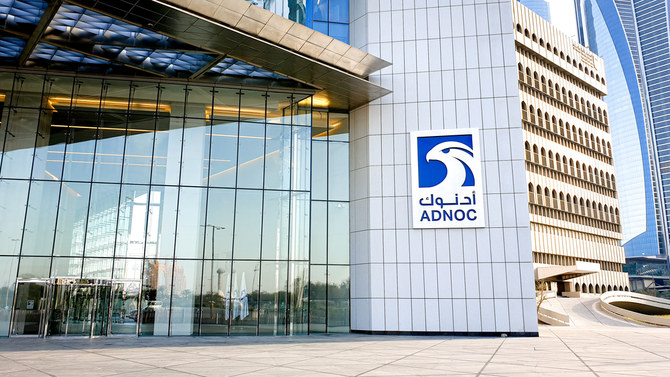
Abu Dhabi’s ADNOC weighs IPO of logistics and services unit next year: sources

Image: Shutterstock
Short Url
Updated 21 November 2021
Follow

Abu Dhabi’s ADNOC weighs IPO of logistics and services unit next year: sources

  • Gulf oil producers are looking at sales of stakes in energy assets

State oil firm Abu Dhabi National Oil Company (ADNOC) is weighing an initial public offering (IPO) of its marine services, logistics and shipping arm next year, two sources familiar with the matter told Reuters.


ADNOC Logistics & Services (ADNOC L&S) has been selected for a potential float in Abu Dhabi in 2022, said the sources, declining to be named as the matter is not public.


A deal could follow after testing investor appetite and market conditions, they said.


ADNOC declined to comment when contacted by Reuters on Sunday.


Gulf oil producers are looking at sales of stakes in energy assets, capitalizing on a rebound in crude prices to attract foreign investors.


ADNOC, which supplies nearly 3 percent of global oil demand, is seeking to extract value from businesses it owns and divest assets seen as non-core businesses.


It is also taking advantage of a rally on the Abu Dhabi equities index, which is up about 65 percent this year, the best-performing market in the Gulf region.


ADNOC in September offered an 11 percent stake in its drilling business, which raised more than $1.1 billion from investors. ADNOC and chemicals firm OCI raised $795 million in October through the public share sale of its fertilizer venture Fertiglobe.


ADNOC L&S delivers crude oil, refined products, dry bulk and liquefied natural gas from Abu Dhabi to its international customers.


It was created in 2016 following a merger between Abu Dhabi National Tanker Co, Petroleum Services Co. and Abu Dhabi Petroleum Ports Operating Co.


The unit has a fleet of over 240 owned and chartered vessels, which include tankers and very large crude carriers. It is also the only licensed operator to service all petroleum ports in Abu Dhabi.


The business is an essential unit of ADNOC, which is seeking to boost its crude oil production capacity to 5 million barrels per day by 2030.


The unit also operates feeder vessels that transport cargo on behalf of ADNOC and other customers. Shipping rates for cargo have soared in the past year as the coronavirus pandemic created bottlenecks and disrupted supply chains. 

Related


Saudi Arabia’s foreign reserves rise to a 6-year high of $475bn

Updated 22 February 2026
Follow

Saudi Arabia’s foreign reserves rise to a 6-year high of $475bn

RIYADH: Saudi Arabia’s foreign reserves climbed 3 percent month on month in January to SR1.78 trillion, up SR58.7 billion ($15.6 billion) from December and marking a six-year high.

On an annual basis, the Saudi Central Bank’s net foreign assets rose by 10 percent, equivalent to SR155.8 billion, according to data from the Saudi Central Bank, Argaam reported.

The reserve assets, a crucial indicator of economic stability and external financial strength, comprise several key components.

According to the central bank, also known as SAMA, the Kingdom’s reserves include foreign securities, foreign currency, and bank deposits, as well as its reserve position at the International Monetary Fund, Special Drawing Rights, and monetary gold.

The rise in reserves underscores the strength and liquidity of the Kingdom’s financial position and aligns with Saudi Arabia’s goal of strengthening its financial safety net as it advances economic diversification under Vision 2030.

The value of foreign currency reserves, which represent approximately 95 percent of the total holdings, increased by about 10 percent during January 2026 compared to the same month in 2025, reaching SR1.68 trillion.

The value of the reserve at the IMF increased by 9 percent to reach SR13.1 billion.

Meanwhile, SDRs rose by 5 percent during the period to reach SR80.5 billion.

The Kingdom’s gold reserves remained stable at SR1.62 billion, the same level it has maintained since January 2008.

Saudi Arabia’s foreign reserve assets saw a monthly rise of 5 percent in November, climbing to SR1.74 trillion, according to the Kingdom’s central bank.

Overall, the continued advancement in reserve assets highlights the strength of Saudi Arabia’s fiscal and monetary buffers. These resources support the national currency, help maintain financial system stability, and enhance the country’s ability to navigate global economic volatility.

The sustained accumulation of foreign reserves is a critical pillar of the Kingdom’s economic stability. It directly reinforces investor confidence in the riyal’s peg to the US dollar, a foundational monetary policy, by providing SAMA with ample resources to defend the currency if needed.

Furthermore, this financial buffer enhances the nation’s sovereign credit profile, lowers national borrowing costs, and provides essential fiscal space to navigate global economic volatility while continuing to fund its ambitious Vision 2030 transformation agenda.