

Pakistan welcomes Indian Sikh pilgrims as Kartarpur corridor reopens

Sikh pilgrims gesture as they return from the Gurdwara Darbar Kartarpur Sahib in Pakistan after paying their respect on the occasion of Sikhism founder Guru Nanak's birth anniversary at the Kartarpur Sahib corridor on November 17, 2021. (AFP)
Short Url
Updated 17 November 2021
Follow

Pakistan welcomes Indian Sikh pilgrims as Kartarpur corridor reopens

  • Pakistan closed the passage in March 2020 over the coronavirus outbreak but reopened it three months later
  • Islamabad urged New Delhi to reopen the corridor from its side and allow Sikhs to participate in Guru Nanak’s 552nd birth anniversary celebrations

ISLAMABAD/NEW DELHI: Pakistan welcomed Sikh pilgrims arriving from India's Punjab through the visa-free Kartarpur corridor on Wednesday to celebrate the birth anniversary of Guru Nanak, the founder of Sikhism.

Much of the Sikh heritage is located in Pakistan. When Pakistan was carved out of India at the end of British rule in 1947, Kartarpur ended up on the Pakistani side of the border, while most of the region's Sikhs remained on the other side.

Gurdwara Darbar Sahib in Kartarpur is of particular importance to the Sikh community as it was built in tribute to Guru Nanak, who established the town of Kartarpur in 1515. It is also his final resting place.
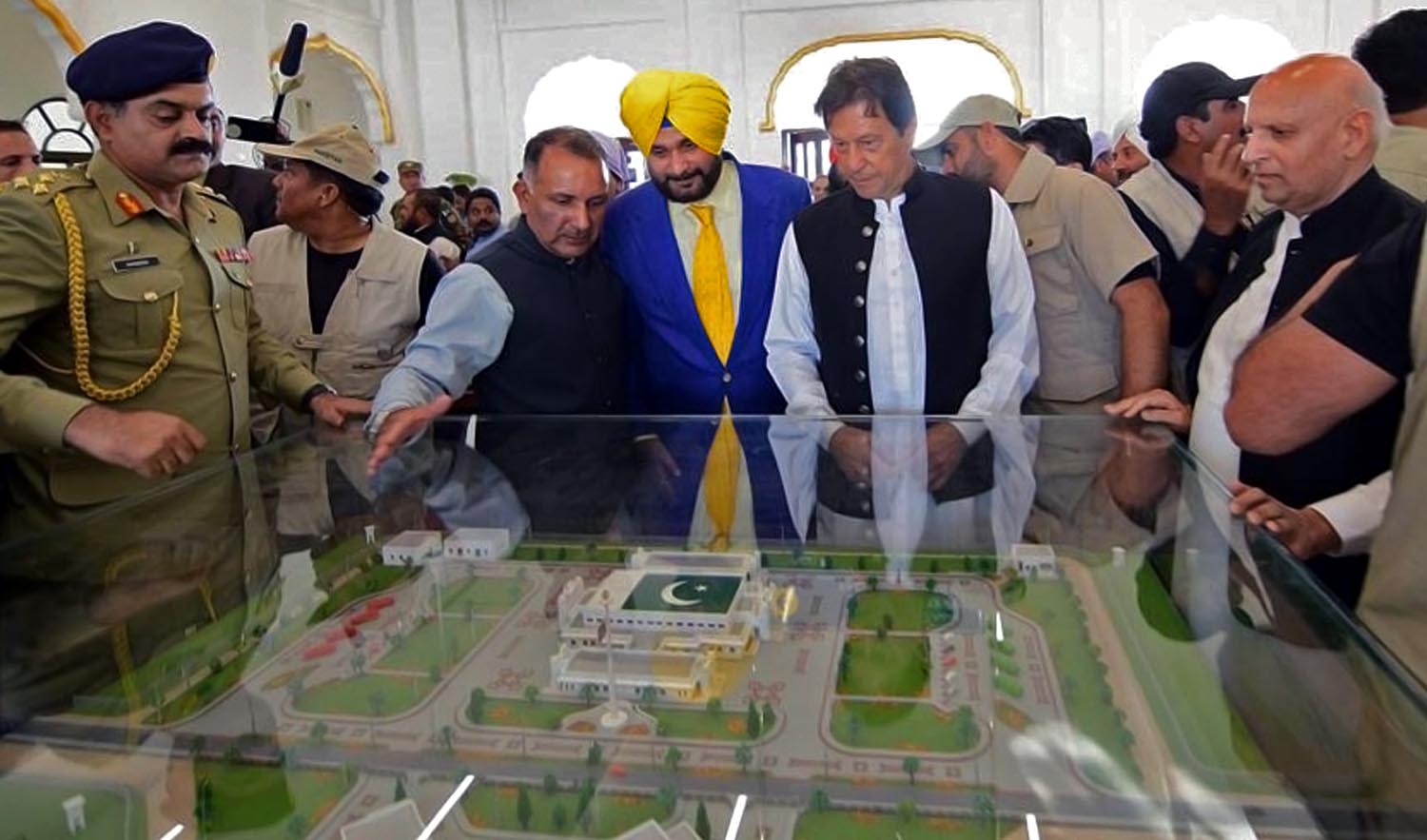


Pakistan's Prime Minister Imran Khan, center right, along with Indian Politician Navjot Singh Sidhu, center, being briefed on the Kartarpur Sahib Corridor Project at Kartarpur on November 9, 2019. (PID/File)

The Pakistani government in 2019 opened the Kartarpur corridor, connecting Gurdwara Darbar Sahib to the border with India and allowing Indian Sikhs to visit the site. The opening of the corridor marked the first time Indian Sikh pilgrims could enter Pakistan without a visa since 1947.

The corridor was closed in March 2020 following the coronavirus outbreak. While Pakistan says it had reopened the passage in June 2020, Indian authorities gave the green light for pilgrims to cross the border from Wednesday, a week after Islamabad urged New Delhi to reopen the corridor from its side and allow Sikhs to participate in Guru Nanak’s 552nd birth anniversary celebrations in Kartarpur.

"Pakistan looks forward to welcoming Sikh pilgrims visiting Gurdwara Darbar Sahib through the Kartarpur corridor," Shah Mahmood Qureshi said in a statement as the corridor reopened. 
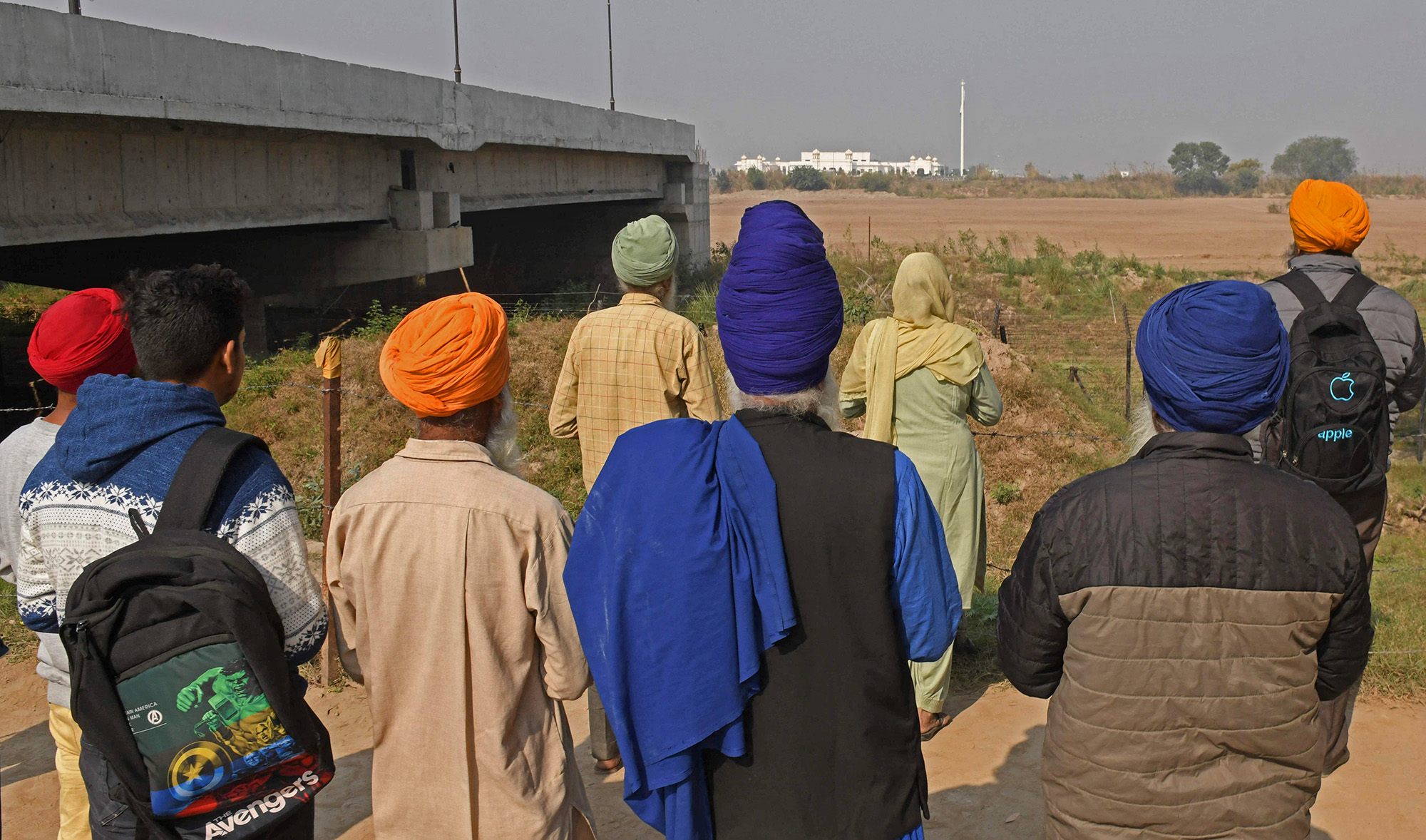


Sikh devotees offer prayers as they look towards Gurdwara Kartarpur Sahib, situated in Pakistan, at Kartarpur Corridor on November 17, 2021. (AFP)

Community members in Indian Punjab, a predominantly Sikh state, also welcomed the reopening, with its chief minister Charanjit Singh Channi saying politicians from the state would also travel to Pakistan.

“The entire cabinet will be part of the first jatha (group) which will visit and pay obeisance on November 18,” he told reporters.

Sukhwinder Agwan, caretaker of a Sikh temple in Shahida village in the Dera Baba Nanak Sahib area of Punjab, said he was waiting for the reopening "with bated breath" and was looking forward to reaching Pakistan on Thursday.

"I have applied for the permission to visit," he said. "Hopefully by tomorrow I should be able to visit Kartarpur."

Sukhdeep Singh Bedi, one of the Indian Sikh community leaders told Arab News "the opening of the corridor is the reflection of the wishes of the people of Punjab." 
 
"This kind of exchanges between people of both the nation will help create a better atmosphere between India and Pakistan," he said, adding that he hoped the Kartarpur corridor would become a "corridor for peace and create a better understanding between both the nations."


Pakistan, China launch joint programs to advance vocational education

Updated 5 sec ago
Follow

Pakistan, China launch joint programs to advance vocational education

  • Both sides agree to develop resources in culinary arts, fashion, chemical technology and agriculture disciplines
  • Pakistan, with a huge youth population, is keen to equip its workforce with skills to boost remittance inflows

ISLAMABAD: Chinese and Pakistani officials signed a package of cooperation documents and launched joint programs to advance vocational education in various disciplines this week, Pakistani state media reported on Thursday, aiming to integrate the needs of various industries with skills training. 

The agreements were announced at the “Seminar on International Cooperation and Exchange: Integration of Industry and Education in Vocational Education between China and Pakistan” held in China’s capital Beijing this Tuesday.

Twenty-one items were signed and five cooperation platforms were unveiled between the two sides, the state-run Associated Press of Pakistan reported. These items and platforms covered professional standards, shared teaching resources, faculty and curriculum development and enterprise-linked training bases.

“Vocational education has the ingredients to transform the dreams of young people into jobs, skills and employment,” Pakistan’s Ambassador to China Khalil Hashmi was quoted as saying by APP. 

Under the Professional Standards and International Teaching Resource Database track, partners agreed to develop standards and resources in disciplines such as Culinary Arts & Nutrition, Fashion and Costume Design, Food Inspection and Testing, Supply Chain Operation, Fine Chemical Technology, Modern Agriculture Production, and Information Security Technology Applications, the APP said. 

Pakistan’s National Vocational and Technical Training Commission (NVTTC), provincial technical education and training bodies also took part in the event. 

A second set of vocational education agreements established workshops and colleges aligned with priority sectors.

Examples include the Saishang Workshop in culinary training, a China–Pakistan Automotive Overseas Workshop for New Energy Vehicle Technology involving Hunan Automotive Engineering Vocational University, NAVTTC and the MG JW Automobile Pakistan Limited company.

Vocational training that helps equip young people with skills is important for a country like Pakistan with a large youthful population. 

Islamabad is also keen to equip its workforce with skills aligned with the latest industry requirements to enhance overseas employment opportunities and boost remittance inflows.