




GLASGOW: A top Iraqi official said developing and underdeveloped countries “are victims of more than 300 years of industrial activity with high carbon emissions.”
Talking to Arab News on the sidelines of COP26 in Glasgow, Scotland, the Iraqi deputy minister of health and environment for environmental affairs deplored the mounting pressure from developed countries not to implement the principle of common but differentiated responsibility.
“I think the Arab region is the most vulnerable region (and the most) affected by climate change,” said Jasim Abdulazeez Humadi.
He said oil-producing countries in the Middle East have been classified “as the most vulnerable countries” when it comes to the impact of climate change and should be dealt with “carefully” in issues related to climate action.
He said since the signing of the Paris accords, Arab countries have been working to ratify and complete the agreement with all its legal and constitutional processes.
Humadi said it was not the developing countries but rather the richest and developed countries that have not fulfilled their commitments so far, several major issues were not even discussed and there has been no progress with the Green Climate Fund, which is a financial mechanism to assist developing countries in adapting and mitigating practices to counter climate change.
Humadi said the Arab countries are encouraging the conversion toward renewable energy and reducing greenhouse emissions, but this responsibility should be common and should support the developing countries and encourage them to adapt their infrastructure accordingly. However, the roadmap for each country is very clear through the nationally determined contribution, and Iraq is committed to this despite the difficulties they have been facing the past decade due to war, instability, and fighting Daesh, he added.
“There are no clear criteria and at each conference, we spent a lot of time in discussions, but we did not reach (any conclusion as to) when they will support us financially to implement our plan,” he said.
The Iraqi official also called for a gradual transition toward renewable energy so as not to disturb the economy. “They (developed countries) want us to get rid of oil as the main source of energy and economy,” said Humadi. “Where is the substitution process? So I think it is not fair.”
Husham Alnahi, manager of Nakheel Al-Dwalieah for Agricultural Livestock Investment and Huqool Al-Taqa, said that Iraq needs more financial and technological support from developing countries.
Coming from Basra in southern Iraq, he said the province is highly contaminated due to all the oil fields.
There are the North and South Rumaila oil fields, which are managed by BP, the West Qurna 1 field operated by Exxon Mobil, the West Qurna 2 field developed by Russia’s Lukoil, the Zubair oil field led by Italy’s Eni, Shuaiba oil refinery run by Kuwait Energy, and the super-giant Majnoon oil field which is being developed by the US company KBR, among others.
Alnahi said these increasing fields and refineries are emitting a lot of gases and generating pollution that is negatively affecting the population, causing agricultural scarcity, and sea water has become hypersaline, meaning they cannot use it to water crops.
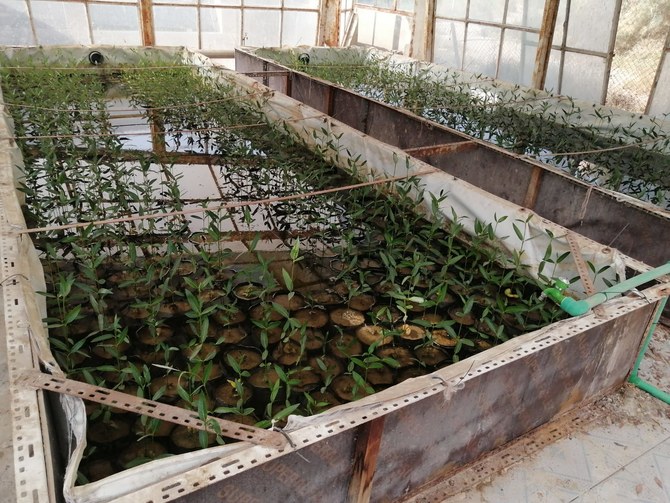
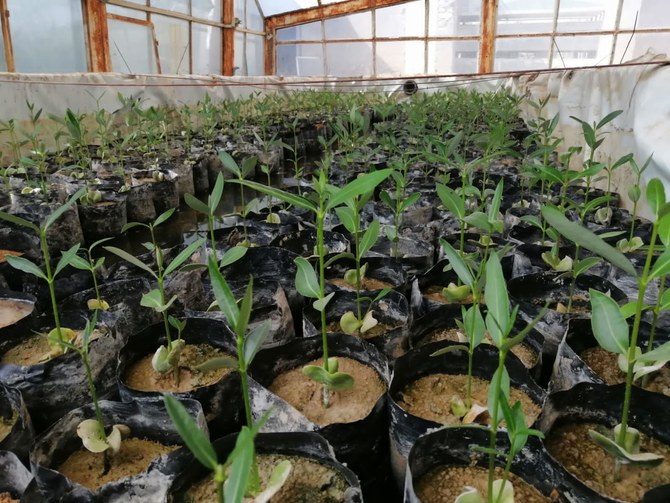
He added that they have implemented projects to plant mangrove trees, the seeds of which were imported from Oman and India and cultivated in Iraq, along the coast as they can be planted with sea water. They have also implemented the project in several other Gulf countries as well.


