

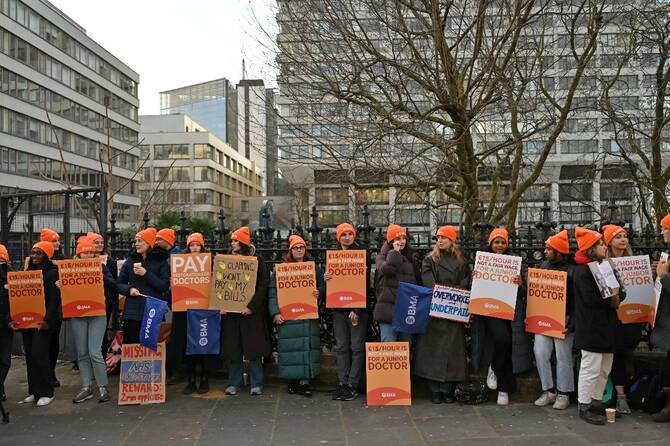

LONDON: Resident doctors in England on Tuesday started a six-day walkout after rejecting an offer the government said would not get better, with the British Medical Association saying it fell short of reversing years of pay erosion and staffing pressures. The strike action during the Easter holiday period is due to run until the morning of April 13 after a 48-hour ultimatum from Prime Minister Keir Starmer passed without agreement.
The government has now withdrawn a pledge to fund 1,000 additional specialty training posts that it said had been contingent on the deal being accepted.
“Walking away from this deal is the wrong decision. It is a reckless decision,” Starmer said at the time.
The BMA represents about 55,000 of the so-called resident doctors — formerly known as junior doctors — who make up nearly half of the medical workforce.
BMA DENOUNCES LONG-TERM PAY EROSION
Since early 2023 the BMA has held more than a dozen rounds of industrial action over pay.
The union says the government’s offer on pay and workforce does not go far enough to address long-standing concerns, including historical below-inflation pay increases.
However, Starmer said last week that the 3.5 percent offer would have delivered an above-inflation pay rise this year and taken total pay increases over three years to around 35 percent.
The deal also included reimbursements of mandatory exam fees, which can cost doctors thousands of pounds.
Jack Fletcher, chair of the BMA’s resident doctors’ committee, said the union was concerned that the level of investment in the deal had been reduced, the proposed reforms were spread over several years, and uncertainties remained over the implementation of new training posts.
Fletcher said the government’s threat to withdraw parts of the deal had also undermined confidence, adding that resident doctors wanted a settlement that was credible, enforceable and sustainable for the health service. Health Secretary Wes Streeting, who said the offer “doesn’t get better than this” when urging the union to reconsider, said the BMA had rejected a deal it helped negotiate without putting forward an alternative, calling the planned strike action unnecessary and damaging.


