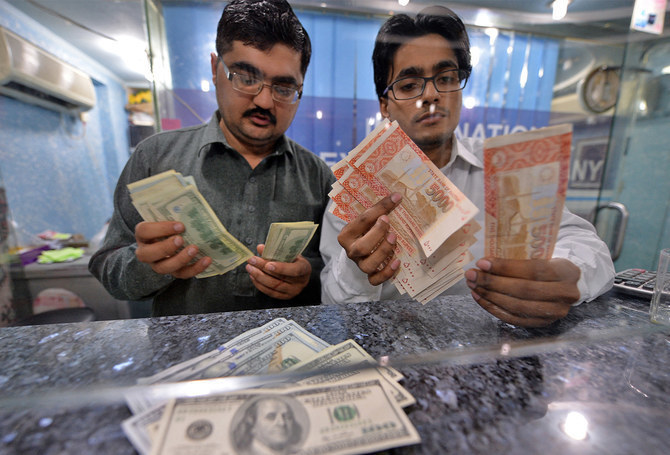
KARACHI: Pakistan’s national currency ended the trading week on a bearish note after hitting another historic low against the United States dollar to close at Rs175.73 as the country continued negotiations with the International Monetary Fund (IMF) for the revival of a $6 billion loan program, analysts said on Saturday.
The rupee lost its value by about three percent during the week as currency traders and investors awaited the outcome of the ongoing talks between the Pakistani authorities and IMF officials which began in the first week of October.
The currency also lost its value in the open market where it closed at Rs178 for selling and Rs177 for buying on Friday against the previous closing of Rs176.50 for selling and Rs175.50 for buying against the greenback, according to the Exchange Companies Association of Pakistan.
Analysts said the uncertain outcome of talks with the IMF was keeping the Pakistani currency under pressure, though the rising demand for dollar to make import payments was also militating against the Pak rupee.
“The rupee is under pressure due to the uncertainty related to the outcome of talks with the IMF,” Samiullah Tariq, director research at the Pakistan Kuwait Investment, told Arab News. “The autonomy of the central bank seems to be the main stumbling block, impeding conclusive negotiations.”
The success of the talks is vital for the revival of the $6 billion bailout package that will make the IMF release another tranche of about $1 billion.
Tariq said the outcome of the talks would provide short-term relief to the Pakistani currency as did the Saudi pledge to offer $4.2 billion, though he added that the rising demand for greenback would remain a key challenge to the country’s monetary stability.
In the last week of October, Saudi Arabia pledged to provide $4.2 billion in assistance to Pakistan which supported the rupee and made it appreciate from Rs175.27 to Rs170 in the interbank market.
Pakistan’s growing imports are fueling the demand for the US dollar and keeping the rupee under pressure.
The country’s imports increased by 64 percent to $24.99 billion during the first four months of the current fiscal year (July-October 2021), according to the ministry of commerce which added that 40 percent of the increase came from the investment-driven capital goods imports.


![]()

Pakistani currency hits new all-time low amid prolonged IMF talks, rising import bill
Short Url
https://arab.news/nyp33
Pakistani currency hits new all-time low amid prolonged IMF talks, rising import bill
- Pakistani authorities and IMF officials have been negotiating for the revival of a $6 billion loan program
- Analysts say the outcome of IMF talks is expected to provide short term relief to the Pak rupee, adding that a surging import bill will still cause problems
Latest updates




© 2026 SAUDI RESEARCH & PUBLISHING COMPANY, All Rights Reserved And subject to Terms of Use Agreement.