British tractor firm JCB fails to carry out rights due diligence in Palestine, watchdog finds

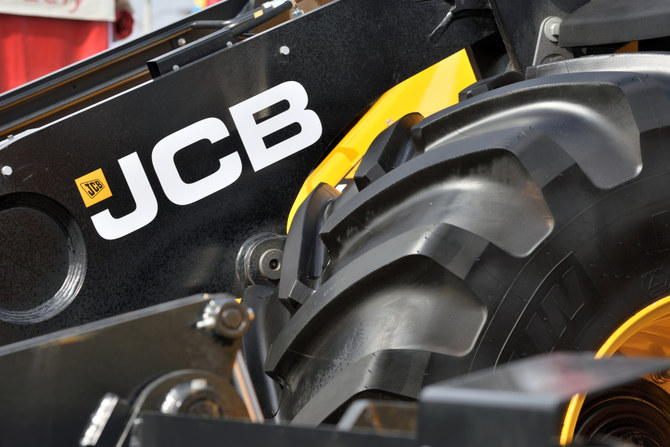
JCB, the British tractor giant, was found by a watchdog to have failed to carry out due diligence human rights checks in Palestine. (Shutterstock)
Short Url
Updated 12 November 2021
Follow

British tractor firm JCB fails to carry out rights due diligence in Palestine, watchdog finds

  • Lawyers for Palestinian Human Rights said JCB products were used in ‘at least 60’ demolitions of homes in one year
  • Watchdog UK National Contact Point urged JCB to draw up a human rights policy

LONDON: JCB, the British tractor giant, was found by a watchdog to have failed to carry out due diligence human rights checks over the potential use of its equipment in the demolition of homes in Palestine.

The government watchdog ruled: “It is unfortunate that JCB, which is a leading British manufacturer of world-class products, did not take any steps to conduct human rights due diligence of any kind despite being aware of alleged adverse human rights impacts and that its products are potentially contributing to those impacts.”

The UK National Contact Point, charged with ensuring multinational British firms meet Organization for Economic Co-operation and Development guidelines for human rights, urged JCB to draw up a human rights policy.

The case was brought to the UK NCP in December 2019 by Lawyers for Palestinian Human Rights, who said they had identified the use of JCB products in “at least 60 out of the 266 demolitions” in one year.

While UK NCP found that JCB failed to carry out its due diligence over human rights, the watchdog dismissed claims that JCB failed to use its leverage to persuade its Israeli distributor, Comasco, not to allow its equipment to be used to bulldoze homes.

There was no conclusive evidence, it said, that JCB equipment used in the bulldozing of Palestinian homes was supplied by Comasco, nor that JCB had sufficient leverage to influence the distributor.

JCB told the inquiry that the machines could have been “purchased secondhand from sellers within Israel, from neighboring countries via the internet or international auctions or brought in by sea.” That defense was accepted by the inquiry.

UK NCP added, however, that JCB should “engage with companies with whom it has a business relationship on their human rights policies, uncover any potential human rights issues and ensure there is no risk of adverse human rights impacts in its supply chain.”

Tareq Shrourou, director of Lawyers for Palestinian Human Rights, said: “JCB’s board of directors and senior management must consider the real-life repercussions of its noncompliance with core human rights provisions of the OECD guidelines.

“JCB cannot defy a UK Government body. The onus has firmly been placed on JCB to take all necessary steps to fully comply with its responsibility to address the use of its products in serious human rights violations against Palestinians. It is now unsustainable for JCB to act otherwise.”


Archbishop of York says he was ‘intimidated’ by Israeli militias during West Bank visit

Archbishop of York Stephen Cottrell poses for a photograph with York Minster’s Advent Wreath.
Updated 5 sec ago
Follow

Archbishop of York says he was ‘intimidated’ by Israeli militias during West Bank visit

  • “We were … intimidated by Israeli militias who told us that we couldn’t visit Palestinian families in the occupied West Bank,” the archbishop said

LONDON: The Archbishop of York has revealed that he felt “intimidated” by Israeli militias during a visit to the Holy Land this year.

“We were stopped at various checkpoints and intimidated by Israeli militias who told us that we couldn’t visit Palestinian families in the occupied West Bank,” the Rev. Stephen Cottrell told his Christmas Day congregation at York Minster.

The archbishop added: “We have become — and really, I can think of no other way of putting it — we have become fearful of each other, and especially fearful of strangers, or just people who aren’t quite like us.

“We don’t seem to be able to see ourselves in them, and therefore we spurn our common humanity.”

He recounted how YMCA charity representatives in Bethlehem, who work with persecuted Palestinian communities in the West Bank, gave him an olive wood Nativity scene carving.

The carving depicted a “large gray wall” blocking the three kings from getting to the stable to see Mary, Joseph and Jesus, he said.

He said it was sobering for him to see the wall in real life during his visit.

He continued: “But this Christmas morning here in York, as well as thinking about the walls that divide and separate the Holy Land, I’m also thinking of all the walls and barriers we erect across the whole of the world and, perhaps most alarming, the ones we build around ourselves, the ones we construct in our hearts and minds, and of how our fearful shielding of ourselves from strangers — the strangers we encounter in the homeless on our streets, refugees seeking asylum, young people starved of opportunity and growing up without hope for the future — means that we are in danger of failing to welcome Christ when he comes.”