WASHINGTON: The United States on Friday agreed to set up an interests section in Afghanistan under Qatar, assisting US citizens following the shuttering of the embassy during the Taliban takeover.
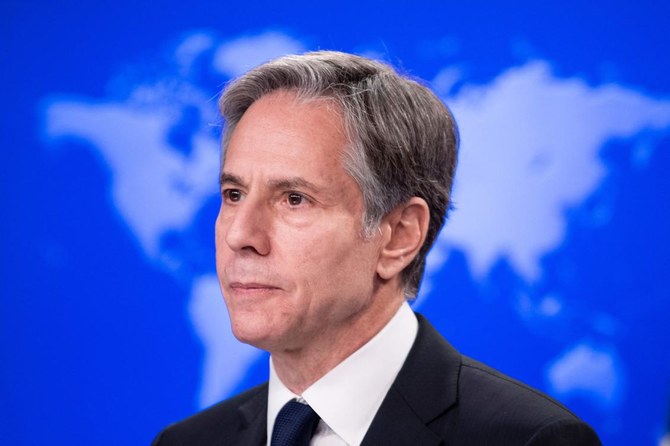
Welcoming his Qatari counterpart to Washington, Secretary of State Antony Blinken signed an agreement that established Qatar as the United States protecting power in Afghanistan” with the Gulf ally to establish a US interests section at its Kabul embassy.
“Let me again say how grateful we are for your leadership, your support on Afghanistan, but also to note that our partnership is much broader than that,” Blinken told Foreign Minister Sheikh Mohammed bin Abdulrahman Al-Thani.
Qatar, home to a major US military base, has played a major role both in the diplomacy and the evacuations as the United States ended its 20-year war in Afghanistan.
Around half of the 124,000 Westerners and Western-allied Afghans flown out in the waning days of the US military involvement transited through Qatar.
The Qataris earlier played host to negotiations between the United States and Taliban that led to the February 2020 agreement for the United States to withdraw troops.
Since the Taliban takeover, US embassy operations in Kabul have been relocated to Qatar.
The United States closed down its embassy in Kabul, which was one of its largest in the world, in August as it became clear that the Western-backed government was falling, with diplomats destroying sensitive materials and taking down the flag.
Despite the Taliban’s draconian 1996-2001 regime and years of war with the United States, US officials have been cautiously optimistic on dealing with the Taliban, saying that the Islamists are largely carrying out promises to let people leave the country.
But the United States has ruled out any immediate recognition or reopening of its embassy in Kabul, saying it is waiting to see that the Taliban make good on other concerns including on the treatment of women and prohibiting Al-Qaeda from basing operations in Afghanistan.

Blinken says Qatar to handle US interests in Afghanistan
Short Url
https://arab.news/guwvr
Blinken says Qatar to handle US interests in Afghanistan
- Secretary of State Antony Blinken signed an agreement that established Qatar as the US protecting power in Afghanistan
- Qatar has played a major role both in the diplomacy and the evacuations as the US ended its 20-year war in Afghanistan
Mexico and El Salvador make big cocaine seizures at sea as US continues lethal strikes
MEXICO CITY: The navies of El Salvador and Mexico announced drug seizures in the Pacific Ocean this week of more than 10 tons of cocaine, in contrast to deadly strikes by the US government that just this week left 11 people dead on three boats suspected of carrying drugs in Latin American waters.
The latest announcement came Thursday, when Mexico said it had seized nearly four tons of suspected drugs and detained three people from a semisubmersible craft, 250 nautical miles (463 kilometers) south of the port of Manzanillo.
Mexican Security Secretary Omar García Harfuch said via X that the seizure from the sleek, low-riding boat with three visible motors brought the weekly total to nearly 10 tons, but he did not provide detail on the other seizures.
Mexican authorities said the seizure was made with intelligence shared US Northern Command and the US Joint Interagency Task Force South.
On Sunday, El Salvador’s navy announced the largest drug seizure in the country’s history of 6.6 tons of cocaine. The navy had intercepted a 180-foot boat registered to Tanzania, 380 miles (611 kilometers) southwest of the coast. Navy divers found 330 packages of cocaine hidden in the boat’s ballast tanks. Ten men were arrested from Colombia, Nicaragua, Panama and Ecuador.
On Thursday, Salvadoran authorities gave access to the seized ship FMS Eagle, which had just arrived in the port of La Union. More than 200 wrapped bundles were lined up on the deck.
The Trump administration has pressured Mexico to make more drug seizures over the past year. The trafficking of drugs like fentanyl was the president’s justification for tariffs on Mexican imports.
Mexican President Claudia Sheinbaum has responded with a more aggressive stance toward drug cartels than her predecessor, that has included sending dozens of drug trafficking prisoners to the United States for prosecution.
Sheinbaum has also expressed her disagreement with strikes by the US military in the Caribbean Sea and Pacific Ocean against boats suspected of carrying drugs.
At least 145 people have been killed in those strikes since the US government began targeting those it calls “narcoterrorists” last September.
The US strikes this week included two vessels carrying four people each in the eastern Pacific Ocean and another boat in the Caribbean carrying three people. The administration provided images of the boats being destroyed, but not evidence they were carrying drugs.
The latest announcement came Thursday, when Mexico said it had seized nearly four tons of suspected drugs and detained three people from a semisubmersible craft, 250 nautical miles (463 kilometers) south of the port of Manzanillo.
Mexican Security Secretary Omar García Harfuch said via X that the seizure from the sleek, low-riding boat with three visible motors brought the weekly total to nearly 10 tons, but he did not provide detail on the other seizures.
Mexican authorities said the seizure was made with intelligence shared US Northern Command and the US Joint Interagency Task Force South.
On Sunday, El Salvador’s navy announced the largest drug seizure in the country’s history of 6.6 tons of cocaine. The navy had intercepted a 180-foot boat registered to Tanzania, 380 miles (611 kilometers) southwest of the coast. Navy divers found 330 packages of cocaine hidden in the boat’s ballast tanks. Ten men were arrested from Colombia, Nicaragua, Panama and Ecuador.
On Thursday, Salvadoran authorities gave access to the seized ship FMS Eagle, which had just arrived in the port of La Union. More than 200 wrapped bundles were lined up on the deck.
The Trump administration has pressured Mexico to make more drug seizures over the past year. The trafficking of drugs like fentanyl was the president’s justification for tariffs on Mexican imports.
Mexican President Claudia Sheinbaum has responded with a more aggressive stance toward drug cartels than her predecessor, that has included sending dozens of drug trafficking prisoners to the United States for prosecution.
Sheinbaum has also expressed her disagreement with strikes by the US military in the Caribbean Sea and Pacific Ocean against boats suspected of carrying drugs.
At least 145 people have been killed in those strikes since the US government began targeting those it calls “narcoterrorists” last September.
The US strikes this week included two vessels carrying four people each in the eastern Pacific Ocean and another boat in the Caribbean carrying three people. The administration provided images of the boats being destroyed, but not evidence they were carrying drugs.
© 2026 SAUDI RESEARCH & PUBLISHING COMPANY, All Rights Reserved And subject to Terms of Use Agreement.


