What to look forward to at Saudi Arabia’s Red Sea Film Festival 

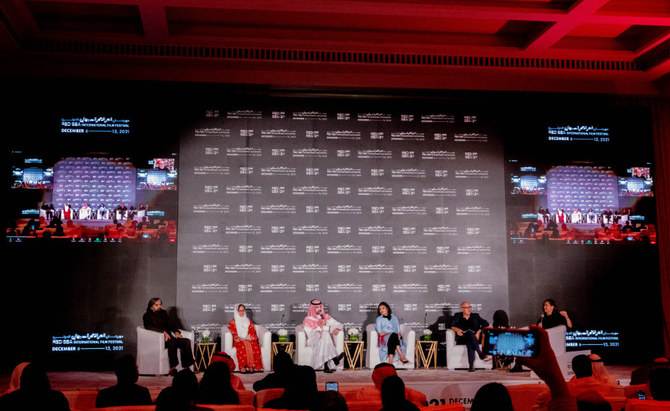
The highly-anticipated event will feature award-winning international movies, honors for female filmmakers in the region and masterclasses to educate its movie enthusiasts. (Photos/Huda Bashatah)
Short Url
Updated 10 November 2021
Follow

What to look forward to at Saudi Arabia’s Red Sea Film Festival 

DUBAI: Saudi Arabia’s Red Sea Film Festival announced the lineup for its inaugural edition that will take place from Dec. 6-15 during a conference held in Jeddah on Tuesday. 

The highly-anticipated event, which will be held at the UNESCO world heritage site Al-Balad, will feature award-winning international movies, honors for female filmmakers in the region and masterclasses to educate its movie enthusiasts. We've rounded up some of the highlights, including international and Arab films set to screen, below. 

The festival will open with a movie that has Oscar buzz — “Cyrano,” directed by Joe Wright, which will have its world premiere on Dec. 6. 

Audiences in the Kingdom will see the movie before it reaches the US and UK.

Diversity is another key element that organizers are gearing-up for. The movies that will be screened at the festival will comprise 138 films from 65 countries in 34 languages. 

The collection caters for all age groups, and includes children’s movies, anime and 3D immersive experiences.

Among the highlights are Netflix’s drama “The Lost Daughter” that had its world premiere at the 78th Venice Film Festival, Maggie Gyllenhaal’s “The Lost Daughter” and period drama “The Colour Room,” starring “Bridgerton” lead Phoebe Dynevor.

Meanwhile, Ana Lily Amirpour will present her fantasy-thriller “Mona Lisa and the Blood Moon,” starring Kate Hudson.

The closing movie will be Egyptian director Amr Salama’s “Bara El-Manhag,” which will have its world premiere at the festival. 

The event will also celebrate women by honoring Saudi filmmaker Haifaa Al-Mansour and Egyptian actress Laila Eloui. 

Renowned Egyptian actress Yousra will give a masterclass. 

The festival’s Red Sea Souk, which is an initiative designed to discover and connect Arab and African filmmakers from the region, will host another masterclass by Chilean editor Andrea Chignoli. 

There will also be panels with Palestinian filmmakers Hany Abu-Assad, Annemarie Jacir and Rashid Masharawi.


Riyadh exhibition to trace the origins of Saudi modern art

Updated 07 January 2026
Follow

Riyadh exhibition to trace the origins of Saudi modern art

  • Features painting, sculpture and archival documents
  • Open from Jan. 27-April 11 at Saudi national museum

DUBAI: A new exhibition in Riyadh is focusing on the origins of Saudi Arabia’s modern art scene, examining how a generation of artists helped shape the Kingdom’s visual culture during a period of rapid change.

The “Bedayat: Beginnings of Saudi Art Movement” show reportedly traces the emergence of creative practices in Saudi Arabia from the 1960s to the 1980s, an era that laid the groundwork for today’s art ecosystem.

On view from Jan. 27 until April 11 at the National Museum of Saudi Arabia, it includes works and archival material that document the early years of modern and abstract art in the Kingdom, according to the organizers.

It will examine how artists responded to shifting social, cultural and economic realities, often working with limited infrastructure but a strong sense of purpose and experimentation.

The exhibition is the result of extensive research led by the Visual Arts Commission, which included dozens of site visits and interviews with artists and figures active during the period.

These firsthand accounts have helped to reconstruct a time when formal exhibition spaces were scarce, art education was still developing, and artists relied heavily on personal initiative to build communities and platforms for their work.

Curated by Qaswra Hafez, “Bedayat” will feature painting, sculpture, works on paper and archival documents, many of which will be shown publicly for the first time.

The works will reveal how Saudi artists engaged with international modernist movements while grounding their practice in local heritage, developing visual languages that spoke to both global influences and lived experience.

The exhibition will have three sections, beginning with the foundations of the modern art movement, and followed by a broader look at the artistic concerns of the time.

It will conclude with a focus on four key figures: Mohammed Al-Saleem, Safeya Binzagr, Mounirah Mosly and Abdulhalim Radwi.

A publication, documentary film and public program of talks and workshops will accompany the exhibition, offering further insight into a pivotal chapter of Saudi art history and the artists who helped define it.