ISLAMABAD: Prime Minister Imran Khan on Thursday met with resident ambassadors of Muslim countries and outlined the concept behind the establishment of the Rehmatul-lil-Alameen Authority to counter modern challenges faced by the Muslim world, including Islamophobia, the PM’s office said.
The authority was formed last month to monitor the media and national curriculum along religious lines. It seeks to help familiarize children and adults with the teachings of Prophet Muhammad (Peace Be Upon Him).
PM Khan briefed the envoys of Muslim countries that the prime objective of establishing the authority was to develop a deeper understanding of Sunnah, the ways of life of Prophet Muhammad (PBUH), through collaborative research and to provide essential tools to the youth to preserve their Islamic identity, values and culture in the face of diverse social and digital media influences.
He also invited “constructive ideas” from the envoys and hoped for active collaboration among Muslim countries, both at the governmental level and through interaction among scholars and academia.
“The Rehmatul-lil-Alameen Authority was mandated to coordinate with Islamic scholars around the globe to discuss contemporary issues faced by the Muslim youth and to present a coherent and logical intellectual response to modern challenges, in particular Islamophobia,” PM Khan’s office quoted him as saying in a statement.
He stressed the need for teaching “ethics” in schools in order to help build character of the Muslim youth in accordance with the principles and true spirit of Islam.
The prime minister highlighted the importance of print, digital and electronic media and the influence of their content on the lifestyle and personality development of the young generation.
On Wednesday, PM Khan said the country needed urgent steps to protect its youth from “immoral alien culture” that was spreading through modern means of communications.
“Several envoys of the Muslim countries appreciated the initiative of the prime minister and shared the ideals of his endeavor,” the PM’s office added.


![]()
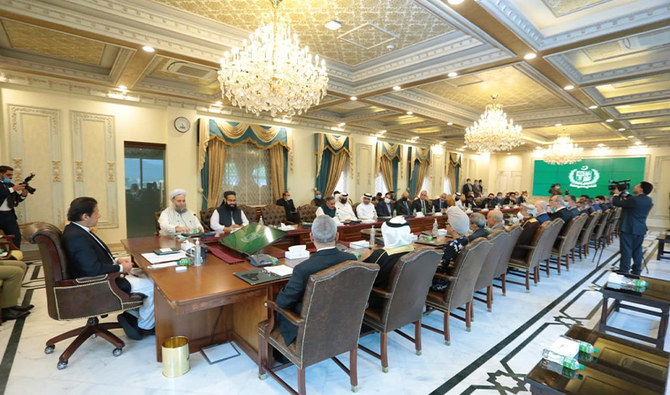
Pakistan PM discusses with envoys of Muslim states new authority to counter Islamophobia

Short Url
https://arab.news/6xues
Pakistan PM discusses with envoys of Muslim states new authority to counter Islamophobia
- Prime Minister Imran Khan invites ‘constructive ideas,’ hopes for active collaboration among Muslim countries
- Pakistan premier emphasizes need for teaching ‘ethics’ in schools to help build character of Muslim youth
Latest updates


Recommended


© 2026 SAUDI RESEARCH & PUBLISHING COMPANY, All Rights Reserved And subject to Terms of Use Agreement.