Champagne is on us if Washington removes Hezbollah, says Lebanese FM to Gulf media outlets

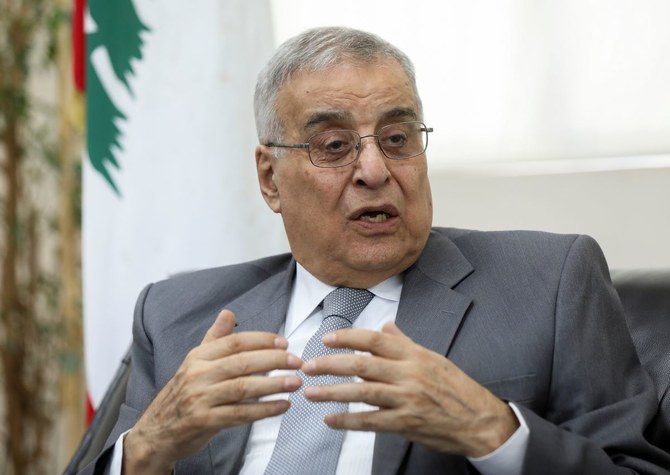
Referring to Hezbollah, Bou Habib said Lebanon was “ailing” and unable to find a cure. (File/Reuters)
Short Url
Updated 03 November 2021
Follow

Champagne is on us if Washington removes Hezbollah, says Lebanese FM to Gulf media outlets

  • Lebanese Foreign Affairs Minister Abdullah Bou Habib has downplayed the importance of Saudi financial support to Lebanon and acknowledged his government’s inability to curb Hezbollah’s role in the country

LONDON: Lebanese Foreign Affairs Minister Abdullah Bou Habib has downplayed the importance of Saudi financial support to Lebanon and acknowledged his government’s inability to curb Hezbollah’s role in the country.

In an interview with Gulf media outlets, Bou Habib claimed that Gulf states, Saudi Arabia in particular, have spent a lot of money in Lebanon on elections, but the state did not directly benefit. 

“The biggest aid came from the EU, as for Saudi aid, it was not for the government, but was given during elections,” Bou Habib said.

“We still do not know where the Saudi aid that was given to the relief agency after 2006 was spent, but the state did not take anything from it,” he added. 

The interview, which took place on Oct. 28 with correspondents from various Gulf media outlets, was obtained by Saudi newspaper Okaz. The recording was published on Tuesday. 

Referring to Hezbollah, Bou Habib said Lebanon was “ailing” and unable to find a cure. 

He revealed that he had told an official from the previous US administration: “If you send us 100,000 Marines, rid us of Hezbollah and want to celebrate, then the champagne is on us.”

Commenting on the leak, Bou Habib said in a statement that the recording published by Okaz offered “fragmented and false narratives that only add fuel to the fire.” 

He added that he met with the journalists “to open the door for dialogue” and “restore the relationship with the Kingdom of Saudi Arabia.” 

According to Okaz newspaper, the foreign minister’s office sought to prevent the release of the statements, and attempted to convince the journalists not to publish them.

Bou Habib further revealed to Reuters on Tuesday that Saudi Arabia was dictating impossible terms by asking the Lebanese government to reduce the role of Iran-backed Hezbollah, adding that Beirut’s row with Riyadh could be resolved if the Kingdom agreed to a dialogue with the new Lebanese cabinet.

“If they just want Hezbollah’s head on a plate, we can’t give them that,” Bou Habib indicated. 

“Hezbollah is a component of politics in Lebanon. It has a regional armed dimension, yes, but this is beyond what we can resolve,” he added.

His comments come in light of exacerbated tensions between Saudi Arabia and Lebanon following critical comments from Lebanon’s information minister, George Kordahi, regarding the Saudi-led intervention in Yemen. He claimed that the war against the Iran-backed terrorist Houthi militia was futile. 

In response, Saudi Arabia expelled the Lebanese ambassador from Riyadh, a move that was replicated by Kuwait and Bahrain, which expelled the top Lebanese envoys in their own capitals. The UAE also withdrew all diplomats from Beirut.

In the Reuters interview, Bou Habib referred to the lack of dialogue with Saudi Arabia, claiming that the Saudi Ambassador to Lebanon “never communicated” with them.  

“He (the ambassador) was here and was communicating with a lot of Lebanese politicians, but he wasn’t communicating with us,” Bou Habib said.

“We need to know what they want … we prefer dialogue to dictates.”


Book by jailed Palestinian political leader Marwan Barghouti set for November release

Updated 03 February 2026
Follow

Book by jailed Palestinian political leader Marwan Barghouti set for November release

  • Prison letters, photographs and other documents to feature in the book

DUBAI: A new book by jailed Palestinian political leader Marwan Barghouti is set for publication in November, with Penguin confirmed as the publisher, The Guardian reported.

Titled “Unbroken: In Pursuit of Freedom for Palestine,” the book brings together a selection of Barghouti’s writings, including prison letters, interviews, public statements, conversations with public figures, and other documents and photographs.

It also features excerpts from his book “1,000 Days in Solitary Confinement,” which has so far only been published in Arabic.

Fadwa Barghouti, who wrote the introduction to the book, said she hoped it would allow the world to hear her husband “in his own voice, not through the noise surrounding him.”

She said in a statement: “This book finally makes that possible — and I hope it helps people understand who Marwan Barghouti truly is, and how he embodies the Palestinian struggle for freedom and dignity.”

Barghouti, who has spent over two decades in Israeli prison, is a member of the Fatah party. He has long advocated a two-state solution and is widely regarded as a powerful and unifying voice for Palestinians, with many supporters describing him as “Palestine’s Mandela.”

His detention has prompted repeated international advocacy efforts over the years.

In December 2025, an open letter calling for his release was signed by hundreds of celebrities, including Margaret Atwood, Philip Pullman, Zadie Smith and Annie Ernaux; actors Sir Ian McKellen, Benedict Cumberbatch, Tilda Swinton, Josh O’Connor, Mark Ruffalo and Stephen Fry; and musicians Sting, Paul Simon, Brian Eno and Annie Lennox.

In November 2025, his family and several UK-based human rights advocates ran a campaign that included demonstrations and public art installations in Palestine and London.

Barghouti has been jailed by Israel since 2004, having been handed five life sentences plus 40 years for his role during the second Palestinian uprising. He has spent significant time in solitary confinement, has been denied visits by his family for three years, and has been denied access to the International Committee of the Red Cross.

His name was on a list of prisoners to be exchanged for Israeli captives in October 2025, but Israel declined to release him.