

Egypt assumes presidency of African Peace and Security Council

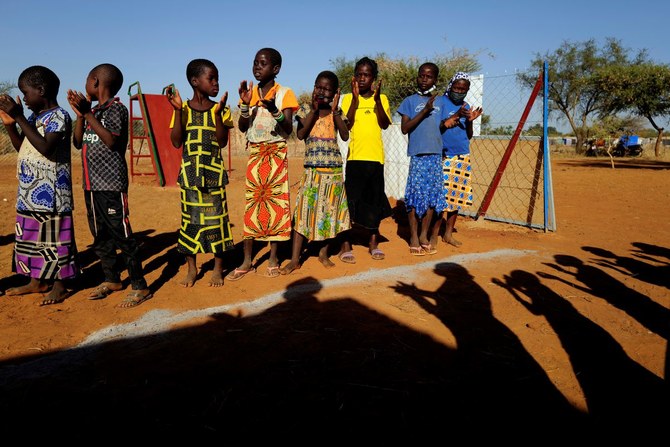
Children, who fled extremist attacks, in the Sahel, play at a camp for internally displaced people (IDPs) in Kaya, Burkina Faso, Nov. 23, 2020. (Reuters)
Short Url
Updated 01 November 2021
Follow

Egypt assumes presidency of African Peace and Security Council

  • Body is responsible for implementing African Union decisions
  • Envoy: Council will monitor developments in Sudan, Somalia

CAIRO: Egypt has assumed the monthly presidency of the African Peace and Security Council as of Nov. 1, said the country’s ambassador to Ethiopia and its permanent representative to the African Union.

Mohamed Gad added that this is the second time that Egypt assumes the presidency of the council, which is responsible for implementing AU decisions and is somewhat similar to the UN Security Council.

Its 15 member states are elected by the AU Assembly to reflect regional balances and other criteria, including the ability and political will to contribute militarily and financially to the union.

Gad said the Egyptian presidency of the council aims to enhance its role in high-priority peace and security issues in Africa.

He added that the Egyptian presidency comes at a time of increasing security challenges facing the continent, foremost of which are terrorism, extremism, organized crime, ethnic tensions, internal political crises, climate change and natural disasters.

He said the Egyptian presidency will hold a ministerial session on combating terrorism by dismantling extremist discourse and ideologies.

The session will witness the exchange of experiences and best practices between countries, especially in light of the growing terrorist threat in the Sahel, the Horn of Africa and Central Africa.

Gad said there will also be a session on protecting medical facilities and staff during armed conflict, and a session to study the consequences of climate change on peace and security in Africa.

“This is in the context of preparing for Egypt’s expected hosting of the UN Conference on Climate Change in 2022,” he added.

Egyptian diplomacy in African multilateral forums pays special attention to addressing the root causes of conflicts, preventing their recurrence via peace-building and stabilization activities, ensuring full respect for international humanitarian law and improving humanitarian access, he said.

Developments in Sudan and Somalia will be monitored by the council in order to formulate an appropriate response to them, Gad said, adding that they are sister countries of particular importance to Egypt and its national security, and have wide repercussions in terms of regional and continental security and stability.

He said the council, under its Egyptian presidency, intends to conduct a field visit to Somalia in order to review developments on the ground and provide necessary support in confronting the terrorist group Al-Shabaab.

Gad added that he is expected to hold consultations with the AU Commission, the UNSC presidency and the UN Peacebuilding Commission.


Iraqi lawmakers to elect president Tuesday, PM appointment next

Updated 3 sec ago
Follow

Iraqi lawmakers to elect president Tuesday, PM appointment next

BAGHDAD: Iraq’s parliament will meet on Tuesday to elect the country’s new president, who will then appoint a prime minister expected to be Nouri Al-Maliki after he was endorsed by the largest Shiite bloc.
By convention, a Shiite Muslim holds the post of prime minister, the parliament speaker is Sunni and the largely ceremonial presidency goes to a Kurd.
Parliamentary speaker Haibat Al-Halbussi announced on Sunday that the new parliament will convene on Tuesday to elect a president, according to the official INA press agency.
The president will then have 15 days to appoint a prime minister, who is usually nominated by the largest Shiite bloc formed through post-election alliances.
On Saturday, the Coordination Framework alliance — whose Shiiite factions have varying links to Iran — endorsed former prime minister and powerbroker Al-Maliki as the country’s next premier.
The alliance, to which Al-Maliki belongs, spoke of his “political and administrative experience and his record in running the state.”
Kurdish parties have yet to agree on a presidential candidate, who must be endorsed by other blocs and win a two-thirds majority in parliament.
The presidency is usually held by the Patriotic Union of Kurdistan (PUK). This year, the rival Kurdistan Democratic Party (KDP) named its own candidate: Foreign Minister Fuad Hussein.
Although Maliki’s endorsement effectively guarantees him the post, forming a new government remains a daunting challenge that could drag on for months and still fail.
The designated premier has one month to form a government and present it to parliament for a vote of confidence.
The 75-year-old Maliki, a shrewd politician, is set to return to power at a time of seismic changes in the Middle East, as Tehran’s regional influence wanes and tensions with Washington rise.
Government formation in Iraq must balance internal political dynamics and power-sharing among major parties, all under the continued influence of Iraq’s two main allies: Iran and the United States.
A close Iran ally, Al-Maliki will be expected to address Washington’s longstanding demand that Baghdad dismantle Tehran-backed factions, many of which are designated terrorist groups by the US.
Last month, Iraqi officials and diplomats told AFP that Washington demanded the eventual government exclude Iran-backed armed groups, even though most of them hold seats in parliament, and have seen their political and financial clout increase.
But Iraq is struggling with weak economic growth and cannot risk punitive measures by the US, which has already sanctioned several Iraqi entities, accusing them of helping Tehran evade sanctions.