

AS IT HAPPENED: Future Investment Initiative 2021, Day Three

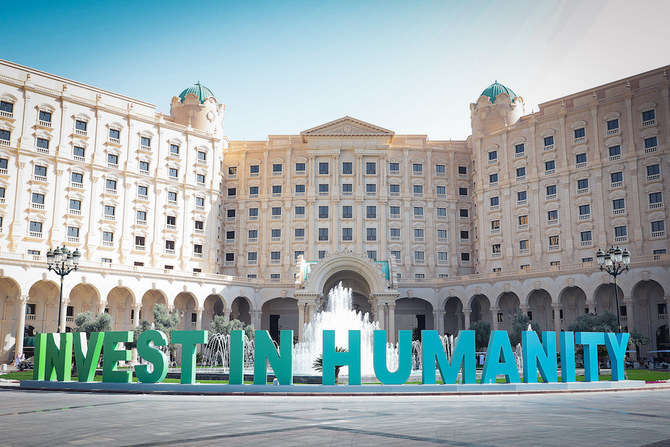
Above, venue of the the Future Investment Initiative Forum in Riyadh. (Courtesy www.fii-institute.org)
Short Url
Updated 29 October 2021
Follow

AS IT HAPPENED: Future Investment Initiative 2021, Day Three

DUBAI: The Future Investment Initiative holds it final day in Riyadh with discussions ranging from venture capitalism, digital finance, fashion to investments in medical innovations.

The opening plenary will talk about how young companies could thrive with the torrent of venture investment into private markets from non-traditional sources, including hedge funds, sovereign wealth funds and family offices.

Watch the livestream of FII 2021’s third day:

(All times in GMT)

14.13 — Universities are 'late to act' on climate change, the president of the King Abdullah University of Science and Technology said as he set out actions his establishment is taking.

11.52 — “The future will be defined by a tech race between the companies that adopt and embrace EV technology and that’s why I would believe Tesla’s value today of over $1 trillion is based on its technological prowess,” said Lucid Motors CEO Peter Rawlinson as he gave an update on the Saudi-backed firm. 

11.31 — Electric cars have been under discussion at the Forum, and Maha Achour of Metawave Corp believes self-driving vehicles could be commonplace within a decade

10.39 — Never mind oil, digital healthcare is where investors can get big bangs for their bucks, says Peter Ohnemus, president and CEO of Zurich-based dacadoo. He says there are likely to be returns of up to 35 percent in every year of the next decade.

09.32 —Fawaz Farooqui, MD of Cruise Saudi, has ambitious plans for the sector, and believes a million tourists will come to Saudi Arabia on cruise ships within seven years. 

08.46 — Whenver there is a discussion about artificial intelligence, there's always an undercurrent of 'will the robots overthrow the human race'. Bruno Maisonnier, founder and CEO of AI firm AnotherBrain, said humans have always feared technological advancements, going all the way back to the discovery of fire. 

08.12 — More detail on the comments from Saudi Aramco’s Ahmad Al-Khowaiter on what the company is doing on hydrogen capture. He believes the technology is there to expand the sector, but the issue is how to transport the energy source.

07:24 – Sanford R. Climan, president of Entertainment Media Ventures, Inc.; Ignace Lahoud of Majid Al-Futtaim Holding, and Robert Simonds, CEO and co-chairman of Eros STX Global Corporation meanwhile are on a panel discussion on the future of entertainment in the region, highlighting the growing sophistication of local content and where it sits in international show business.

07:16 – Saudi Aramco’s Al-Khowaiter says “blue hydrogen is ready today to scale.”

07:13 – On carbon capture, Saudi Aramco’s Ahmad Al-Khowaiter says “the question of technology feasibility is not there, the technology is at scale today.”

07:08 – The most optimal production of hydrogen is the combination of blue and green – it’s never going to be one or the other, Aramco’s Ahmad Al-Khowaiter says.

07:04 – Ahmad Al-Khowaiter: “We are looking at $1.5 to $2 a kilogram for low carbon hydrogen, but the biggest challenge is transport, it will take some time to be cost competitive.”
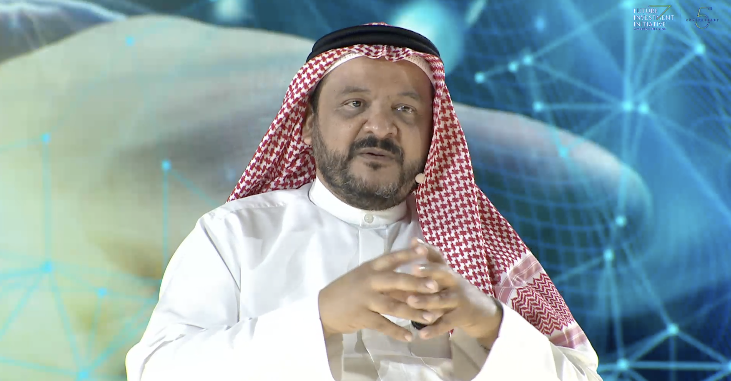
06:45 – A parallel session, which includes Saudi Aramco’s chief technology officer Ahmad Al-Khowaiter, is also being held to explore investing in hydrogen and scaling technology.

06:10 – The scheduled speakers for the opening plenary, John R. Selby, managing director of Thiel Capital; Fadi Ali Ghandour, executive chairman of WAMDA; Ronaldo Mouchawarm, vice president of Amazon MENA; Akash Shah, chief growth officer at The Bank of New York Mellon; Dr. Hani Enaya, the head of private investments at Sanabil Investments, will try to answer how changes are playing out across different markets around the world, and how should founders navigate these new opportunities while continuing to grow and scale.


G7 countries to release oil reserves as IEA agrees to largest ever market intervention

Updated 11 March 2026
Follow

G7 countries to release oil reserves as IEA agrees to largest ever market intervention

  • IEA recommends release of 400 million barrels

RIYADH: Germany, Japan and Austria will release part of their oil reserves after the International Energy Agency recommended the release of 400 million barrels of oil ‌from stockpiles, the largest ‌such move in IEA ​history.

In a statement, IEA Executive Director Fatih Birol said the flow of oil, gas and other commodities through the Strait of Hormuz have all but stopped, leading global energy supply to fall by around 20 percent.

Ahead of the confirmation of the move — a larger intervention than the 182.7 million barrels that were released in 2022 by in response to Russia’s invasion of Ukraine — several countries began setting out plans to bring their reserves into play as countries grapple with ​soaring crude prices amid ​the US-Israeli war with Iran. 

Birol said: “I can now announce that IEA countries have decided to launch the largest ever release of emergency oil stocks in our agency's history. 

“IEA countries will be making 400 million barrels of oil available to the market to offset the supply lost through the effective closure of the strait.

“This is a major action aiming to alleviate the immediate impacts of the disruption in markets.”

Germany’s Economy ⁠Minister ​Katherina Reiche ⁠confirmed on Wednesday her government plans to limit petrol price increases at filling stations to once a day and to introduce more stringent antitrust regulation of the sector.

She did not ⁠give an exact timing for ‌those measures, but added that ‌the US and ​Japan would be the ‌largest contributors to the release of the ‌oil reserves.

The US has not confirmed it would do so, but its Interior Secretary Doug Burgum told Fox News on Wednesday that “these are the kinds of moments that these reserves are used for.”

The announcements did not stop oil prices rising, with Brent crude up 3.26 percent to $90.66 a barrel at 4:29 p.m Saudi time, and West Texas Intermediate up 3.12 percent to $86.05. Both were some way below the $119 a barrel seen earlier in the week.

“The situation regarding oil supplies is tense, as the Strait of Hormuz is currently virtually impassable,” Germany’s Reiche said.

“We will comply with this request and ‌contribute our share, because Germany stands behind the IEA’s most important principle: mutual ⁠solidarity,” Reiche ⁠said about the IEA’s request.

According to a statement by Reiche’s ministry, Germany will contribute 2.64 million tonnes of oil. This corresponds to 19.51 million barrels.

Reiche stressed there was no supply shortage in the country, which has a legally mandated reserve of oil and oil products intended to cover 90 days’ demand.

South Korea will release 22.46 million ​barrels of oil, which represents 5.6 percent of the total IEA ask, the ⁠country's industry ministry said.

“The government will consult with the IEA ⁠secretariat on details, such ‌as ‌the ​timing ‌and amount, from ‌the perspective of national interests in accordance with domestic conditions,” ‌the ministry said in a statement.

The ⁠ministry ⁠said it would continue to coordinate closely with major countries in responding to high oil prices to minimise any domestic ​impact.

Austrian Economy Minister Wolfgang Hattmannsdorfer said his country was releasing part of the emergency oil reserve and extending the national strategic gas reserve, adding: “One thing is clear: in a crisis, there must be no crisis winners at the expense of commuters and businesses.”

Acting ahead of the IEA move, G7 ​member Japan announced plans to release 15 days' worth of ‌private-sector oil reserves and one month's worth of state oil reserves.

“Rather than wait for formal IEA approval ‌of a coordinated international reserve release, Japan will act first to ease global energy market supply and demand, releasing reserves as early as the 16th of this month,” Prime Minister Sanae Takaichi said in a broadcast statement.

Following a meeting with the IEA on Wednesday, G7 energy ministers said: “In principle, we support the implementation of proactive measures to address the situation, including the use of strategic reserves.”

All IEA member countries are required to keep 90 days’ worth of their nation’s oil use in reserve in case of global disruption.